Contents
- What is in the free tech pack template downl…
- Which template should you download?
- PDF or CSV: which file do you fill in?
- How do you fill in the template?
- What do you need before you open the templat…
- Why do measurement pages cause rejected samp…
- What makes a filled-in template factory-read…
- When is a free template not enough?
- Frequently asked questions
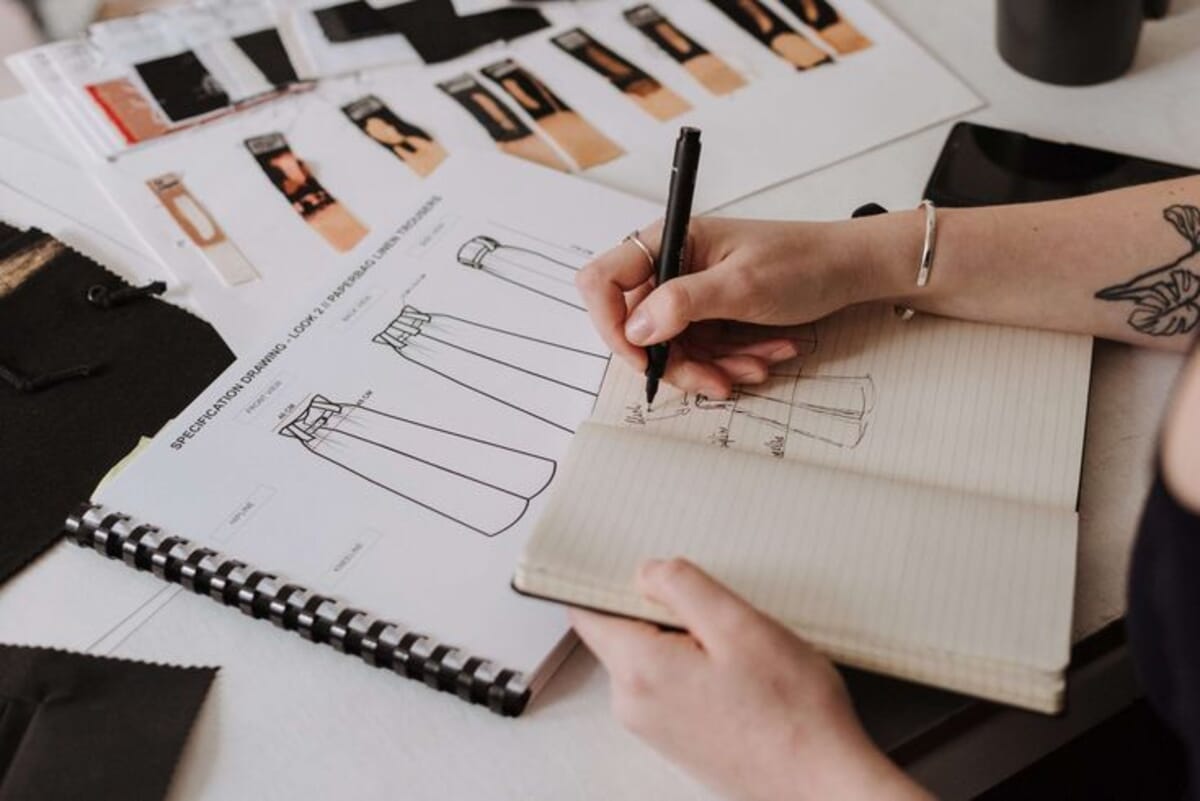
A tech pack is the document a factory prices, samples and cuts from. If you are building your first one, you don't need to start from a blank page: our tech pack template page gives you a free template for eight garments, each a seven-page PDF with the points of measure, materials and sewing operations for that garment already listed, plus a CSV spec sheet for the measurements. This guide explains what is in each template, which one to pick, how to fill it in and what to check before it goes to a factory.
Key Takeaways
- The free download covers eight garments: t-shirt, hoodie, jeans, jacket, shirt, dress, leggings and a six-panel cap.
- Each template is a seven-page PDF (US Letter, landscape); a CSV spec sheet covers sizes XS to 2XL with a tolerance column.
- You enter a name and email and the file downloads straight away. No account needed.
- The measurement page is the one that decides whether a sample comes back right: grade every point and give it a tolerance.
- Check the filled template with the free tech pack checker, or send it for a $49 tech pack check before a factory sees it.
What is in the free tech pack template download?
Eight garment templates and one spreadsheet. Each garment template is a seven-page PDF in US Letter, landscape, and every page answers one question a factory would otherwise email you about:
- Cover and style info. Brand, style number, season, size range, base size, main fabric and factory, plus the revision log.
- Front and back flats. The garment drawn front and back, with space for numbered callouts on every seam, stitch and trim.
- Points of measure. The garment's points of measure already listed with how to measure them, columns from XS to 2XL and a tolerance column.
- Bill of materials. Every fabric and trim with supplier, reference, color code, placement and quantity per garment.
- Construction. The sewing operations in order, with stitch type, stitches per inch and seam allowance, plus a key of common ISO stitch classes.
- Colorways. Four colorway flats to color in and a component-by-colorway table with swatch boxes.
- Labels and packing. Label positions, care label content, fold, polybag and carton details.
The CSV spec sheet puts every section on one sheet (style info, points of measure from XS to 2XL with a tolerance, bill of materials, construction, colorways, labels and packing, and a revision log) and opens in Google Sheets, Excel or Numbers.
GarmentSpec's free tech pack templates cover eight garments (t-shirt, hoodie, jeans, jacket, shirt, dress, leggings and a six-panel cap). Each is a seven-page PDF: cover and style info, flats, points of measure with tolerances, bill of materials, construction, colorways, and labels and packing. A CSV spec sheet covers sizes XS to 2XL for spreadsheets.
Which template should you download?
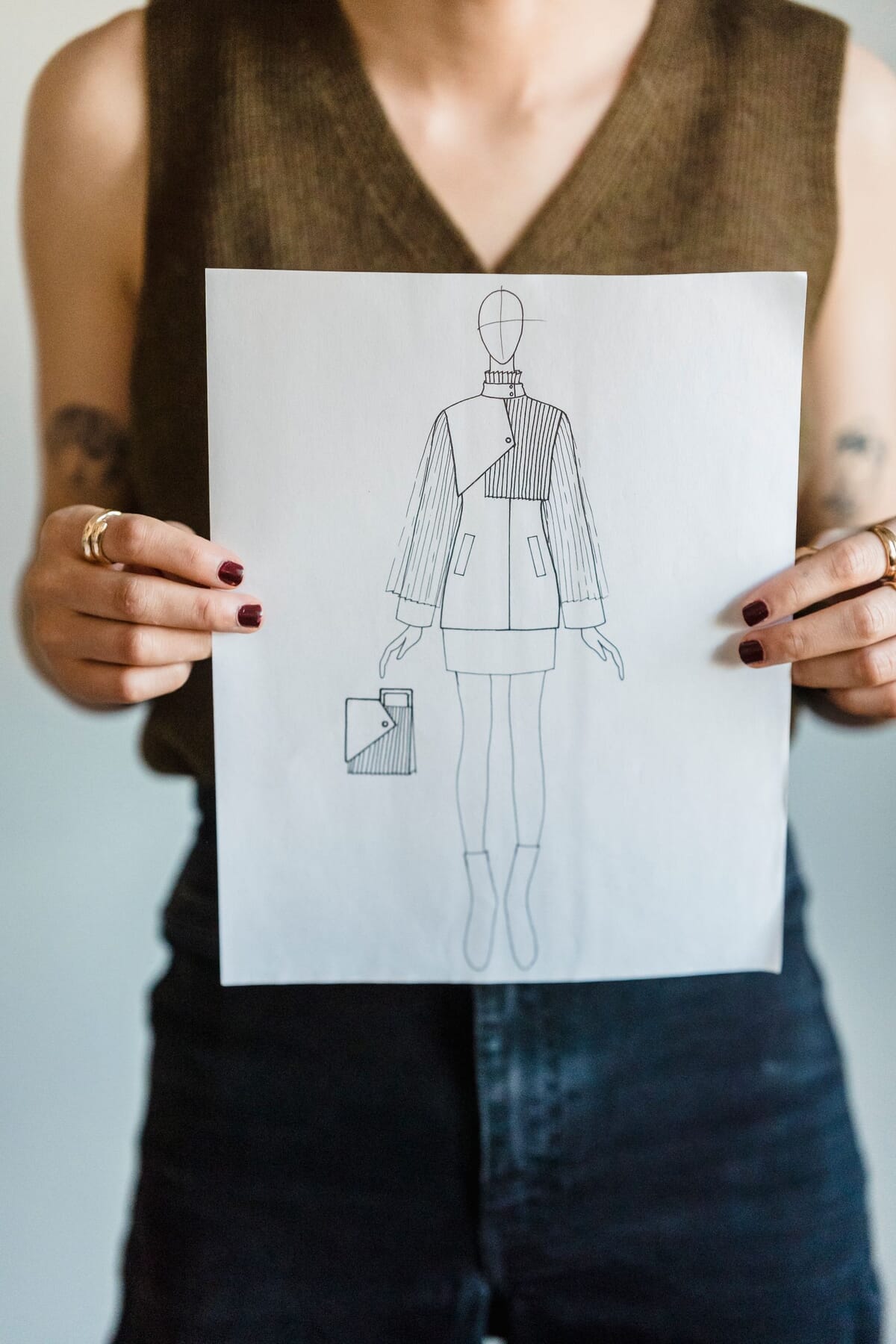
Pick the garment closest to your style. Each template already lists the measurement points and components that matter for that garment, so starting from the nearest one saves you the most typing.
| Template | What it already lists |
|---|---|
| T-shirt | Crewneck tee: neck, shoulder, sleeve and hem points; rib, neck tape and print on the bill of materials |
| Hoodie | Pullover hoodie: hood, pouch, cuff and hem rib points; drawcord, eyelets and hood lining |
| Jeans | Five-pocket jeans: rise, thigh, knee and leg opening; rivets, zip, patch and wash steps |
| Jacket | Zip jacket: collar, cuffs, zip length and pockets; fusing, lining and topstitch thread |
| Shirt | Button-up shirt: collar length, cuff and yoke; placket, collar and cuff operations |
| Dress | A-line dress: bust, waist, hip and sweep; invisible zip, facings and darts |
| Leggings | Stretch leggings: rise, inseam, thigh and gusset; waistband elastic and stretch thread |
| Hat (six-panel cap) | Six-panel cap: head size, crown height, visor and closure; buckram, sweatband and eyelets |
Making a sweatshirt? Start from the hoodie template and remove the hood points. A zip hoodie sits between the hoodie and the jacket. For worked examples of the same garments, see our guides to the hoodie tech pack, the t-shirt tech pack, the jeans tech pack and the hat tech pack.
PDF or CSV: which file do you fill in?
Both, for different pages. The PDF is the document the factory reads. You can print it and write on it, or type into it with the text tool of any PDF editor, such as the Fill & Sign tool in Adobe Acrobat Reader. The CSV is easier for the measurements, because a spreadsheet lets you copy a grade step across sizes and check your numbers before you transfer them.
The free templates are PDF and CSV only. If you want to draw editable flats yourself, our guides to the Illustrator tech pack template and the Canva tech pack template show how designers set up their own files. If you want spreadsheets that grade for you, the premium template pack ($39) has eight garment workbooks with auto grading, a fit log and costing, plus 16 editable flats.
How do you fill in the template?
Fill it in the order the pages depend on each other, and give the measurement page the most time. A factory cuts from your measurements, not from your drawing.
- Cover. Style number, season, size range and base size. Start the revision log at version 1.
- Flats. Draw or paste the front and back, then number a callout for every seam, stitch and trim.
- Points of measure. Measure your reference garment flat, the same way every time, and enter the base size.
- Grading and tolerances. Step each point across the size range and give every point a tolerance.
- Bill of materials. Every fabric, thread, label and trim, with supplier, reference and color code.
- Construction, colorways, labels and packing. Sewing operations in order, colors by code, then how the garment is labelled and packed.
Grading should follow body measurements, not a flat percentage. Published size tables exist for this: ASTM D5585-21, for example, lists body measurements for the adult female misses figure type, sizes 00 to 20 (ASTM). Our size chart generator and grading chart template help you turn a base size into a full size chart.
What do you need before you open the template?
Gather your inputs first, because a blank template can't invent them:
- A reference garment that fits the way you want, to measure for your base size and to show fit intent.
- Consistent measurements. Measure flat, edge to edge, the same way every time. Our guide to how to measure garments shows each point.
- Color references. A Pantone code or a physical swatch for every color. A color name is a guess; a code is an instruction.
- Your trims list. Every zipper, drawcord, label, button and thread, with a supplier or a photo. This becomes the bill of materials.
- Quantities and a size ratio, so the factory can see whether the order clears its minimum.
Why do measurement pages cause rejected samples?
Because the measurement page is what an inspector checks the garment against. Inspections usually follow an Acceptable Quality Limit (AQL): according to QIMA, AQL 2.5 is the most common standard for general consumer goods, 1.0 is used for higher-risk categories, 4.0 where minor cosmetic defects are acceptable, and critical defects are typically held at 0.
Without a tolerance on each point of measure, nobody can say which variation is acceptable, so normal production drift can be argued as a defect. A tolerance per row, not one global note, tells the factory and the inspector exactly what passes. The template's points-of-measure page already has the tolerance column; the work is filling every row.
Garment inspections commonly use AQL 2.5 for general consumer goods, 1.0 for higher-risk categories and 4.0 where minor cosmetic defects are acceptable, with critical defects typically at 0 (QIMA). A tech pack without a tolerance on every point of measure leaves the pass or fail line undefined.
What makes a filled-in template factory-ready?
A template is ready when someone who has never spoken to you could build the garment from it alone. Check these before you send it:
- One unit system, stated on the measurement page.
- A tolerance on every point of measure, not a single global note.
- Seam and stitch types called out for every operation, so the factory doesn't pick the fastest option for them.
- Colors by code, mapped to each component in the colorway table.
- A filled revision log, so you and the factory agree which version is approved.
Then hand it to someone who wasn't involved and ask what they would need to ask you. Whatever they point at is a gap a factory would fill on its own. Our list of tech pack mistakes covers the gaps we see most when reviewing packs.
When is a free template not enough?
A template gives you the pages; it doesn't draw flats to proportion or decide your grade steps and tolerances. If those are what stop you, you have three options:
- Have it checked: tech pack check, $49, a written list within 3 working days, credited if you upgrade.
- Do it yourself with more help: the premium template pack, $39, with auto grading, a fit log, costing and 16 editable flats (on the tech pack templates page).
- Have it done: our tech pack service, $299 per style ($249 per style for 3 or more), first draft in 3 to 5 working days, 2 to 3 revision rounds.
For the full walkthrough of each field, read our guide to filling in a tech pack template, and if you are new to the document, start with what a tech pack is.
Frequently asked questions
Is the tech pack template really free?
Yes. On the tech pack templates page you enter your name and email and the PDF downloads straight away, with no account. You can use the templates for your own brand as often as you like.
Which garments have a template?
Eight: a crewneck t-shirt, a pullover hoodie, five-pocket jeans, a zip jacket, a button-up shirt, an A-line dress, stretch leggings and a six-panel cap. Each one already lists the points of measure, materials and sewing operations for that garment.
What formats does the download include?
Each garment template is a seven-page PDF, US Letter, landscape. There is also one CSV spec sheet with every section (points of measure XS to 2XL with a tolerance column, bill of materials, construction, colorways, labels and packing, revision log) that opens in Google Sheets, Excel or Numbers.
How do I fill in a PDF tech pack template?
Print it and write on it, or type into it with the text tool of any PDF editor, for example the Fill & Sign tool in Adobe Acrobat Reader. For the measurements, use the CSV spec sheet in a spreadsheet.
Can I send a filled-in template straight to a factory?
You can if every page is complete: flats for every view, every point of measure graded with a tolerance, supplier and color codes on the bill of materials, and a note for every sewing operation. Run it through the free tech pack checker first, or send it for a $49 tech pack check.
What if I would rather not fill it in myself?
Send us your sketch, sample or reference photo and our team draws the full tech pack: $299 per style ($249 per style for 3 or more, $499 from concept), first draft in 3 to 5 working days, 2 to 3 revision rounds. See the tech pack service.
Peter Midea is GarmentSpec's technical lead for brand development.
We build the factory-ready spec from your sketch, sample or reference: technical flats, bill of materials, graded points of measure with tolerances, colorways and construction notes. $299 per style, 3 to 5 working days, 2 to 3 revision rounds. Our team replies within 24 hours.
Get your tech pack, $299Download the free templatesWe don't take your production. The spec is yours to send to any factory, anywhere. Talk to us first if you're not sure what you need.
Sources
- ASTM International, D5585-21: standard tables of body measurements for adult female misses figure type, sizes 00 to 20.
- QIMA, AQL (Acceptable Quality Limit): common AQL levels for consumer goods inspections.
Related guides
- How to fill in a tech pack template
- Illustrator tech pack template
- Canva tech pack template
- Grading chart template
- Tech packs: the complete guide