Contents
- What Is a Denim Tech Pack?
- What Must a Jeans Tech Pack Include?
- Wash and Finish: Where Denim Lives or Dies
- How Does Denim Wash Approval Work?
- Why Must Denim Measurements Be Post-Wash?
- What Hardware and Topstitching Does Denim Ne…
- Denim Weight, Selvedge, and the BOM
- How Do You Spec Five-Pocket Construction?
- How Do You Spec the Waistband, Fly, and Belt…
- What Seams and Threads Does Denim Need?
- How Do You Grade a Pair of Jeans?
- Inspection and AQL: how does a pair of jeans…
- How Much Does a Denim Tech Pack Cost?
- Frequently Asked Questions
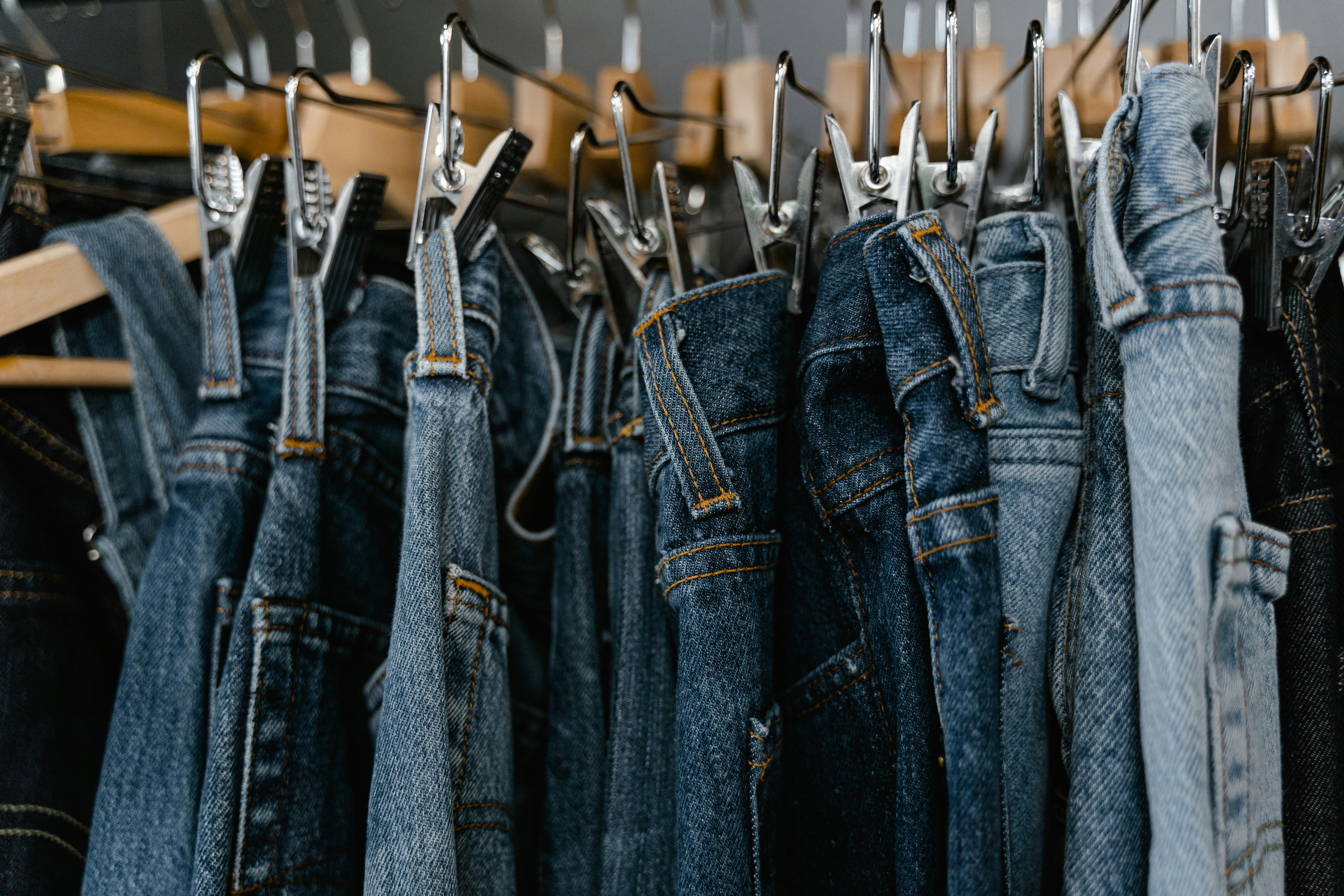
Jeans look like a solved problem. Five pockets, two legs, a fly. Then the first sample comes back and the waist that measured perfect on the cutting table is an inch tight, the wash sits three shades off, and a rivet is a centimetre from where you wanted it. Denim is a wash-and-hardware garment, and a tech pack for jeans has to carry information a tee never touches. Guru estimates a full spec runs $500-$2,000 per style and takes 5 to 20 hours to build (Guru, 2022). This guide walks every section a denim tech pack needs, and the exact places jeans fail once they hit the line.
Key Takeaways - A denim tech pack is a factory-facing spec: flats, points of measure, BOM, wash, hardware, and construction (Techpacker). - Denim measurements must be stated post-wash. Wash shrinks and skews the garment, so pre-wash numbers mislead everyone. - Wash, rivets, topstitch thread, and denim weight in ounces are the sections a simpler garment never needs. - A full spec runs $500-$2,000 outsourced, or your own time with a free template.
New to the format? Start with our guide on what a tech pack is and the wider tech pack pillar before you spec your first pair.
What Is a Denim Tech Pack?
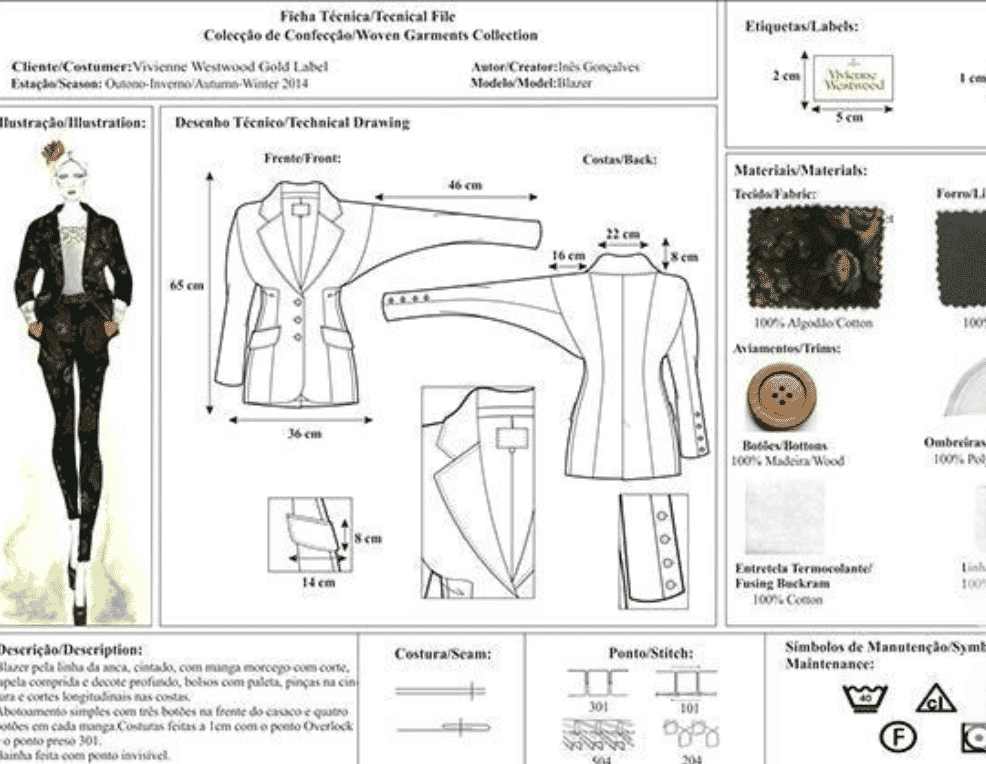
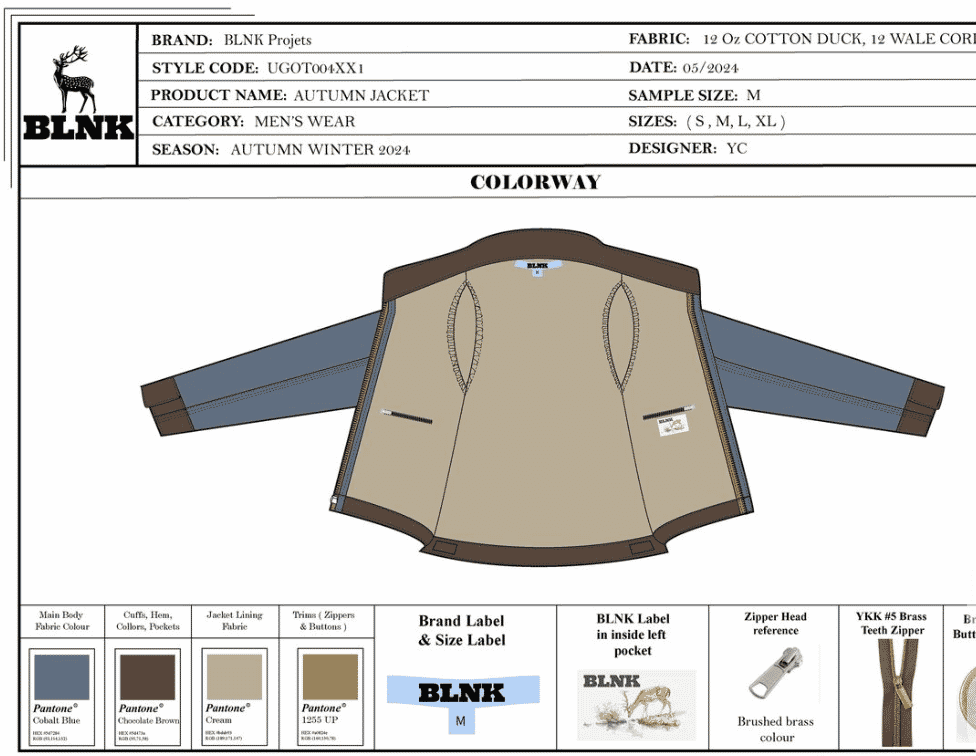
A denim tech pack is the technical document that tells a factory how to cut, sew, wash, and finish a pair of jeans. It bundles technical flats, a graded measurement chart, a bill of materials, construction notes, hardware callouts, and a wash and finish page into one file. The tech pack is the blueprint every manufacturer needs to build a garment correctly. Without it, the factory guesses. On denim, guessing is expensive.
The reason jeans need more than a tee comes down to process. A tee is cut, sewn, done. A pair of jeans is cut, sewn, then washed, and the wash changes everything: colour, hand-feel, and size. Two extra production stages sit between your pattern and the finished garment, and both need their own spec.
A denim tech pack translates a jeans design into buildable instructions: flats, points of measure, a bill of materials, hardware, and a wash recipe. Techpacker defines the tech pack as the blueprint a factory needs to produce a garment accurately (Techpacker), and denim adds wash and hardware pages a knit garment never carries.
Across the factories I work with, the jeans that go wrong rarely fail for a single dramatic reason. They fail because the spec stopped at the sewn garment and said nothing about the wash. The sewing room hits every measurement. Then the laundry takes over, the denim shrinks and twists, and the finished pair lands outside tolerance. Everyone blames the factory. The tech pack never mentioned wash at all.
What Must a Jeans Tech Pack Include?
A complete denim tech pack covers eight core sections. Techpacker lists them as flat sketches, a bill of materials, measurement specs, a cost sheet, size gradings, colorways, construction notes, and revision history (Techpacker). Sewport adds that the bill of materials must account for every component, from the shell denim down to the rivets, zippers, buttons, trims, and labels (Sewport). On jeans, the BOM is long, and hardware is half of it.
For denim, three sections carry extra weight: the wash and finish page, the hardware callouts, and the post-wash measurement chart. Your flat needs front and back with every seam, pocket, and topstitch row drawn. Your BOM needs the denim by weight, the thread by Tex, and every rivet and button by brand. Your measurements need to state before and after wash.
Our free tech pack template already lays out this structure, so you're filling in blanks rather than building it yourself.
Wash and Finish: Where Denim Lives or Dies
The wash page is the section that separates a denim tech pack from every other garment spec. A pair of jeans is sewn in raw, rigid denim, then the laundry does the real work. Raw, rinse, stone, enzyme, whiskering, hand-sand: each is a different process with a different result. Sewport notes the bill of materials and construction detail must capture every finishing component (Sewport), and on denim the finish is the whole personality of the garment.
Spell out the wash type and the sequence. Raw denim ships unwashed. A rinse wash removes stiffness and shrinks the garment once. Stone wash tumbles the jeans with pumice for abrasion. Enzyme wash softens and fades chemically. Whiskering and hand-sand are hand-applied abrasion at the hip and knee, and they need a placement diagram, not a word.
Denim wash and finish is a production stage in its own right, not a colour label. Raw, rinse, stone, enzyme, and hand-sand each change the garment's colour, hand-feel, and size differently. A wash described in one vague word comes back five shades wrong.
Here's what most spec guides miss about wash. It isn't only a colour decision, it's a measurement decision. Every wash process shrinks and abrades the garment by a different amount, so the wash you pick silently rewrites your finished measurements. Two identical patterns, one rinse-washed and one stone-washed, come off the line as two different sizes. If your wash page and your measurement page don't agree, the factory can't hit both.
Get the wash wrong and even a perfect pattern fails, which is exactly why the next section matters so much.
How Does Denim Wash Approval Work?
Wash approval is a sign-off loop where the laundry proves it can hit your target before it touches the bulk run. You hand over a wash standard, they return a wash-tested sample, and you approve or reject it against that standard. Guru puts a full denim spec at 5 to 20 hours per style partly because documenting this loop takes real time (Guru, 2022). Skip it, and every bulk pair is a coin toss.
Hand the laundry four things: a wash standard (an approved reference garment or a written recipe with reference photos), fabric cut from the same lot as production, your target after-wash measurements, and placement diagrams for whiskering, hand-sand, and any PP spray. Vague inputs come back as vague results. The more you pin down, the less the laundry improvises.
Then the loop runs. The laundry processes a bulk-representative trial and returns a first wash sample. You check shade against the standard under controlled light, not a phone screen, then hand-feel, then the after-wash points of measure, then abrasion placement. Approve it, and that pair becomes the seal sample every bulk pair is judged against. Reject it with written notes on shade, hand, or placement, and run it again.
The wash-approval step is the one brands rush and regret. I've watched a program lose two weeks because the first bulk wash came back a half-shade too green and nobody had sealed a reference. Once a physical seal sample exists, the argument stops: the run either matches the seal or it doesn't. Without one, every rejection turns into a debate nobody can win.
Denim wash approval is a documented sign-off loop, not a colour preference. The laundry returns a wash-tested sample, the brand checks it against a sealed standard for shade, hand, and after-wash measurement, and only then does bulk run. The seal sample becomes the reference every production pair is judged against.
Modern finishing adds tools worth naming on the wash page: PP (potassium permanganate) spray for localised bleaching, laser etching for whiskers and worn zones without hand labour, and 3D or resin curing to set permanent creases. Each is a line item with a placement, not a vibe. Where you'd once have written "worn look," you now name the process, the zone, and the intensity.
Why Must Denim Measurements Be Post-Wash?
Denim measurements must be stated post-wash because the wash changes the garment's size and shape after it leaves the sewing room. Raw denim shrinks when washed, and twill-woven denim also skews, meaning the leg seam spirals slightly around the leg. A waistband that measures 34 inches sewn can come back at 33 after a rinse. Spec the after-wash number, or the sample returns wrong and everyone blames the factory.
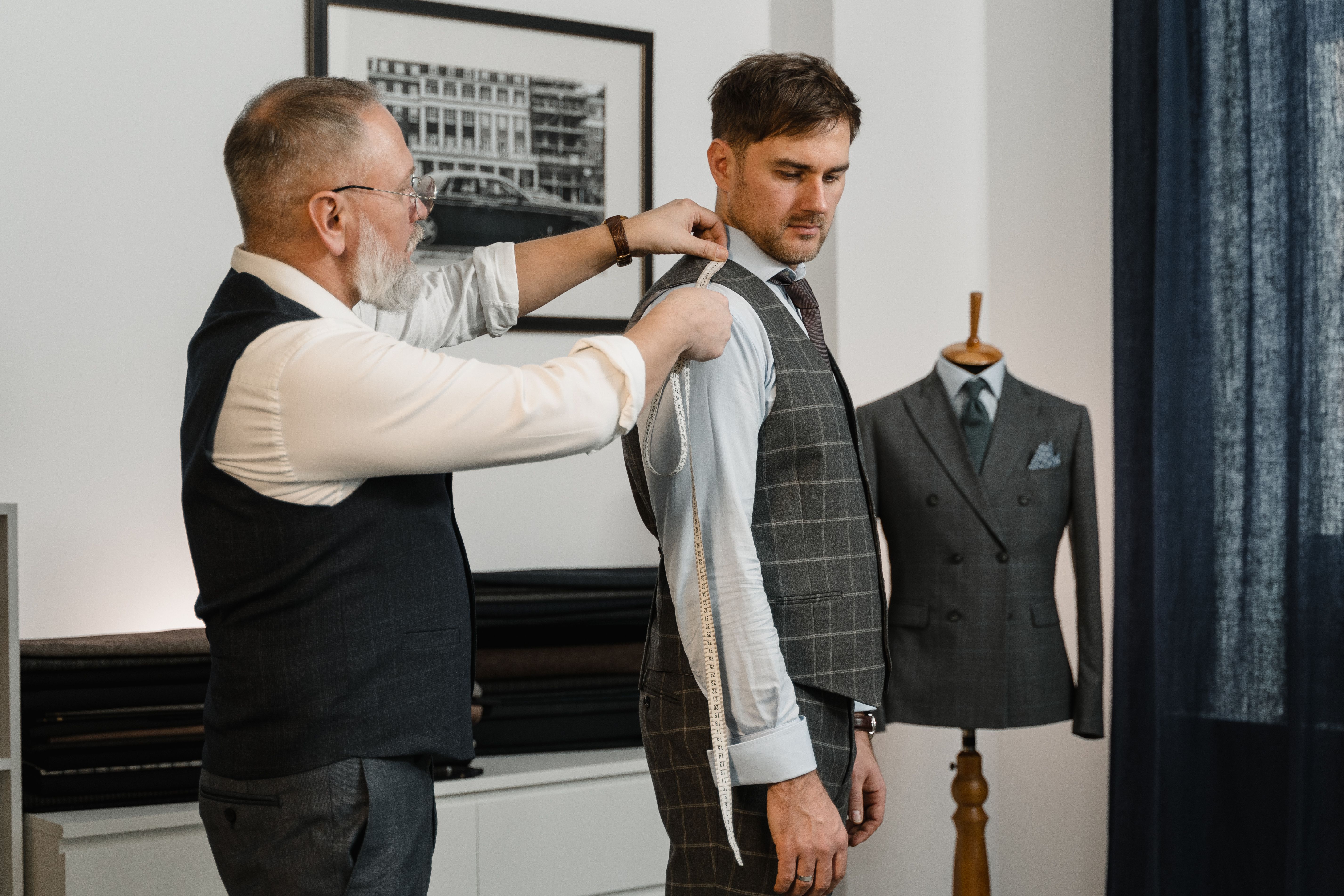
The fix is simple to write and easy to forget. Your measurement chart needs two columns, or a clear note: before wash and after wash. State which one the factory grades against, and it's always the after-wash number, because that's the garment the customer buys. Below is an illustrative points-of-measure table for a base size medium jean. Treat the numbers as an example of format, not a house standard.
| Point of Measure | Base Size M | Tolerance |
|---|---|---|
| Waist, relaxed (flat, x2) | 34" | +/- 1/2" |
| Hip, 3" below waistband (flat, x2) | 42" | +/- 1/2" |
| Thigh, 1" below crotch (flat) | 12" | +/- 1/4" |
| Front rise, crotch to waistband | 10.5" | +/- 1/4" |
| Back rise, crotch to waistband | 15" | +/- 1/4" |
| Inseam, crotch to hem | 32" | +/- 1/2" |
| Leg opening, hem (flat) | 7.5" | +/- 1/4" |
Denim measurements must be specified after wash, because raw denim shrinks and twill skews once the garment is laundered. A waistband spec'd pre-wash comes back tight. Standards like ASTM D5585-21 exist so those after-wash dimensions carry defined tolerances (ASTM) instead of "looks about right."
For the errors that repeat across every garment type, our guide to common tech pack mistakes is worth a read before you finalise the chart.
What Hardware and Topstitching Does Denim Need?
Hardware and topstitching are where denim carries detail no knit garment ever needs. A pair of jeans has rivets, a shank button or a zip-fly, bar-tacks at every stress point, and rows of contrast topstitching that define the look. Sewport lists rivets, zippers, and buttons among the BOM components a spec must name precisely (Sewport). Name each one by brand and placement, or the factory substitutes.
Start with the closure. Button-fly or zip-fly is your first call, and if it's a zip, name the brand, usually YKK, plus length and gauge. Then the rivets: material, finish, and exact placement at the front pockets. Then the button: shank or tack, diameter, finish. Every rivet and bar-tack needs a position on the flat, not a general instruction.
Topstitching is its own spec. Denim topstitch thread is heavy, and you state it by Tex weight. You call the colour, classic gold or tonal, and you say single-needle or double-needle for each seam. Bar-tacks reinforce the pocket corners, belt loops, and fly, and their count and placement belong on the flat too.
Denim needs hardware and topstitch specs a knit garment never carries: rivets, a button-fly or YKK zip-fly, bar-tacks, and heavy topstitch thread by Tex weight and colour. Each one needs a brand and an exact position on the flat.
The same hardware and topstitch logic carries straight over to our denim jacket tech pack guide, where rivets and contrast stitching do even more of the visual work.
Denim Weight, Selvedge, and the BOM
The BOM has to name the exact denim, and weight in ounces does most of the work. Denim weight is measured in ounces per square yard: lighter denim around 9 to 11 oz drapes and moves, mid-weight around 12 to 13 oz is the everyday jean, and anything above 14 oz is heavy and stiff. Sewport states the bill of materials must specify every fabric component precisely (Sewport), and on denim "cotton twill" tells the factory nothing.
Two axes get muddled in denim BOMs, so pull them apart. Ring-spun versus open-end describes the yarn, not the loom. Ring-spun yarn leaves the fibre slubby, uneven, and soft, which is why premium denim reaches for it. Open-end (rotor) yarn is faster to spin, flatter, and cheaper, and it's the workhorse for volume production. Name the yarn on the warp at least, since it drives both hand-feel and price.
Selvedge is a separate call about the loom. Selvedge denim runs on narrow shuttle looms and finishes with a clean, self-bound edge you can show at the outseam, so it's slower and pricier. Non-selvedge denim runs wide on projectile or air-jet looms, which is faster, cheaper, and covers most production. State whether you want selvedge, because it changes cutting, cost, and the whole outseam detail.
Shrinkage control is a spec line, not an afterthought. Sanforized denim is mechanically pre-shrunk at the mill, so it moves roughly 1 to 3 percent in the wash. Loomstate (unsanforized) denim is raw and can shrink 5 to 10 percent, the classic shrink-to-fit behaviour. Name which one you're buying, because it rewrites your after-wash grading before a single pair is cut.
Stretch is the last big fork. Rigid denim is 100 percent cotton and holds its shape. Comfort-stretch denim adds 1 to 3 percent elastane for give, and power-stretch pushes higher on a dual-core yarn. State the elastane percentage and the recovery you expect, because a stretch that bags out at the knee is a spec failure, not a wash failure. Then name the warp colour, usually indigo, and the weft, usually undyed, which is why a classic jean reads blue outside and white in.
The mistake I see most on denim BOMs isn't a missing field, it's collapsing yarn and loom into one word. A buyer writes "open-end selvedge" and the two halves contradict each other, since almost no selvedge denim is open-end spun. Split the yarn line from the loom line on the BOM, and the mill stops phoning to ask what you actually meant.
| Field | What to state | Example |
|---|---|---|
| Weight | Ounces per square yard, with tolerance | 12.5 oz +/- 0.5 |
| Yarn | Ring-spun or open-end | Ring-spun warp |
| Loom | Selvedge or wide | Wide, non-selvedge |
| Shrinkage | Sanforized or loomstate, expected % | Sanforized, under 3% |
| Fibre blend | Cotton and elastane % | 98% cotton, 2% elastane |
| Warp / weft | Colours | Indigo warp, undyed weft |
A denim BOM needs weight in ounces per square yard, weave type, selvedge or open-end, fibre blend, and any elastane for stretch, not just "denim." Weight and weave decide drape, cost, and how much the fabric moves in the wash.
Need this done properly without building it yourself? Our tech pack service delivers a factory-ready denim spec from $299, with graded after-wash measurements, a full BOM, and wash and hardware callouts checked against real production requirements.
How Do You Spec Five-Pocket Construction?
The five-pocket build is four working pockets plus the coin pocket, and each one needs its own callout so the factory doesn't guess placement. A back pocket set a centimetre off reads as a defect under AQL sampling, and QIMA reports AQL 2.5 as the common commercial limit for that kind of check (QIMA). Placement is two numbers: down from the waistband seam, and in from the side seam.
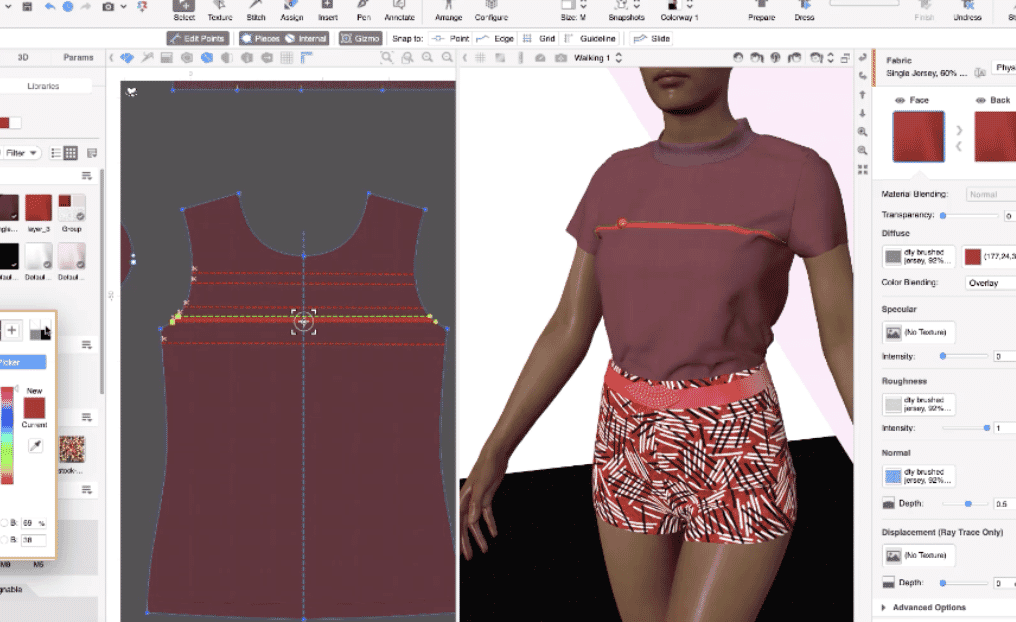
Start with the front pockets. Name the pocket bag fabric, usually a lighter cotton pocketing, by weight and colour, and say whether the front pocket facing is cut in shell denim so no pocketing peeks at the opening. The coin pocket, that little watch pocket, sits inside the right front pocket, and you give its size and position. Draw the pocket opening shape too, since a curved slant and a straight cut wear completely differently.
Back pockets carry the brand. Give each one a size, a placement coordinate, and the stitch design drawn on the flat, because the arcuate stitch is often the label's signature and the factory can't invent it. Spell out the topstitch pattern row by row.
Rivets versus bar-tacks is a real construction decision, not a default. Rivets reinforce the front pocket corners, but many brands drop the back-pocket rivets to stop them scratching furniture and bar-tack those corners instead. Name rivet or bar-tack at every corner, with placement, so the line builds the reinforcement you actually want.
Five-pocket denim needs a callout per pocket: front pocket bag fabric by weight, the coin pocket's size and position, back-pocket placement coordinates, and the arcuate stitch drawn on the flat. Rivet-versus-bar-tack at each corner is a spec decision, and a misplaced pocket fails AQL inspection like any other defect (QIMA).
How Do You Spec the Waistband, Fly, and Belt Loops?
Waistband, fly, and belt loops are small parts that fail loudly, and each one carries a number. Belt loops typically run 5 to 7, each anchored with a bar-tack top and bottom, and the waistband closes on a shank button you name by diameter and finish. Guru's 5 to 20 hour estimate covers exactly this kind of part-by-part callout (Guru, 2022). Miss one, and the sample comes back improvised.
Spec the waistband shape first. Straight waistbands sit level; contoured (curved) waistbands follow the body and cut back gape, and the two grade differently. State the finished height, whether there's a waistband curtain or interlining inside, and the button: shank type, diameter in millimetres, and finish.
The fly is a fork in the road. A button-fly needs the button count, spacing, and buttonhole type. A zip-fly needs the zip named in full: brand (usually YKK), length in centimetres, gauge such as #4.5, slider type, tape colour, and finish. Add the fly shield, the J-stitch topstitch shape, and the bar-tack at the bottom of the fly, since that's a classic stress point.
Belt loops close it out. Give the count, the width in millimetres, whether they're folded or raw-edge, and the bar-tack at each end. Note the centre-back loop, which either straddles the seam or sits beside it, because that's a placement the factory will otherwise choose for you.
Waistband, fly, and belt loops each carry numbers a denim spec has to name: waistband height and shape, the shank button by diameter, the fly closure (button count or a YKK zip by length and gauge), and belt loop count, width, and bar-tacks. Left blank, the factory picks for you.
What Seams and Threads Does Denim Need?
Denim is built on felled seams and heavy topstitch thread, and both need Tex and stitch-density numbers to build right. The outseam and inseam on a classic jean are flat-felled, two rows of stitching that lock the raw edges inside for strength. Finished seam dimensions carry tolerances under ASTM's denim jurisdiction (ASTM), so "sew it strong" isn't a spec.
Call the thread by weight. Denim topstitch thread runs heavy, often Tex 60 to Tex 80, while the seaming thread underneath can be finer. State the colour, classic gold or a tonal match, and note that the needle thread on top and the bobbin thread underneath can differ: gold showing on the face, tonal hidden inside. Say single-needle or double-needle for each seam.
Stitch density is the quiet spec. Topstitching often runs around 7 to 8 stitches per inch, seaming tighter, and bar-tacks tighter still. State the SPI per operation, because loose stitching puckers and over-tight stitching cuts the fabric.
One detail separates denim heads from everyone else: the hem. A chainstitch hem, sewn on an old union-special machine, twists slightly as it's washed and gives the roping effect collectors look for. A plain lockstitch hem stays flat and reads generic. If that roping matters to your customer, it has to be written on the construction page, because a modern factory will default to lockstitch every time.
How Do You Grade a Pair of Jeans?
Grading scales the base-size measurements up and down by fixed increments, and on denim every point of measure grades, not just the waist. ASTM D5585-21 publishes the body-measurement tables that grade rules build from (ASTM). Waist and hip take the biggest jump; rise, thigh, knee, and leg opening grade in smaller, proportional steps.
Grade the after-wash target, not the sewn one. Because wash shrinkage compounds across sizes, grading pre-wash numbers stacks error into the biggest and smallest sizes. State every increment on the after-wash dimension, then let the wash math sit on top of a clean grade.
Inseam is the exception. Most brands hold inseam constant across waist sizes and instead offer length blocks, 30, 32, and 34, so a single waist ships in three inseams. Note that on the grade sheet, or the factory grades a length you never intended. Stretch denim adds one more wrinkle: recovery changes across sizes, so a power-stretch jean often needs a tighter grade than a rigid one to fit the same way.
| Point of Measure | Grade per size |
|---|---|
| Waist | 2" |
| Hip | 2" |
| Front rise | 1/4" |
| Back rise | 1/4" |
| Thigh | 3/4" |
| Knee | 1/2" |
| Leg opening | 1/2" |
| Inseam | 0 (offered in length blocks) |
Inspection and AQL: how does a pair of jeans pass or fail?
Inspection judges jeans numerically, so every measurement and finish needs a stated tolerance. Factories inspect finished goods by AQL sampling under ISO 2859-1, also published as ANSI/ASQ Z1.4, pulling a sample and counting defects against a defined limit. QIMA reports AQL 2.5 as the most common commercial limit, AQL 1.0 for higher-risk goods, AQL 4.0 for minor cosmetic defects, and a zero limit for critical defects (QIMA). A jean outside its after-wash tolerance fails the same way a broken zip does.
This is why the wash page and the measurement page can't contradict each other. Inspection measures the finished, washed garment. If your spec grades against pre-wash numbers, every washed pair reads as off-spec, and a whole run can fail on a technicality you wrote yourself. State the after-wash tolerance, list defects that count as critical, major, or minor, and the inspection has a rulebook.
Jeans pass or fail inspection by numbers, not opinion. AQL sampling under ISO 2859-1 checks a run against defined limits, and QIMA reports AQL 2.5 as the most common commercial standard (QIMA). A pair outside its after-wash measurement tolerance fails the same inspection as one with a faulty rivet.
How Much Does a Denim Tech Pack Cost?
A denim tech pack costs $500-$2,000 per style if you outsource it, or your own time if you build it. Guru estimates that range and puts the work at 5 to 20 hours per style (Guru, 2022). Jeans sit toward the upper end of that range, because the wash page, the hardware callouts, and the after-wash grading all add real work a simpler garment skips.
You can still build one yourself for the cost of your time. A structured template gets you most of the way, since the eight sections are the same across garments and only the content changes. Fill in the sections, add graded after-wash POMs with tolerances, and pin down the wash, the denim weight, and every rivet and thread. That's a working spec a factory can quote against.
Building a denim spec yourself costs only your time, since the eight standard sections are the same across garments. Techpacker defines those sections as the fixed blueprint a factory needs (Techpacker), so a template lets you fill in wash, hardware, and after-wash grading rather than build the structure.
Grab our tech pack template to start for free, and read what each page needs to include so your file opens cleanly at the factory. If you want a manufacturer's view on how these denim specs get read on the floor, Portugal Clothing Factory publishes on the production side.
Frequently Asked Questions
Should denim measurements be before or after wash?
After wash, always. Raw denim shrinks and twill-woven denim skews once laundered, so the sewn measurement and the finished measurement differ. Grade against the after-wash number, because that's the garment the customer buys. Note both on the chart if you like, but state clearly which one inspection measures against.
What is the most common denim tech pack mistake?
Speccing measurements pre-wash and never mentioning the wash's effect on size. The sewing room hits every number, then the laundry shrinks and skews the garment, and the finished pair lands out of tolerance. Name the wash, and grade every point of measure on the after-wash dimension, not the sewn one.
How is denim weight measured in a tech pack?
Denim weight is stated in ounces per square yard. Lighter denim around 9 to 11 oz drapes softly, mid-weight around 12 to 13 oz is the everyday jean, and 14 oz and up is heavy and rigid. Name the weight with a tolerance in your BOM, since it changes drape, cost, and wash behaviour.
What hardware belongs in a jeans tech pack?
Every rivet, the fly closure, the waistband button, and all bar-tacks. Name the zip brand, usually YKK, with length and gauge, the rivet material and finish, and the button type and diameter. Rivets, zippers, and buttons all belong in the BOM, each with an exact position on the flat.
How many measurements does a denim tech pack need?
A standard five-pocket jean typically needs 8 to 12 points of measure: waist, hip, thigh, front rise, back rise, inseam, knee, and leg opening. Each needs an after-wash target and a tolerance. ASTM's dimensional standards exist so those tolerances grade consistently across sizes (ASTM).
What is the difference between selvedge and open-end denim?
They describe two different things. Selvedge refers to the loom: selvedge denim runs on narrow shuttle looms and finishes with a clean self-bound edge at the outseam. Open-end refers to the yarn: open-end (rotor) yarn is flatter and cheaper than ring-spun. A BOM should state the loom and the yarn separately, not as one label.
How much elastane goes into stretch jeans?
Comfort-stretch denim usually carries 1 to 3 percent elastane, enough to give at the knee and recover. Power-stretch pushes higher with a dual-core yarn. Rigid denim has none. State the exact elastane percentage and the recovery expectation in your BOM, because stretch that bags out reads as a spec failure, not a wash fault.
What thread weight is used for denim topstitching?
Denim topstitch thread runs heavy, commonly Tex 60 to Tex 80, while the seaming thread underneath is finer. State the Tex weight, the colour (classic gold or tonal), and single or double needle per seam. The needle thread on top and the bobbin thread underneath can differ, so name both if the face and back colours aren't the same.
Peter Midea runs a network of 80 clothing factories in Portugal and has watched more garments get rejected on a production line than he'd like to admit.
We build the factory-ready spec a manufacturer can quote from without a single question: technical flats, bill of materials, graded points of measure with tolerances, colorways and construction notes. $299 per style, 3 to 5 working days, 2 to 3 revision rounds.
Get your tech pack — $299Start with the free templateWe don't take your production. The spec is yours to send to any factory, anywhere. Talk to us first if you're not sure what you need.
Sources
Every statistic and definition in this article traces to one of the following. Each is listed once here, and cited inline where it is used.
- Guru
- Techpacker
- Sewport
- images.pexels.com
- ASTM International
- QIMA
- otextilpt.sirv.com
- ASTM International
- Portugal Clothing Factory
Related guides
- Tech packs: the complete guide
- Jacket tech pack
- Streetwear tech pack
- Free tech pack template