Contents
- When should you hire a tech pack designer?
- What are the four ways to get a tech pack ma…
- What separates a good tech pack designer fro…
- What are the red flags in a tech pack design…
- What should you send a designer, and how do…
- What should a tech pack cost?
- Does a cheap tech pack really cost more?
- Should you DIY or hire? A quick decision fra…
- Where a full service fits, and when it's wor…
- Frequently asked questions
Most people don't go looking for a tech pack designer until something has already gone wrong. A sample came back with the wrong pocket. A factory sent an email full of questions. Or a freelancer delivered ten pretty pages that fell apart the moment a pattern maker opened them. You're here because the first attempt cost you time and money, and you'd like the second one to hold up on a real production line. A standard tech pack takes five to twenty hours and costs roughly $500 to $2,000 to prepare (Guru, 2022). This guide covers when to hire, when not to, and what actually separates a competent tech pack designer from an expensive mistake.
Key Takeaways
- Hire a tech pack designer once your garment is finalized and you're ready to talk to a factory, not while you're still sketching.
- A standard tech pack runs $500 to $2,000 and five to twenty hours of work (Guru, 2022).
- The real test isn't a nice flat sketch. It's grading, tolerances, and whether the designer has produced garments before.
- Freelancer, software, or a full service: pick by risk, complexity, and how close you are to real production.
When should you hire a tech pack designer?
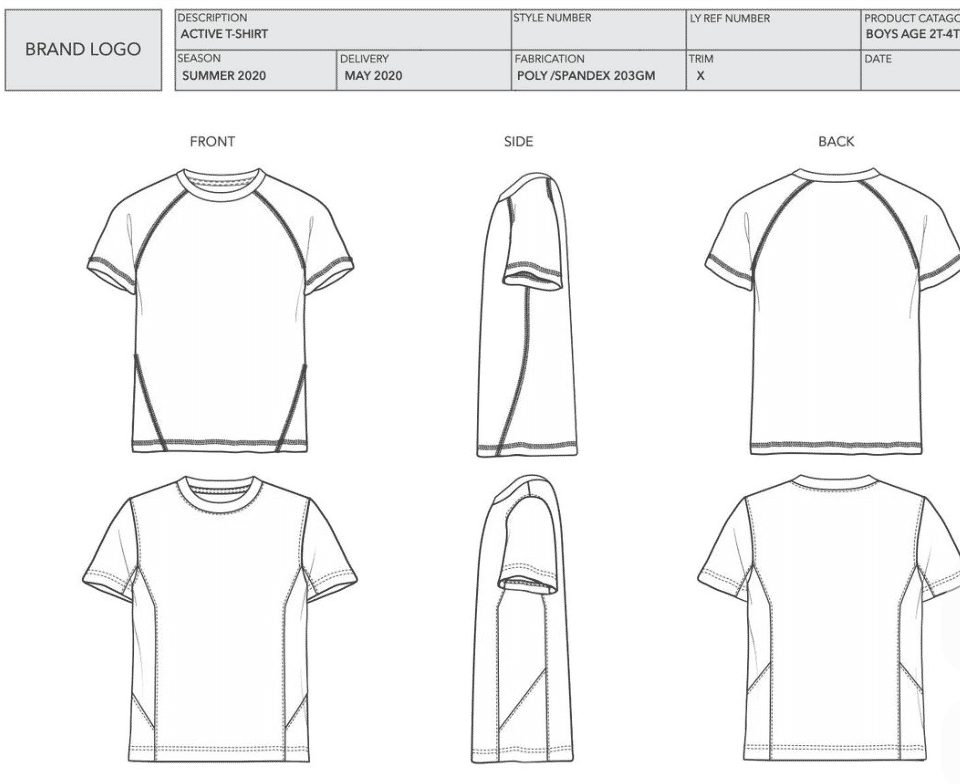
Hire one when your design is finished and your next conversation is with a factory. A tech pack is a production document, not a brainstorming tool. It's the specification a manufacturer uses to build, price, and quality-check your garment. A competent pack contains roughly eight sections, from flats and measurements to construction and bill of materials.
If you're still moving pockets around, you're too early. The point of the document is to lock decisions, not host them. A tech pack communicates every construction detail a factory needs to produce your garment consistently across a run (Sewport, 2023). Hire when three things are true: the fit is settled, you've chosen fabric and trims, and you intend to order more than a one-off. Before that, you're paying a designer to guess.
In my experience running factories, the packs that cause the most grief aren't the amateur ones. They're the half-finished ones from clients who hired too early, then kept emailing changes after the pattern was cut. If you're unsure what the document even is, read what a tech pack is first, then come back.
What are the four ways to get a tech pack made?
Four routes exist: an in-house designer, a freelancer, a dedicated tech pack service, or an AI generator. Pick by risk and complexity, not price. Marketplace rates for tech pack work have been observed anywhere from $3 to $150 per hour (Cad Crowd, 2026), so the label "tech pack designer" covers wildly different skill levels.
A simple tee with a proven fit can survive a template or AI-built pack. A structured jacket with linings, interfacing, and a grade across five sizes needs a human who's produced one before. Here's the honest version of the decision. Software and AI tools are cheap and fast, but they don't own the outcome when a factory rejects the file. A freelancer can be excellent or a liability, and you often can't tell which until the sample arrives. A full service costs more up front and removes the guessing. An in-house hire only pays off at volume. Match the route to what a mistake would cost you.
An in-house designer
An in-house designer sits on your team and costs roughly $55,000 to $85,000 a year (Adstronaut, 2026, a vendor selling AI packs). That math only works once you're releasing styles most months. For one or two products a year, you're paying a full salary to sit idle between drops. The upside is continuity: someone who already knows your fit blocks, your factories, and your revision history. The downside is a fixed cost and a single point of failure the day they quit.
A freelancer
A freelancer is hired per project or per hour, and the quality swings hard. A vetted one who's actually produced garments is often the best value for a mid-complexity style. The catch is that you rarely know which kind you've hired until the sample lands on your desk. Scope creep is the other trap. An open hourly meter with no defined deliverable turns every revision into an unbounded bill, and the meter runs longest on the packs that were vague to begin with.
A dedicated tech pack service
A service delivers a fixed scope with defined revisions, so you're buying an outcome instead of someone's time. It costs more up front than a template fill-in or an AI export. What that premium buys is the guessing removed: factory-acceptance, grading, tolerances, and a named party who fixes the file when a manufacturer pushes back. It fits production-bound styles best, the ones where a single rejection would cost more than the whole document. For a one-off hobby piece, it's overkill.
An AI generator
AI tools are the cheapest and fastest route, and they're genuinely useful for a simple tee with a settled fit. Type in your measurements, export a file, move on. Where they fall down is structured garments, real grading, and defensible tolerances. The file looks complete and reads thin. No generator owns the outcome when a factory rejects the export, and no software defends your spec to a pattern maker who's found a seam that won't sew. Treat AI as a first draft, not a final pack.
| Criterion | In-house | Freelancer | Software / AI | Full service |
|---|---|---|---|---|
| Cost per style | Salaried, ~$55k to $85k/yr | $100 to $2,000+ | $3 to $25 (vendor-quoted) | Fixed, e.g. $299 |
| Factory-acceptance track record | High if hire is experienced | Varies widely | None, you own the risk | Built into the offer |
| Grading and tolerances | Depends on the hire | Depends on the person | Weak or absent | Standard practice |
| Revisions in scope | Unlimited, in-house | Negotiated hourly | Self-serve, no expert | Defined, included |
| Best for | High-volume brands | Mid-complexity, vetted vendor | Simple styles, tight budget | Production-bound, complex fit |
The freelancer figures ($100 to $2,000+ per style), AI figures ($3 to $25 per style), and in-house salary range ($55,000 to $85,000 per year) come from Adstronaut, a vendor that sells AI-generated tech packs, so read their AI numbers as a seller's floor, not a neutral benchmark.
What separates a good tech pack designer from a cheap one?
A good one has produced garments and can prove a file passed inspection at a factory. That's the whole test. A cheap one sells you drawings. A competent one sells you a document that survives contact with a cutting table, a pattern maker, and a quality inspector working to an acceptable quality limit. The most common AQL sampling level used in apparel inspection is 2.5, with 1.0 for higher-risk items and zero tolerance for critical defects (QIMA, 2024).
Ask four questions. Have you produced garments, not just designed them? Can you grade across a size range? What are your measurement tolerances, and where do they come from? And what happens when the factory sends questions? A designer who can't answer the tolerance question is guessing, and the factory will guess too. Grading competence, the ability to scale a pattern across sizes correctly, is the skill most buyers never check and most rejections trace back to.
Here's the part nobody tells you. The flat sketch is the easiest thing in the pack to fake and the least predictive of production success. Grading follows published standards like ASTM D5585-21 for women's figure types, maintained by ASTM Subcommittee D13.55 (ASTM). If a designer treats grading as an afterthought, the pretty sketch won't save your run.
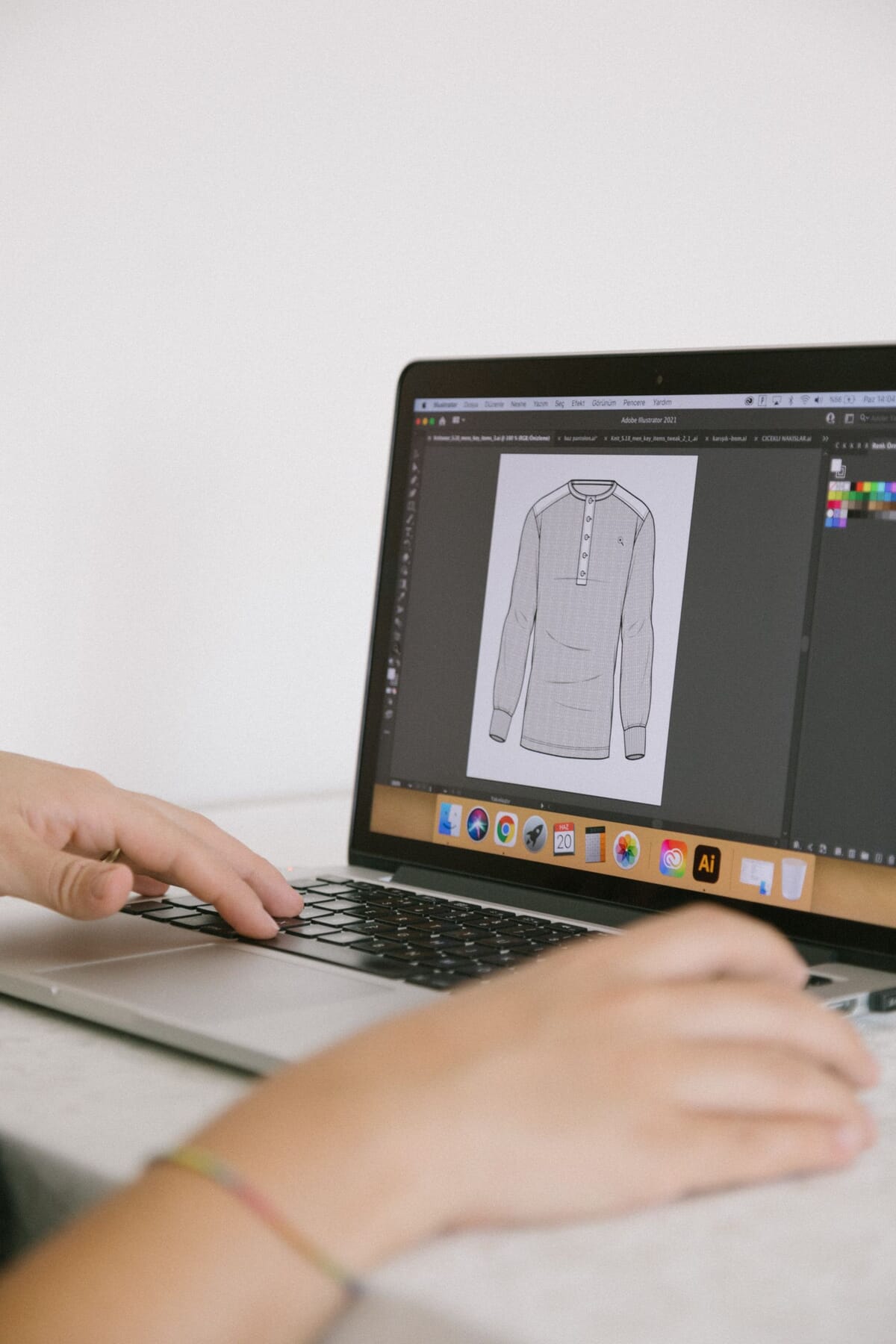
A good designer's output looks boring in the best way: consistent callouts, a full measurement spec with tolerance columns, a complete bill of materials, and construction notes a stranger could follow. If you want to see the difference between that and the usual mess, our guide to common tech pack mistakes shows what a weak designer actually produces.
Production experience over pure design
The strongest single signal is whether they've produced garments, not just designed them. A design-school portfolio proves someone can render a clean flat. It says nothing about whether their spec survives a cutting table, a pattern maker, and a quality inspector. Ask a blunt question: what have you put into production, and how did it come back from the factory? A designer who's felt a run go wrong writes tighter specs than one who's only ever pushed pixels.
The right fit for your garment category
Category fit matters more than buyers expect. A designer fluent in knit tees may struggle with tailored outerwear, and the reverse is just as true. Structured garments carry linings, interfacing, fusible placements, and construction sequences that a jersey specialist rarely touches. Match the track record to your actual product, not to a generic "apparel" label. A great denim spec and a great swimwear spec come from different heads, and the wrong match shows up first at the sample stage.
Factory-communication skill
A tech pack is a conversation with a factory, not a monologue you file and forget. The best designers write callouts a stranger in another timezone can follow without a phone call. They also answer fast when a manufacturer emails ten questions about a single seam. Ask a candidate how they handle factory pushback, because that back-and-forth is where a good pack gets fixed and a weak one gets abandoned. Silence from the freelancer at that stage is what turns a delay into a dead order.
What are the red flags in a tech pack designer?
The biggest red flag is a gorgeous portfolio with no measurement tolerances anywhere in it. Tolerances are the numbers a factory is allowed to vary within, and their absence means the designer has never been held to a real inspection. AQL sampling exists precisely because no production run is perfect, and a spec without tolerances gives the inspector nothing to measure against (QIMA, 2024). Pretty pictures don't pass inspection. Numbers do.
Watch for these. Can't or won't grade across sizes. No factory or production experience, only design school work. Charges strictly per hour with no scope, so revisions become an open meter. Won't show a full measurement spec from a past project. And avoids talking about what happens when a factory pushes back. Any one of these is survivable. Two together, and you're buying a rejection.
I've watched garments get rejected on the line more times than I'd like to admit, and the pattern is boring. The pack looked great in a PDF. It had no tolerances, the grade was guessed, and nobody had asked the pattern maker anything. The freelancer was long paid and gone. The brand ate the sample cost and the delay.
What should you send a designer, and how do you test one first?
Send more than a sketch. A designer can only specify decisions you've already made, so the quality of your pack tracks the quality of your brief. Hand over a real reference garment that fits the way yours should, your finalized flats or clear front-and-back sketches, the exact fabric and trims you've chosen, your full size range with the sample size flagged, and your target order quantity. Leave any of those blank and the designer fills the gap with a guess, which is the same failure that sinks a thin tech pack in the first place.
The reference garment matters most. A physical sample that fits correctly tells a designer more than three pages of adjectives, because they can measure it, photograph it, and watch how the fabric actually behaves. If all you have is a rendered image, say so, and expect more questions and a slower first draft.
The clients whose packs come back clean are almost always the ones who sent a garment, not a mood board. When a brief arrives with a real sample attached, I can quote it and spec it in a fraction of the time, because there's nothing left to assume.
Then test before you commit. Ask for one artifact: a complete measurement spec with a filled tolerance column from a past project. A flat sketch proves almost nothing, because flats are the easiest part of the document to make look good. A graded spec with tolerances is the thing a factory actually cuts against, and grading follows published standards like ASTM D5585-21 for women's figure sizing. If a designer can't show you one, they've never been held to a real inspection, and your run will be their first.
The cheapest insurance is a small paid test. Commission one simple style before you hand over a whole range. You'll learn more from how a designer handles a single tee than from any portfolio: the questions they ask up front, whether they push back on a fit that won't sew cleanly, and how they document a tolerance. A designer who interrogates your brief early is worth far more than one who quietly accepts a vague one and bills for the revisions later.
Pin the scope in writing before any money moves. The open-ended hourly arrangement is where budgets die, so agree what a complete pack includes, how many revision rounds you get, and what happens if the factory rejects the file. A designer confident in their work defines that scope happily. One who resists it is showing you how the invoice will grow.
What should a tech pack cost?
A standard tech pack costs $500 to $2,000 and takes five to twenty hours (Guru, 2022). Below that, you're usually buying a template fill-in or an AI export with no expert on the hook. Above it, you're paying for complexity or for a name. The spread is real: observed marketplace rates run from $3 to $150 per hour (Cad Crowd, 2026), so the hourly number alone tells you almost nothing about quality.
.jpeg?w=1200&format=optimal)
Route by route, the picture is clearer. Freelancers land at $100 to $2,000+ per style, AI tools at $3 to $25 per style, and an in-house designer costs $55,000 to $85,000 per year (Adstronaut, 2026, a vendor selling AI packs). Our full tech pack cost breakdown walks through each route. The question isn't which is cheapest. It's which one still owns the outcome when the factory says no.
Does a cheap tech pack really cost more?
Often, yes. A cheap pack that skips tolerances and grading pushes the cost downstream, into extra sample rounds and failed inspections. Apparel inspection commonly runs to an acceptable quality limit of 2.5, tightening to 1.0 for higher-risk items and zero tolerance for critical defects (QIMA, 2024). Every rejection against that limit is a re-sample, a re-inspection, and a delay you end up paying for twice.
Do the math on a real order. Say a weak pack costs $150 and a solid one costs $500. The $350 you saved vanishes the first time a factory cuts a wrong measurement, sews a sample you have to reject, and waits two weeks for corrected specs before it recuts. Each extra sample round burns real money in fabric, labour, and shipping. Then add the opportunity cost of a launch that slips a month because the document wasn't right the first time.
The expensive failures all share a shape. A tolerance nobody set means the inspector has nothing to measure against, so borderline units either ship or the whole lot gets held. A grade nobody checked means half your size run fits wrong. A bill of materials with no placements means the factory sources the wrong trim. None of these show up in a pretty PDF. All of them show up on an invoice later.
I've watched a $200 pack turn into a four-figure problem more than once. The brand saved on the document, then paid for three sample rounds and a delayed drop while we chased corrections the spec should have carried from day one. The cheapest line item on the project quietly became the most expensive decision on it.
Should you DIY or hire? A quick decision framework
Decide by complexity and stakes. DIY a tech pack when the style is simple, the fit is proven, and a rejection would cost you little. Hire the moment any of those flips. A complete pack carries eight sections: flat sketches, bill of materials, measurement specs, cost sheet, size gradings, colorways, construction notes, and revision history. Each one is a place a first-timer can quietly go wrong.
Map it on two axes. On one, how complex is the garment: a basic tee versus a lined jacket. On the other, how much rides on the order: a 30-unit test versus a 2,000-unit production run. Low complexity and low stakes is the honest DIY quadrant. Push either axis up and you want someone who owns the outcome, because the cost of getting it wrong now outweighs the cost of the pack.
Be honest about the middle. A simple garment headed for a big run still needs correct grading, because one fit error multiplies across every unit you make. A complex garment in a tiny test batch can sometimes survive a rougher pack, since you'll catch problems before volume. The real trap is a complex garment and a large run handled by a first-time DIY document. That's where the downstream costs from the last section pile up fastest.
Here's the counterintuitive part. Volume usually matters more than complexity when you're choosing. A boxy tee at 3,000 units punishes a bad grade far harder than a structured jacket at 40 units, because the error repeats three thousand times over. Most buyers fixate on how hard the garment looks to draw and badly underweight how many times a single mistake gets copied down the line.
Where a full service fits, and when it's worth it
A full service is worth it when a rejected sample would cost you more than the pack itself. That's most production-bound orders. You're not just buying pages. You're buying someone who owns factory-acceptance, grades correctly, includes revisions in scope, and answers the factory's questions so you don't have to. For apparel specifically, that means a designer who knows garment construction, not a generalist drafting a diagram.
This is the honest case for GarmentSpec's tech pack service. It's a fixed $299 per style, built by apparel specialists, and delivered factory-ready with grading and tolerances included. No hourly meter, no guessing about scope. If your style is simple and your budget is thin, a DIY tech pack template or an AI tool may be the right call, and we'll say so. But if a bad sample would set you back weeks and a manufacturing run, a fixed-price specialist pack is the cheaper option once you count the rejections you avoid.
Frequently asked questions
What is a freelance tech pack designer, and how is that different from a service?
A freelance tech pack designer is an individual you hire per project or per hour, with quality that swings widely. Observed rates run from $3 to $150 per hour (Cad Crowd, 2026). A tech pack company or service delivers a fixed scope with defined revisions, so you're buying an outcome rather than someone's time.
How much should I pay a tech pack maker per style?
Budget $500 to $2,000 for a standard pack, reflecting five to twenty hours of work (Guru, 2022). AI tools quote $3 to $25 per style, but a vendor selling those tools sets that floor (Adstronaut, 2026). Price against what a rejected sample would cost you, not the invoice alone.
Can an AI tech pack creator replace a designer?
For a simple, proven style on a tight budget, an AI tech pack creator can produce a usable file. For structured garments, grading, and real tolerances, it can't own the outcome when a factory rejects it. AQL inspection uses defined limits like 2.5 (QIMA, 2024), and software won't defend your file to a pattern maker.
What's the single most important skill to check for?
Grading, the ability to scale a pattern correctly across sizes. It follows published standards such as ASTM D5585-21, maintained by Subcommittee D13.55 (ASTM). Most rejections that reach a production line trace back to a grade or a tolerance nobody checked, not to the flat sketch everyone stares at.
Do I need a tech pack before contacting a factory?
Yes, if you want an accurate quote and a consistent run. A tech pack is the production document a factory prices and builds from, covering roughly eight sections. Without one, you're asking a manufacturer to guess your garment, and their guess rarely matches yours.
What should I hand a tech pack designer to get a good result?
Send a real reference garment that fits correctly, your finalized flats, the exact fabric and trims, your full size range with the sample size flagged, and your target quantity. A tech pack communicates every construction detail a factory needs to build consistently (Sewport, 2023), so anything you leave blank becomes a guess the designer has to make for you.
Is it cheaper to hire in-house or use a freelance tech pack designer?
For one or two styles a year, a freelancer is far cheaper. Observed freelance rates run from $3 to $150 per hour (Cad Crowd, 2026), and you pay only when you have work in front of them. An in-house designer only pays off once you're releasing styles often enough to keep a full salary busy between drops.
Can I DIY my first tech pack?
Yes, for a simple style with a proven fit and a small order, a careful DIY pack can work. A tech pack communicates every construction detail a factory needs (Sewport, 2023), so the risk climbs sharply with complexity and volume. For a structured garment or a large run, a wrong grade repeats across every single unit you make.
Peter Midea is GarmentSpec's technical lead for brand development.
We build the factory-ready spec a manufacturer can quote from without a single question: technical flats, bill of materials, graded points of measure with tolerances, colorways and construction notes. $299 per style, 3 to 5 working days, 2 to 3 revision rounds.
Get your tech pack — $299Start with the free templateWe don't take your production. The spec is yours to send to any factory, anywhere. Talk to us first if you're not sure what you need.
Sources
Every statistic and definition in this article traces to one of the following. Each is listed once here, and cited inline where it is used.