Contents
- What does a size spec template look like?
- What is a size spec?
- How do you set the body measurements?
- How should you name sizes?
- How does ease link the spec to a garment?
- How does the size spec relate to grading and…
- What should the published size chart show?
- How do you handle several categories?
- How do you test a size spec before committin…
- How does sizing affect stock?
- What goes wrong most often?
- Frequently asked questions
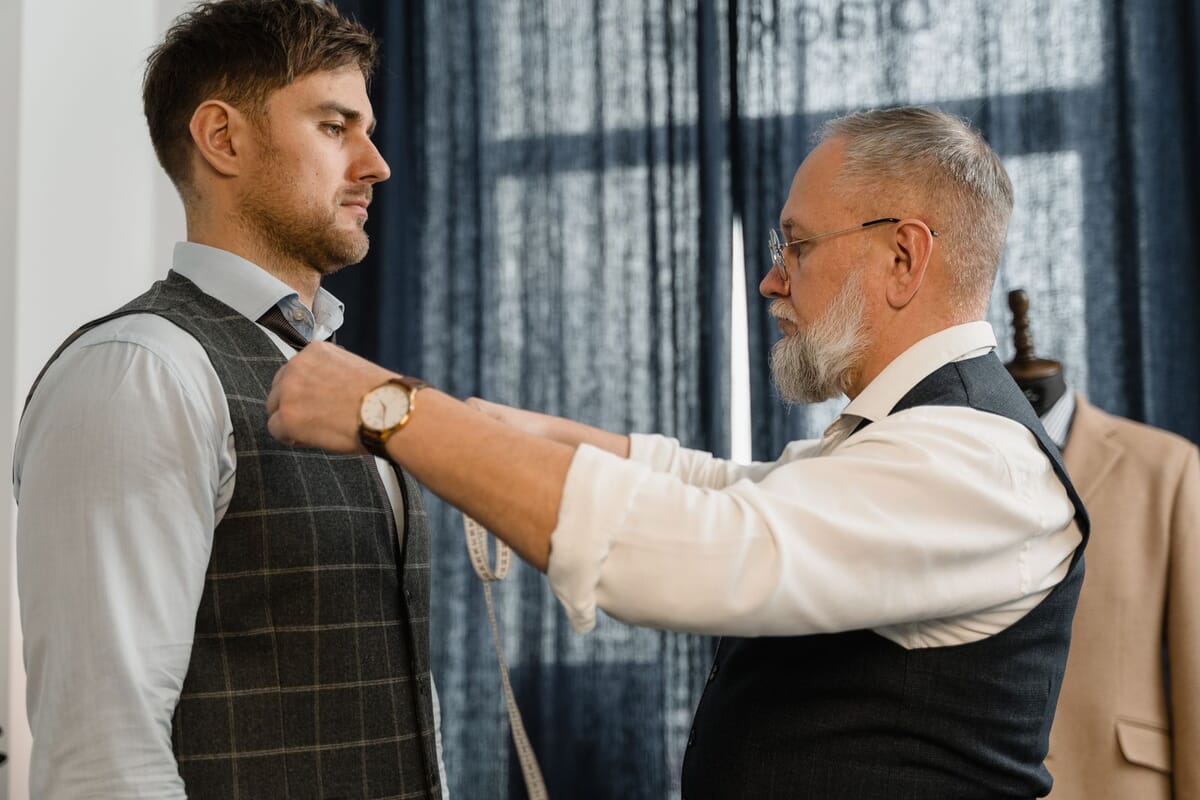
A size spec is the document that defines what your sizes mean. Not what one garment measures, but which body each size is meant to fit, what each size is called and how it relates to the systems customers already know. It is written once for the brand rather than once per style, and many brands never write it down at all.
This guide covers what a size spec contains, how to set body measurements per size, how to name sizes, how ease links the spec to garment measurements, and how to keep your published size chart consistent with production. For grade rules and increments, see our grading chart template; for how to measure a garment, our guide to measuring a garment.
Key Takeaways
- A size spec defines bodies. A garment measurement chart defines garments. They are different documents.
- The gap between them is ease, and ease is a design decision per style.
- Write the size spec once for the brand, then grade every style to it.
- Size names are labels; body measurements are the definition. Publish both.
- Generate the published size chart from the same numbers as production, not separately.
What does a size spec template look like?
One row per size, one column per body measurement, plus a height range.
| Size | Chest / bust | Waist | Hip | Height |
|---|---|---|---|---|
| XS | 82 | 64 | 88 | 160 to 166 |
| S | 88 | 70 | 94 | 163 to 169 |
| M | 94 | 76 | 100 | 166 to 172 |
| L | 100 | 82 | 106 | 169 to 175 |
| XL | 106 | 88 | 112 | 172 to 178 |
| 2XL | 112 | 94 | 118 | 175 to 181 |
Illustrative format in centimetres. These are body measurements, taken on a person, not garment measurements. The values show the structure; they are not a size standard to adopt.
Add the body measurements your categories need: trousers need a hip position and inside leg, dresses a back length, and so on. If you sell into markets that expect numeric or regional sizes, add a column for each conversion you are prepared to stand behind, and check it against garments sold in that market rather than copying a generic table.
What is a size spec?
A brand-level definition of which body each size is meant to fit.
It describes bodies, not garments
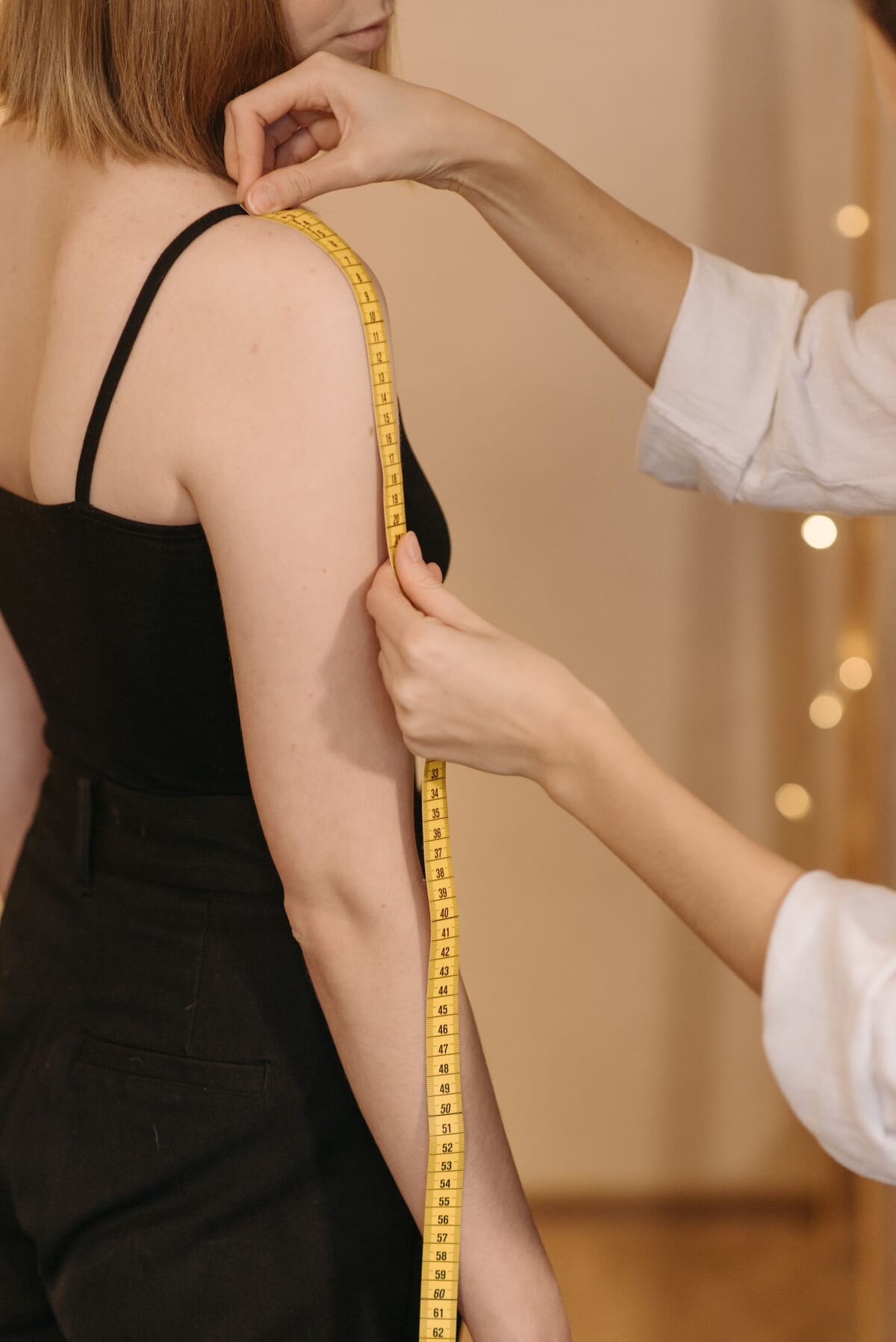
Every number in a size spec is a body measurement, taken on a person rather than on a garment lying flat. Confusing it with a garment measurement chart produces a size range that fits nobody as intended, because the ease designed into each style disappears from the calculation.
It applies to the whole range
Every style is graded to the same spec, which is what makes a medium mean the same thing across your catalogue. Styles developed against separate assumptions produce a range where customers cannot predict their own size, which shows up in exchanges and returns.
It is a commercial decision
Choosing which bodies your sizes serve, and how many sizes you offer, is a decision about who your customer is. Make it deliberately and early rather than inheriting it from whichever factory graded your first style.
It should change rarely
Customers learn their size in your brand and expect it to stay valid. Change the spec only with a reason, and say so when you do.
How do you set the body measurements?
From your actual customers, benchmarked against published references.
Start from a reference standard
Sizing standards give a defensible starting point. The European standard EN 13402, for example, labels clothes by body dimensions in centimetres, with chest girth as the primary dimension for men's tops and bust girth for women's. A standard describes a population, not the people who buy from you, so treat it as a baseline.
Benchmark brands your customers already wear
Measuring garments from brands your customer already owns tells you what they are used to, which is what they will compare you against. Being noticeably smaller or larger than that reference produces returns even when your own sizing is consistent.
Use your own returns data
Once you have sold anything, exchange and return reasons are the most honest sizing research you have. A cluster of size-up exchanges in one size is a specific signal, not an opinion.
Don't chase vanity sizing
Labelling a larger garment as a smaller size flatters a customer once, then costs their trust when the next product fits differently. Traditional size labels have already drifted over time, which is part of why standards based on body measurements exist.
How should you name sizes?
Pick one system, publish what each size means, and stay with it.
- Letter sizes (XS to 2XL) are easy to understand and carry no fixed definition, so they mean whatever your chart says. That works as long as the chart is published and honoured.
- Numeric or regional sizes carry expectations customers bring from other brands. If you use them, benchmarking against the market is not optional.
- Conversions belong in the chart. If you show equivalents for other markets, put them next to the body measurements so customers can check them.
- Start with fewer sizes. Each size is more stock and more risk. Extend the range when demand shows you where.
A size spec is a brand-level document that lists the body measurements each size is meant to fit, such as chest or bust, waist, hip and height. It is written once and every style is graded to it. Garment measurements in a tech pack are different: they describe the finished garment, and the difference between the two is the ease designed into each style.
How does ease link the spec to a garment?
Ease is the difference between the body measurement and the garment measurement.
It is designed per style
A fitted shirt might carry a few centimetres of ease at the chest and an oversized sweatshirt far more, and both are right for what they are. Ease is where the design intention lives, and it is why the same body measurement produces different garment measurements across your range.
Do the arithmetic on the full girth
Garment points in a tech pack are usually half measurements taken flat: our how to measure garments guide measures the 1/2 chest straight across, 2.5 cm (1 in) below the armhole, so a 1/2 chest of 54 cm is a 108 cm chest all round. Body measurements are full girths. Compare like with like: a 94 cm body chest in a style with 14 cm of chest ease needs a 108 cm garment chest, which is a 54 cm 1/2 chest on the spec.
Keep it deliberate and usually constant
Ease that emerged from a pattern rather than being chosen varies unpredictably between styles. In most ranges the same ease applies in every size, so garment measurements grade in step with body measurements; ease that grows with size is how larger sizes end up unintentionally oversized.
Fabric changes the right amount
A stable woven needs more ease than a stretch jersey for the same fit, because the fabric itself gives none. Woven ease applied to a stretch garment produces something noticeably loose.
How does the size spec relate to grading and the tech pack?
The spec sets the target; grading and the measurement chart implement it.
- Body plus ease equals garment. Stating that relationship in the pack makes both documents checkable: when a garment measurement looks wrong, this is the arithmetic that says whether it is.
- Grading follows the spec. Grade increments should carry the differences between sizes in your size spec, not be chosen separately. Our grading chart template covers how grade rules are written.
- Every point carries a tolerance. Commonly plus or minus 0.5 to 1 cm on body measurements and tighter on small details such as a neck rib, as on our measuring guide.
- Both need dates. The size spec changes rarely and measurement charts change often. A chart graded to an old version of the spec is a quiet and expensive error.
Our free tech pack templates for eight garments each include a points-of-measure page with a tolerance column, and a CSV spec sheet covers sizes XS to 2XL. To turn a base size into a graded chart, try the free size chart generator.
What should the published size chart show?
Body measurements, garment measurements or both, clearly labelled.
- Body measurements help customers choose: they measure their own chest and waist and find them on the chart.
- Garment measurements help customers compare: they measure something they already own and like.
- Say which is which. A chart that does not say whether its numbers describe the body or the garment causes confusion that one line of text would prevent.
- Add a fit description. Fitted, regular or oversized, with a recommendation to size up or down where it applies. Many shoppers read the words before the table.
Generate the published chart from the approved size spec rather than writing it separately for the website. Two charts maintained by different people drift apart, and the gap arrives as returns.
How do you handle several categories?
One body standard, different ease and different points.
Tops, trousers and dresses fit the same customers, so grade them against the same body measurements; the garment measurements differ because the ease and the relevant points differ. Trousers need waist, hip, thigh and rise, so add those body dimensions to the spec even if your first product is a t-shirt. Some categories, such as bras and tailoring, use their own sizing conventions for good reasons; publish a separate chart for them rather than forcing them into letter sizes. A unisex range graded to one standard fits some customers better than others, so say plainly whether to size up or down.
How do you test a size spec before committing to it?
On real bodies, across the range, before the second style exists.
- Fit the base size on several people who wear that size, not one. A base size approved on one person is tuned to one body.
- Sample the extremes. Grading shows its problems at the smallest and largest sizes; one sample at each end costs far less than finding the issue in a full run.
- Ask customers to measure themselves against your chart and tell you their usual size. It is unglamorous research and more useful than a general table.
- Measure a garment they already own in the size they usually buy. It turns an abstract sizing question into a concrete comparison.
How does sizing affect stock?
It multiplies every decision about depth. Demand is rarely even across sizes, so ordering the same quantity in every size tends to sell out the popular sizes and leave the rest. A style in three colours and six sizes is eighteen separately stocked items, each of which can run out. Base the size ratio of a reorder on what actually sold, not on the ratio you guessed for the first run.
What goes wrong most often?
- Mislabelled charts: garment measurements published as body measurements make every size look enormous.
- No spec at all: the brand still has one, inherited from whichever factory graded the first style, undocumented and different between styles.
- Sizes that drift between styles: each style graded to its own logic, so customers cannot trust their size.
- Half and full mixed up: a flat 1/2 chest compared with a full body chest makes the ease look negative.
- Too many sizes, too little depth: running out of the middle sizes while holding the ends.
Frequently asked questions
What is the difference between a size spec and a size chart?
A size spec is the brand's internal standard: the body measurements each size is meant to fit. A size chart is what customers see on the product page. Garment measurements in a tech pack are a third thing: the finished dimensions of one style. The size chart and the tech pack should both come from the size spec.
Should I publish body or garment measurements?
Either works if the chart says which it is, and publishing both serves the most customers. Body measurements let a shopper measure themselves; garment measurements let them compare with something they already own. The problem is publishing one while implying the other.
How many sizes should a first range carry?
Fewer than you think. Every extra size is more stock to buy and more ways to run out. Many small brands start with four or five sizes and extend the range later, when sales and returns show where the demand is.
Can I copy a competitor's size chart?
You can benchmark against it. Copying it wholesale means adopting their fit decisions without knowing what customers they were made for. Measure their garments, compare with your own fittings and then set your own standard.
Does the size spec go in every tech pack?
A reference to it does: the tech pack names the base size and the size range, and its graded points of measure implement the spec for that style. The standard itself lives as one brand document rather than being retyped in every pack.
Peter Midea is GarmentSpec's technical lead for brand development.
Send us your sample, sketch or reference and we spec it: technical flats, bill of materials, points of measure graded to your size standard with a tolerance on every line, colorways and construction notes. $299 per style, 3 to 5 working days, 2 to 3 revision rounds. Our team replies within 24 hours.
Get your tech pack, $299Open the size chart generatorWe don't take your production. The spec is yours to send to any factory, anywhere. Talk to us first if you're not sure what you need.
Sources
- EN 13402 (Wikipedia): European size labelling based on body dimensions in centimetres; chest and bust as primary dimensions for tops; traditional ad hoc size systems and vanity sizing.
- GarmentSpec, How to measure garments: half measurements taken flat, 1/2 chest position and tolerance guidance used in this article.
Related guides
- Grading chart template
- How to measure a garment for a spec
- How to fill in a tech pack template
- Tech pack mistakes
- What is a tech pack?