Contents
- What is a point of measure?
- How are points of measure organised in a tec…
- What are the standard points on a top?
- What are the standard points on bottoms?
- How many points does a garment need?
- How do you build a POM list for a new garmen…
- What makes a point of measure well defined?
- How do points of measure relate to grading?
- How are points of measure used at inspection…
- Do conventions differ between factories?
- Frequently asked questions
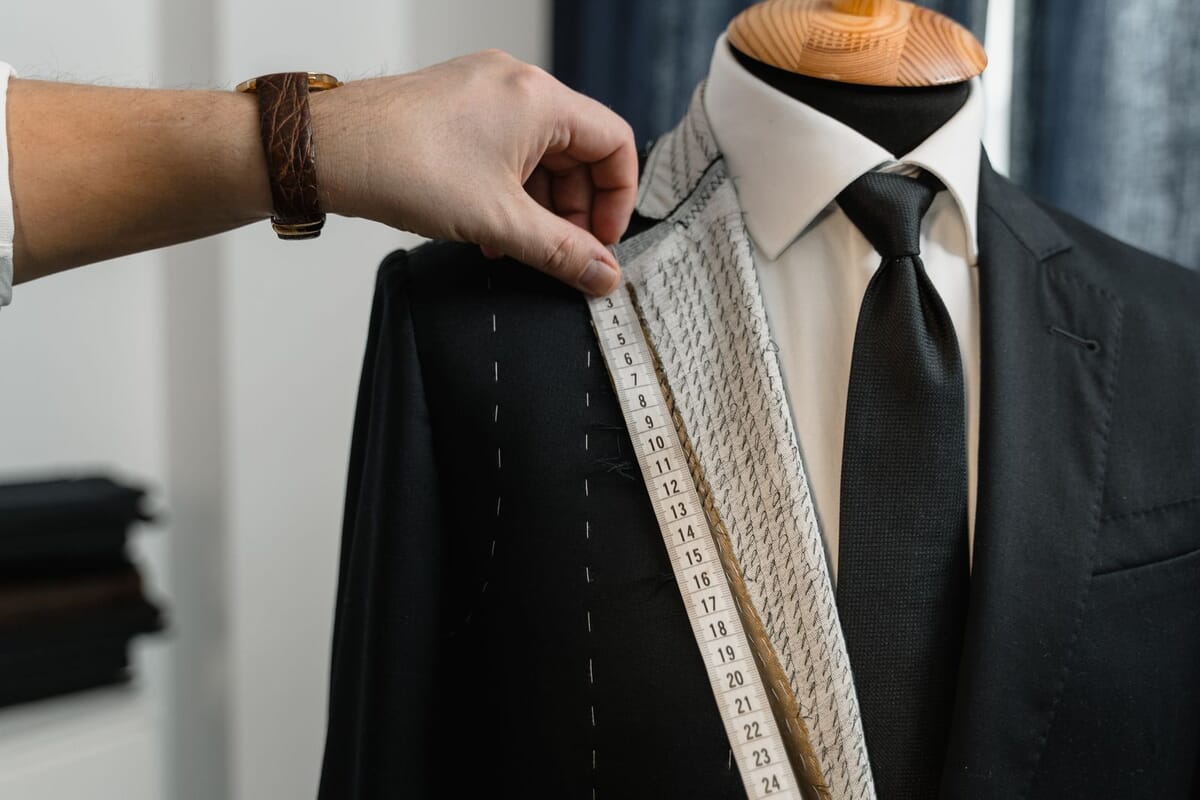
Points of measure, usually shortened to POM, are the defined points on a garment where a measurement is taken and recorded. They are the vocabulary of a tech pack's measurement chart, and the reason a factory can read your spec without sharing your language.
This guide covers what a POM entry contains, how points are coded and organised, the standard lists for common garments, how to build a list for a new garment and how many points you need. For the measuring method itself (where the tape starts, how to lay the garment flat, what tolerance each point needs), see our guide on how to measure a garment for a spec.
Key Takeaways
- A point of measure is a defined location and method, not just a number.
- Every POM needs a code, a name, a written how-to-measure and a tolerance.
- Start from the standard list for the garment type, then add every feature your garment has.
- Too few points is the usual problem: a point you leave out is a decision the factory makes for you.
- Use the same codes and definitions across every style in your range.
What is a point of measure?
A named, coded location on a garment where one measurement is taken in a stated way. Our how to measure garments guide defines it as one measurement with a code, a name, a written how-to-measure and a tolerance, for example "B, body length from HPS".
It is a location, not a number
The measurement is the value; the point of measure is where and how that value is taken. Two charts with identical numbers describe two different garments if their points are defined differently, which is why the definition matters more than the figure next to it.
It carries a code
Points are coded so they can be referenced on the flat, in the chart and in inspection reports without ambiguity. Letters (A, B, C) and numbers (1, 2, 3) both work; what matters is that the code means the same point every time. A code also survives translation in a way a name does not.
It carries a method
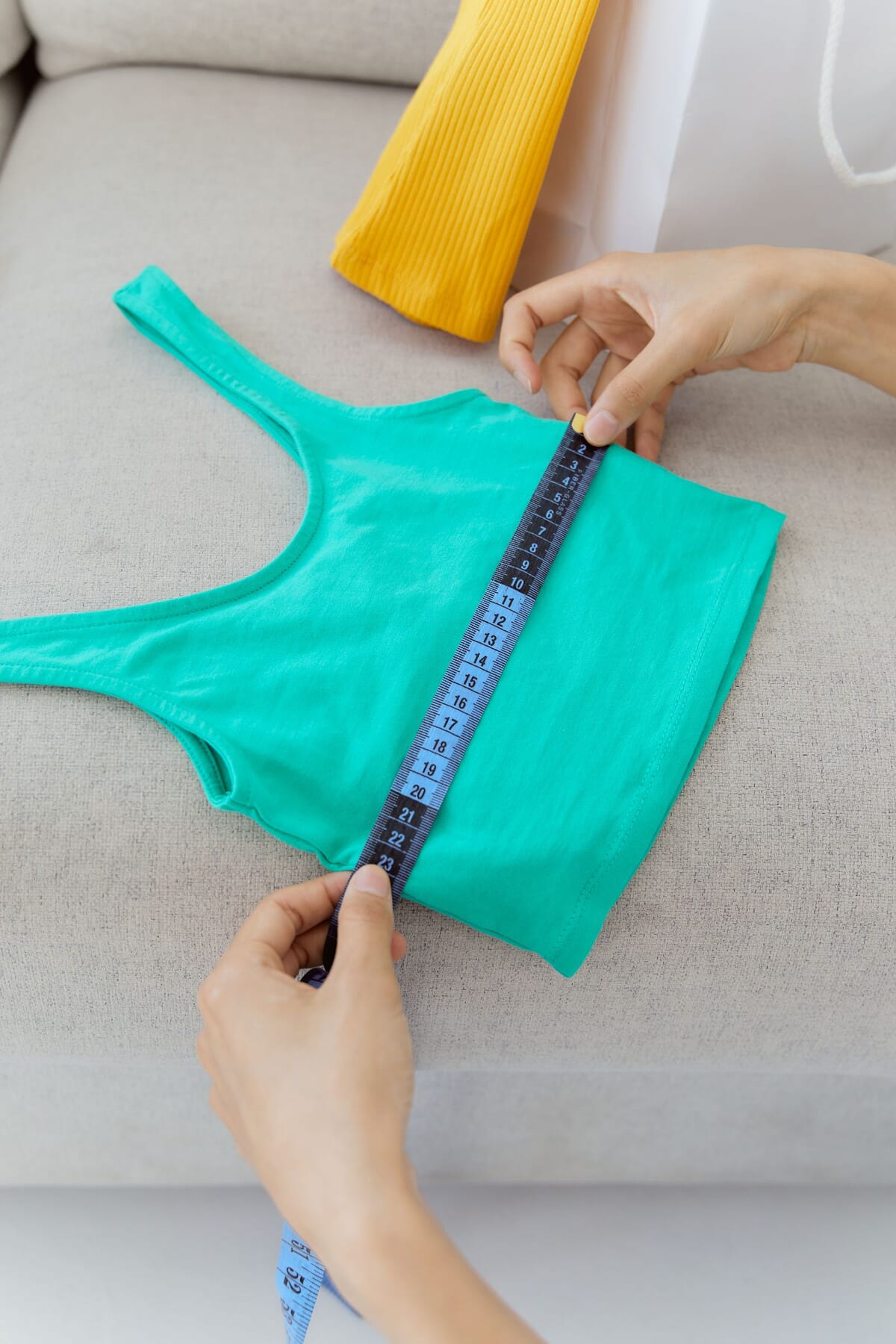
Where the measurement starts and ends, whether the garment is measured relaxed or extended, and whether the value is half or full. Factories measure garments flat, edge to edge, so widths are usually half measurements: a 1/2 chest of 54 cm is a 108 cm chest all round. Say which in the POM name.
It carries a tolerance
Each point has an acceptable range, set by how critical it is. A common starting point is plus or minus 0.5 to 1 cm on body measurements, and tighter on small details such as a neck rib. The tolerance belongs to the point rather than to one size, so it sits in its own column and applies across the row.
A point of measure (POM) is one defined measurement on a garment: a code, a name, a written how-to-measure and a tolerance, such as "B, body length from HPS". Widths are usually half measurements taken flat, so a 1/2 chest of 54 cm means 108 cm all round. Tolerances commonly start at plus or minus 0.5 to 1 cm on body measurements and are tighter on small details.
How are points of measure organised in a tech pack?
In one table, coded and grouped, with the codes drawn on the technical flat.
- Rows are points, columns are sizes. Points run down the left, sizes across the top, the value at each intersection and a tolerance column alongside. Quality control works from this table, so keep one authoritative version.
- Codes are drawn on the flat. Each code appears as a labelled line on the technical flat, showing where the measurement starts and stops. A factory then sees where point B is taken instead of interpreting a sentence in a second language.
- Grouped by area. Body first, then sleeve, neck and details, so whoever measures can work through the garment in order.
- Consistent across your range. The same code and definition for the same point on every style means a factory learns your conventions once, and your own measurements stay comparable from season to season.
| POM | Point of measure | S | M | L | Tol ± |
|---|---|---|---|---|---|
| A | 1/2 chest, 2.5 cm below armhole | ||||
| B | Body length from HPS | ||||
| C | Shoulder width | ||||
| D | Sleeve length |
Layout only: the first rows of the t-shirt chart on our measuring guide, with values left blank. Our free tech pack templates for eight garments each include a POM page in this layout, and a CSV spec sheet covers sizes XS to 2XL with a tolerance column.
What are the standard points on a top?
Chest, body length, shoulder, sleeve length, sleeve opening, armhole, hem and neck. These are the points our measuring guide uses for a t-shirt:
| Code | Point | How it is measured |
|---|---|---|
| A | 1/2 chest | Side seam to side seam, 2.5 cm (1 in) below the armhole |
| B | Body length from HPS | From the high point shoulder straight down to the hem edge |
| C | Shoulder width | Across the back, shoulder point to shoulder point |
| D | Sleeve length | From the shoulder point along the top fold to the sleeve hem |
| E | 1/2 sleeve opening | Straight across the sleeve hem, edge to edge |
| F | Armhole, straight | Shoulder point to underarm point in a straight line |
| G | 1/2 hem | Straight across the bottom edge, relaxed |
| H | Neck width | HPS to HPS, at the inside edge of the neck rib |
| I | Front neck drop | From a ruler laid HPS to HPS, straight down to the front neck seam |
Variations by style
- Hoodie: sleeve length including the cuff, 1/2 cuff and 1/2 hem rib measured relaxed, hood height, pouch pocket width.
- Shirt: collar length (button centre to buttonhole end), body length at centre back, cuff length buttoned.
- Dress: 1/2 bust, 1/2 waist, 1/2 hip at a stated distance below the waist, length from HPS, strap or shoulder width, 1/2 sweep along the hem.
- Fitted wovens: across front and across back, taken a stated distance below the shoulder point, where fit through the upper body matters.
- Details: pocket size and placement, cuff depth, collar point, placket width. These make a chart specific to your garment, and a factory cannot guess them.
What are the standard points on bottoms?
Waist, hip, rise, inseam, outseam, thigh, knee and leg opening. Our measuring guide lists these for jeans and pants:
| Code | Point | How it is measured |
|---|---|---|
| A | 1/2 waist | Buttoned, laid flat, along the top edge of the waistband |
| B | 1/2 hip | Straight across at the distance below the waist your spec states |
| C | Front rise | From the top of the waistband at centre front to the crotch seam, following the seam |
| D | Inseam | From the crotch seam along the inside leg seam to the hem |
| E | Outseam | From the top of the waistband along the side seam to the hem |
| F | 1/2 thigh | Straight across the leg, 2.5 cm (1 in) below the crotch |
| G | 1/2 knee | Straight across at the knee line your spec states |
| H | 1/2 leg opening | Straight across the hem, edge to edge |
- Elasticated or drawstring waists need both relaxed and extended values. One figure describes neither state.
- Hip and knee need their reference distance, or the number cannot be compared between your chart and the factory's inspection.
- Back rise is worth adding for trousers where seat fit matters; front and back rise together shape how a trouser sits.
- Leggings add waistband height and a relaxed 1/2 waist, with a stretched value if your spec needs one.
How many points does a garment need?
Enough that nothing a customer would notice is left undefined.
- Simple garments need fewer. The core lists on our measuring guide run to seven to nine points per garment for a t-shirt, hoodie, jeans, shirt, dress and leggings.
- Structured garments need many more. A lined jacket with several pockets, a collar, a closure and shaped panels has dimensions on every one of those parts.
- Every visible or usable feature needs at least one. Pockets, cuffs, collars, plackets, hoods and vents are often left unmeasured, and then they are built to whatever the factory's own block carries.
- Too few is the usual problem. Each missing point moves a decision from you to whoever makes the pattern, and you only find out when the sample arrives.
How do you build a POM list for a new garment?
Start from the standard list for the type, then add every feature your garment has.
- Take the standard list as the floor. Starting from the list for the garment type, rather than a blank page, prevents the usual omissions.
- Walk the physical garment. Body, then sleeves, then neck, then every detail. Anything you can point at and call a feature needs at least one point.
- Ask what a customer would notice. Pocket placement passes that test; the width of an internal facing usually does not.
- Write the method and tolerance for each point, and draw it on the flat with its code.
- Ask the factory what is missing. Send the chart with the flat and ask which points they would otherwise decide themselves.
What makes a point of measure well defined?
Someone who has never seen your garment could measure it and get your number.
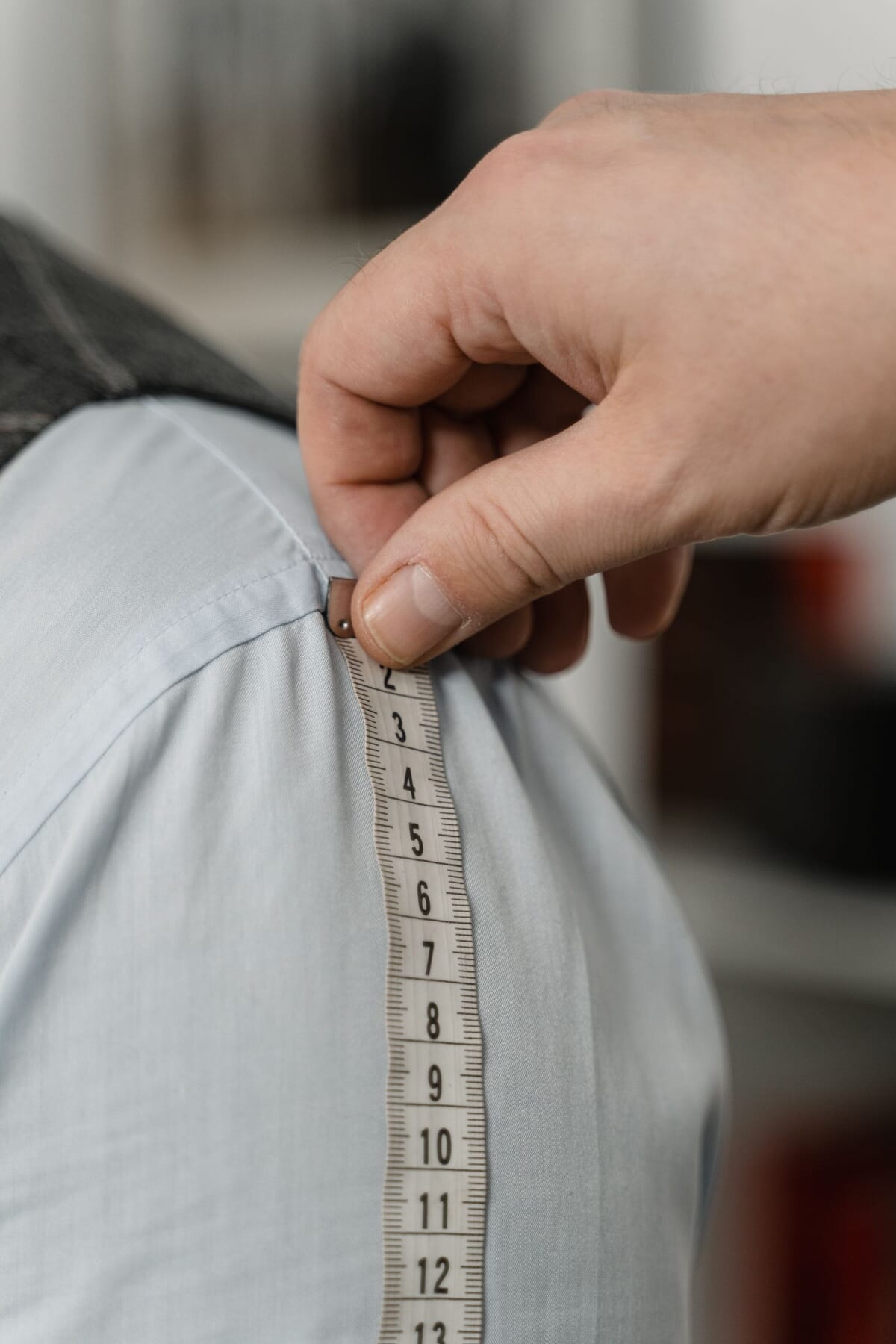
- The start and end are unambiguous. Name the feature it starts from, such as the HPS or the shoulder point, and draw it on the flat.
- The condition is stated: relaxed or extended, half or full, before or after washing. Each changes the number.
- It is drawn, not only described. A labelled line on the flat is harder to misread than a sentence.
- It is used consistently across styles, so a factory can rely on what it learned last time.
How do points of measure relate to grading?
Grading decides how each point changes between sizes. Girths usually change most, lengths less, and some details such as rib depths, plackets or pocket sizes may not change at all. Applying one increment to every point is scaling, not grading, and it shows at the ends of the range. Our grading chart template covers how grade rules are written per point, and our size spec template covers the body standard the grading should follow.
To turn a base size into a graded chart with tolerances, try the free size chart generator.
How are points of measure used at inspection?
They are what a production run is checked against. Quality control measures garments from the run point by point against the chart and its tolerances; anything that is not in the table is not checked. Failures are recorded per point, which shows whether a problem is systematic (every unit long in the body) or random. Where the chart cannot settle a dispute, the approved sealed sample is the physical reference both sides agreed to.
Do conventions differ between factories?
Names and codes vary; what has to be defined does not.
- Terminology is not universal. The same point can have different names in different supply chains. Drawing the line on the flat lets the picture carry the meaning.
- Numbering varies. Some factories and retailers use their own codes. Keep your own numbering stable and mapped on the flat, so a renumbering elsewhere does not confuse your records.
- Half and full. Half measurements are the norm for widths, but say so in the POM name; an unstated assumption is how a chest comes out at twice the intended size.
- Units. Some supply chains work in inches and some in centimetres. State the unit on the chart, and do not mix both on one chart.
Frequently asked questions
What does POM mean in fashion?
Point of measure: one defined measurement on a garment, with a code, a name, a written how-to-measure and a tolerance. The POM table in a tech pack lists every one, with a value for every size.
How many points of measure does a garment need?
Enough that every feature a customer can see or use has at least one. Our measuring guide uses seven to nine core points per garment for a t-shirt, hoodie, jeans, shirt, dress and leggings; a lined, structured jacket with pockets and a collar needs many more.
Should points of measure be coded?
Yes. A code (A, B, C or 1, 2, 3) lets a point be referenced on the flat, in the chart and in inspection reports without ambiguity, and it survives translation in a way a name does not. Keep the same codes for the same points across your range.
What is the difference between a point of measure and a measurement?
The point is the defined location and method; the measurement is the value taken there. Two charts with identical numbers describe different garments if their points are defined differently.
Do all points of measure grade the same way?
No. Girths usually change most between sizes, lengths less, and some details such as rib depths or pocket sizes may not change at all. Applying one increment to every point is scaling, not grading.
Why do my measurements differ from the factory's?
Usually because the method was not defined, not because anyone measured carelessly. State where each point starts and stops, half or full, relaxed or extended, and draw it on the flat.
Peter Midea is GarmentSpec's technical lead for brand development.
Send us your sample, sketch or reference and we spec it: technical flats, bill of materials, coded points of measure graded across your sizes with a tolerance on every line, colorways and construction notes. $299 per style, 3 to 5 working days, 2 to 3 revision rounds. Our team replies within 24 hours.
Get your tech pack, $299Open the measuring guideSources
- GarmentSpec, How to measure garments: POM definition, the point lists and methods for a t-shirt, hoodie, jeans, shirt, dress and leggings, half measurements, tolerance guidance.
- GarmentSpec, Tech pack templates: the POM page and CSV spec sheet layout (XS to 2XL plus tolerance).