Contents
- What must a sweatpants and shorts tech pack…
- How do you spec the sweatpants waistband?
- How do you spec the drawcord and eyelets?
- Fleece or French terry: how do you spec the…
- How do you spec the cuff versus an open hem?
- How do you spec the rise, gusset, and leg bl…
- What construction and trim detail do sweatpa…
- What points of measure do sweatpants and sho…
- How is a sweatpants tech pack inspected on t…
- How do you make a sweatpants tech pack, step…
- Frequently asked questions
- The bottom line
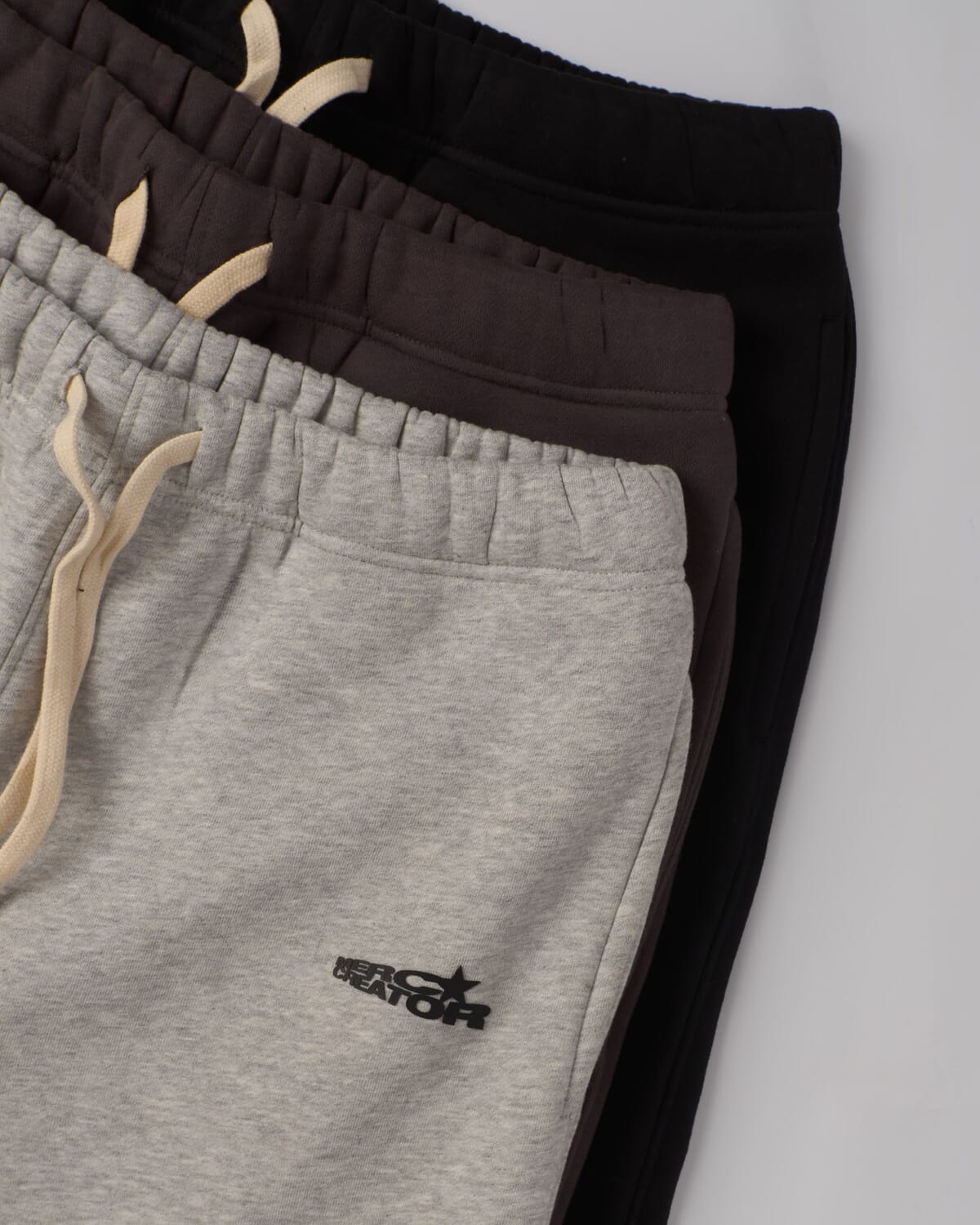
Sweatpants look like the easy garment. No collar, no buttons, no zip. Just two legs, a waistband, and a cord. That's exactly why founders under-spec them and factories send them back. A complete tech pack runs eight core sections, from flat sketches to construction notes, and a pair of sweatpants hides most of its risk inside two of them: the waistband and the fabric.
I lead technical development for the brands GarmentSpec works with. I've watched clean fleece samples get rejected because the elastic had no recovery spec, the drawcord was cut too short to tie, or the knit shrank after the first wash and blew every leg measurement. This guide walks the whole garment, waist to hem, treats shorts as the same block minus the leg length, and shows where both actually fail.
Key Takeaways
- Sweatpants and shorts use the same 8 tech pack sections as any garment, but the waistband and fleece carry most of the risk.
- The two things founders leave vague are elastic waistband recovery and the drawcord plus eyelet spec. Both get samples sent back.
- Spec fleece or French terry by construction and GSM, not by adjective. Knit relaxes and shrinks, so measure after wash.
- Consumer bottoms are inspected at AQL 2.5 (QIMA), so every waist, rise, and inseam number needs a tolerance.
- Shorts are this exact block minus the leg: open hem instead of a cuff, shorter inseam, same waistband risk.
New to the format? Start with what a tech pack actually contains, then come back for the sweatpants specifics. If you just want the fields in front of you, grab the free tech pack template and fill it in as you read. Building a matching set? The hoodie tech pack covers the top half of the same fleece story.
What must a sweatpants and shorts tech pack contain?
A sweatpants tech pack contains the same eight sections as any production spec: flat sketches, bill of materials, measurement specs, cost sheet, size gradings, colorways, construction notes, and revision history. Nothing about an elastic-waist bottom lets you drop one. The garment just loads its detail into the waistband and the fabric.
Here's the difference from a woven trouser. Sweatpants are knit, so the fabric moves, relaxes, and shrinks in ways a stiff woven never does. The BOM has to name the elastic, the drawcord, the eyelets or tunnel, and the fleece construction. The flat needs waistband and cuff callouts. The points of measure need both a relaxed and a stretched waist number. Shorts run the same spec with a shorter leg and an open hem. Same eight sections. Different pressure points.
Citation capsule: A complete tech pack contains eight standard sections: flat sketches, bill of materials, measurement specs, cost sheet, size gradings, colorways, construction notes, and revision history. A sweatpants or shorts tech pack uses all eight, loading extra detail into the BOM and points of measure for the elastic waistband, drawcord, and knit fleece.
How do you spec the sweatpants waistband?
The waistband is where sweatpants fail first. The bill of materials has to pin down every component, including the elastic, drawcord, and eyelets (Sewport), not just the fleece. Spec four things: elastic width, elastic type, waistband construction, and the recovery you expect after stretch. Miss the recovery, and the sample bags out.
There are three common waistband builds, and your tech pack has to name one. A tunnel, or casing, hides elastic inside a folded channel of self-fabric, often with a separate drawcord. A ribbed waistband knits a stretch rib band and mounts elastic behind it. A folded, exposed elastic band shows a branded or plain elastic on the outside. Each looks different and constructs differently. "Elastic waist" tells the factory nothing. "4 cm knitted elastic, tunnel construction, self-fabric casing, cord through two eyelets" tells them everything.
Recovery is the number founders never write and factories always want. Elastic width sets the look. Elastic type and quality set the recovery, meaning how tightly the band springs back after it's stretched over the hips a few hundred times. Cheap braided elastic relaxes and the waist gapes by week three. A good knitted or woven elastic at the right width holds. Name the type, not just the width.
Which elastic width and type should you specify?
Waistband elastic comes in three constructions, and they don't behave alike. Braided elastic narrows when stretched and loses tension fastest, so it's the wrong pick for a band that gets pulled on daily. Woven, also sold as non-roll, holds its width and resists twisting inside a tunnel. Knitted elastic is soft, laundry-durable, and keeps recovery through repeated wash cycles. For most sweatpants, a 3 to 4 cm knitted or woven elastic is the safe call. Write the construction, the width, and the elastane content. A 4 cm braided band and a 4 cm knitted band wear completely differently, and only one of them survives a season.
How should the drawcord route through the waistband?
Decide early whether the cord sits inside or outside the tunnel, because it changes the sew order. An inside drawcord threads through the elastic casing and exits at two front eyelets or buttonholes. It looks clean and won't snag, but it can twist inside the channel when the tunnel runs too wide. An outside drawcord rides over the waistband through external eyelets, easier to replace but sitting proud of the fabric. Some joggers add a back-rise elastic, a second short band across the centre back that lifts the seat and stops the waist gaping when the wearer sits down. If you want it, dimension it: band width, plus how far it spans left and right of centre back.
Citation capsule: The bill of materials specifies every garment input, including elastic, drawcord, and eyelets, not only the main fabric. On sweatpants, the waistband is a sub-assembly: elastic width and type, construction (tunnel, ribbed, or exposed), and recovery each need their own line, because an inspector and a factory can only build the waistband you actually define.
How do you spec the drawcord and eyelets?
The drawcord and eyelets are trim components that belong in the bill of materials alongside the fabric and elastic (Sewport). Spec the cord type, width, length, and tipping, plus whether it exits through metal eyelets, self-fabric buttonholes, or a tunnel opening. This is the second detail founders leave vague, and it sends samples back on its own.
Think about what has to physically happen. The cord threads through the waistband, exits at the front, and ties. If the cord is cut too short, it won't tie once the waist cinches to size. If there's no tipping, the reinforced end, the cord frays and won't re-thread after the first wash. If the eyelet inner diameter is smaller than the cord, the cord jams and never draws. Metal eyelets in some markets need a nickel-free callout to pass compliance. Name the cord as flat or round, give it a finished length per size, and specify the eyelet material and inner diameter.
Flat versus round cord, and how long to cut it
Round cord slides and cinches easily but can slip loose; flat cord, like a shoelace, grips a knot better and reads more premium on heavyweight fleece. Pick one and name it with a width. Then give a finished cord length per size, not a single global length, because a size XS and a size XXL need different cinch tails. A cord that ties fine on the sample size can end up too short on the largest size to knot at all. Tipping matters too. Metal, moulded plastic, and heat-seal ends each source differently and each fails differently: heat-seal is cheapest and frays first, metal tips read premium and add cost. Put the choice in the BOM so nobody guesses.
Citation capsule: A sweatpants drawcord, its tipping, and the eyelets are trim components that belong in the bill of materials next to the fleece and elastic. Each needs its own line: cord type, width, length, and tipping, plus eyelet material and inner diameter, so the factory sources the exact trim rather than substituting whatever's on the shelf.
Fleece or French terry: how do you spec the fabric?
Fabric is the second big failure point, right behind the waistband. The bill of materials must name the fabric by construction and weight, not by nickname (Sewport). Spec the knit construction, the fibre composition, and the GSM. Then add a wash-and-relax note, because knit fleece moves after production in ways a woven never does.
Fleece and French terry are not the same cloth. French terry, also called loopback, has soft uncut loops on the inside and a smooth face. It's lighter and drapes. Brushed fleece takes those loops and brushes them into a soft nap, so it's warmer, heavier, and bulkier at the seams. A 280 GSM loopback and a 380 GSM brushed fleece are different garments with different cutting, different seams, and different shrinkage. Write "100% cotton loopback French terry, 280 GSM" or "80/20 cotton/poly brushed fleece, 380 GSM." Never just "fleece."
I've had a jogger run come back short in the leg after the first wash test, because the tech pack gave the fabric a name but no shrinkage allowance and no post-wash measurement. The knit relaxed on the roll, then shrank in the wash, and the finished inseam landed outside tolerance on every size. Cotton fleece can move a real amount through wash and dry. If your points of measure are pre-wash and your customer washes the garment, you've specced a size you'll never actually ship.
Which GSM tier fits your sweatpant?
Weight decides the whole character of the garment, so pick a GSM tier before anything else. Lightweight loopback French terry around 240 to 300 GSM drapes, breathes, and suits spring joggers or a lounge short. Midweight fleece from 300 to 360 GSM is the year-round staple most brands default to: warm enough, not bulky at the cuff. Heavyweight brushed fleece from 360 to 450-plus GSM feels premium and holds structure, but it runs warmer, costs more, and needs wider seam allowances because the nap adds bulk. Name a target GSM with a tolerance. Mills run to a range, so a 340 GSM order can arrive at 315 or 365 and both are technically in spec.
How much will cotton fleece shrink?
Assume knit fleece shrinks, and spec around it. Cotton-rich fleece can lose a meaningful amount of length through the first wash and dry, and the leg is where it shows first. A poly blend, commonly 20 to 35 percent, cuts shrinkage, adds recovery, and dries faster, at the cost of some cotton hand-feel. Whatever you choose, write a shrinkage allowance and state plainly whether your points of measure are pre-wash or post-wash. Then require a wash test on the sample before bulk. Measuring after wash is the single cheapest way to stop a jogger landing short in the leg, and it costs you nothing but one laundry cycle.
Citation capsule: The bill of materials must name the fabric by construction and weight, not by nickname. French terry (loopback) and brushed fleece behave differently in cutting, seaming, and shrinkage. Specifying construction plus GSM, then measuring points of measure after wash, keeps knit fleece from relaxing or shrinking a finished leg out of tolerance.
How do you spec the cuff versus an open hem?
Sweatpants usually finish two ways: a knitted rib cuff that grips the ankle, or an open, straight hem that falls loose. The construction note, one of the eight core sections, has to state which, because they cut and sew differently. Elastic or ribbed cuffs also need a recovery spec, the same way the waistband does.
A cuffed jogger tapers to a rib band, so the leg opening is cut wider and gathered into a narrower cuff. Spec the rib composition with its elastane percentage, the cuff depth, and the relaxed cuff opening. Cotton-only rib with no elastane stretches over the foot once and never springs back, so the ankle bags within a week. An open-hem sweatpant skips all of that: it's a straight or tapered leg with a folded, topstitched hem, and you spec the leg opening and hem depth instead. Shorts almost always use the open hem, which is one of the main places they differ from full-length pants.
How deep should a rib cuff be, and how much taper?
A jogger cuff usually runs 5 to 8 cm deep, and the deeper it is, the more it grips and blouses the leg above it. Spec the rib composition, often a cotton/elastane rib at 3 to 5 percent elastane, plus the cuff depth and the relaxed opening. The relaxed opening is what has to clear the wearer's foot and then spring back, so it earns its own line and its own tolerance. Taper is the other half of the jogger look. The leg is cut wider at the thigh and narrows toward the cuff, so give a thigh, a knee, and a leg-opening measurement rather than one straight leg width. An open-hem sweatpant skips the cuff, but you still choose between a straight and a tapered leg, and you still dimension the hem depth.
Citation capsule: Whether a sweatpant finishes in a rib cuff or an open hem is a construction decision, and construction notes are one of the eight core tech pack sections. A rib cuff needs composition, elastane percentage, depth, and relaxed opening. An open hem needs leg opening and hem depth. Shorts typically use the open hem.
How do you spec the rise, gusset, and leg block?
The rise, gusset, and leg block decide whether sweatpants move with the body or fight it, and they grade point by point off body-measurement logic, the principle behind ASTM body-measurement standards maintained by Subcommittee D13.55 (ASTM). Choose a block, set the front and back rise, and decide whether the crotch gets a gusset.
Rise sets where the waistband sits and how the seat fits. A low rise reads athletic and sits below the natural waist. A high, generous rise suits relaxed streetwear and stops the front dropping when the wearer sits. Give a front rise and a back rise separately, because the back almost always runs longer to cover the seat. Collapse them into one number and the seat either pulls or sags, and no waistband spec fixes a rise that's wrong.
A gusset is the detail that separates a comfortable jogger from one that splits at the crotch. It's a small diamond or triangular panel set into the crotch seam, right where four seams would otherwise pile onto one weak point. Add one when the fabric is heavier, the fit is slim, or the wearer moves a lot, because it spreads stress and buys real range of motion. Not every sweatpant needs a gusset. But if you want it, draw it on the flat and dimension it, since a factory won't add a panel you never asked for.
How does the block drive taper and leg opening?
The block is your starting pattern, and it drives taper, thigh room, and leg opening. A slim tapered jogger, a straight-leg sweatpant, and a wide relaxed pant are three different blocks, not one pattern stretched to different leg widths. Name the silhouette first. Then let the points of measure carry the numbers down the leg: thigh, knee, and leg opening, each with its own tolerance. Get the block wrong and you're grading a shape nobody wanted, one careful measurement at a time.
Citation capsule: The rise, gusset, and leg block set fit and durability on a sweatpant, and each point grades off body-measurement logic, the principle behind ASTM body-measurement standards maintained by Subcommittee D13.55. A gusset panel at the crotch spreads stress where four seams meet; the block, not a single leg width, drives taper, thigh room, and leg opening.
What construction and trim detail do sweatpants need?
Construction is where the labour hides, and it's a real share of cost. Independent estimates put a full tech pack at 500 to 2,000 dollars and 5 to 20 hours per style, much of it spent pinning down seams and trims (Guru, 2022). Sweatpants need pocket, seam, fly, and branding calls that a woven-trouser spec would never think to make.
How should sweatpants pockets be built and reinforced?
Most sweatpants carry side-seam pockets, and each one needs a bag fabric, a bag depth, and a bar-tack at both ends of the opening. Pocket bags run in a lighter pocketing cloth, not the fleece, because a fleece bag adds bulk and sags out of shape. If you add a back pocket, choose the type and spec it. A patch pocket sits on the surface and is cheapest. A welt pocket is cleaner and dressier. A zip pocket needs a zip length, a puller, and a bar-tack at each corner. A small coin pocket is optional trim. The one thing you can't skip is the bar-tack. Every pocket mouth takes real stress, and a bar-tack at each stress corner is the line between a pocket that lasts and one that rips at the opening.
Which seams and stitches should you call out?
Knit fleece is built on an overlock and a coverstitch, and your construction notes should name both. Panel seams run on a 3 or 4-thread overlock that stretches with the knit. Hems, cuffs, and waistband topstitching run on a coverstitch, which gives the two parallel rows you see on ready-made joggers and won't pop when the fabric stretches. Specify stitches per inch, since too few pops under stretch and too many can pucker fleece. A straight lockstitch belongs only where the fabric won't move, like attaching a woven label. Name the machine for each seam, and the factory builds the garment you drew, not the one that's fastest on their floor.
Do sweatpants need a fly, and where does branding go?
Most pull-on sweatpants have no functional fly. The front is a clean seam or a mock fly, a short line of topstitching that mimics a fly without an opening. Decide which, because a mock fly is a stitch line and a functional fly is a zip or button with a facing, and the two cost and construct differently. Branding is the last call. A side stripe, piping down the outseam, or a taped seam is a design feature the factory has to source and align, so it belongs in both the BOM and the flat, with a width and a placement. An embroidered or printed logo needs a size, a position, and a colour reference too. Left vague, branding is the detail that drifts a centimetre and ruins an otherwise clean sample.
Citation capsule: Sweatpants construction detail carries real cost, with a full tech pack estimated at 500 to 2,000 dollars and 5 to 20 hours per style (Guru, 2022). Pockets need a bag fabric and bar-tacks at every stress corner; knit seams run on an overlock plus coverstitch; a mock fly is a stitch line, and side stripes or piping belong in both the BOM and the flat.
What points of measure do sweatpants and shorts need?
Sweatpants need a points-of-measure table with one thing woven trousers skip: a relaxed and a stretched waist, because the elastic moves. Grading those points follows body-based increments, the logic behind ASTM body-measurement standards maintained by Subcommittee D13.55 (ASTM). Every row needs a base measurement and a tolerance.
The table below shows an illustrative POM list for sweatpants at base size M. Treat the numbers as a worked example, not a standard to copy. Your fit, block, and fabric set the real values. What matters is the structure: a measurement and a tolerance on every line, including the relaxed and stretched waist that first-time specs collapse into one number. For shorts, you keep every row down to front rise, then swap the long inseam and cuff for a short inseam and an open-hem leg opening. A clean format keeps this table readable on the line under time pressure.
| Point of measure (illustrative) | Base size M | Tolerance |
|---|---|---|
| Waist relaxed (half, laid flat) | 36 cm | ±1 cm |
| Waist stretched (half, extended) | 52 cm | ±1.5 cm |
| Hip (half, at fullest seat) | 56 cm | ±1.25 cm |
| Thigh (half, 1 cm below crotch) | 34 cm | ±1 cm |
| Front rise (crotch to waist top) | 30 cm | ±0.75 cm |
| Inseam (crotch to hem) | 76 cm | ±1.5 cm |
| Leg opening (relaxed) | 13 cm | ±0.5 cm |
| Cuff depth | 5 cm | ±0.5 cm |
Citation capsule: Grading a sweatpants points of measure follows body-based increments, the principle behind ASTM body-measurement tables maintained by Subcommittee D13.55 (ASTM). Each point, including relaxed waist, stretched waist, and front rise, grades at its own rate rather than by a single global percentage, so fit holds across the whole size run.
How do you grade the waist, rise, and inseam?
Grade each point at its own rate, not by one blanket percentage. The waist and hip grade in the largest steps between sizes, because that's where bodies differ most. The relaxed and stretched waist grade together, but the stretched value moves less, since the elastic absorbs part of the jump. Rise grades in smaller increments. The inseam often holds a constant length across the run, or grades in short length blocks, because a size S and a size XL wearer can both want the same 76 cm inseam. Decide your inseam policy up front: fully graded, or blocked at a fixed length with only the waist and rise moving. Write the increments onto the grading page so the factory grades your intent instead of guessing it.
How is a sweatpants tech pack inspected on the line?
A finished sweatpant is inspected by sampling, not by checking every unit. Inspectors pull a sample using standards like ISO 2859-1, mirrored by ANSI/ASQ Z1.4, and measure each garment against your spec. Consumer apparel is commonly checked at AQL 2.5, with 1.0 for higher-risk items and 4.0 for minor cosmetic faults (QIMA).
Here's why this shapes your tech pack. Every measurement you list gets checked against the tolerance you set. A stretched waist 2 cm out of tolerance counts as a defect. Enough defects, and the batch fails against the AQL. Critical defects sit at zero, no exceptions. So the tech pack isn't paperwork you file and forget. It's the exact document a stranger with a tape uses to accept or reject your run. Leave the waistband recovery or the fabric GSM undefined, and you've handed that call away.
If you'd rather not build the document alone, our tech pack service turns your sweatpants or shorts design into a factory-ready spec for $299, waistband and fabric detail included. For a full catalogue of failure modes, the common mistakes guide covers what gets garments rejected across every category.
Citation capsule: Garment inspection uses sampling standards such as ISO 2859-1 (mirrored by ANSI/ASQ Z1.4). Consumer apparel is commonly inspected at AQL 2.5, with 1.0 for higher-risk items and 4.0 for minor cosmetic faults; critical defects sit at zero (QIMA). Each sweatpants measurement is checked against your stated tolerance to accept or reject the batch.
How do you make a sweatpants tech pack, step by step?
Building a sweatpants tech pack costs less than one rejected run. Independent estimates put a professional tech pack at 500 to 2,000 dollars per style, taking roughly 5 to 20 hours (Guru, 2022). Work through the eight sections in order, loading the waistband, drawcord, and fleece with the detail this guide covers.
Follow these steps to build a complete sweatpants or shorts tech pack:
- Draw the flats. Front, back, and a separate waistband detail, plus a cuff or open-hem callout. Mark the drawcord, eyelets, and pockets.
- Build the bill of materials. Fleece or French terry with GSM and composition, elastic with width and type, drawcord, tipping, eyelets, rib, thread, and labels.
- Fill the points of measure. Every row a base size and a tolerance, including relaxed waist, stretched waist, hip, thigh, front rise, inseam, leg opening, and cuff. Measure after wash.
- Write the construction notes. Waistband build, seam types, stitches per inch, hem or cuff finish, and a bar-tack at every pocket stress corner.
- Set the colorways. A named or Pantone reference for fleece, rib, cord, tipping, and thread, kept separate.
- Add grading and revision control. Grade point by point, then put a revision number and date on every page. One live version.
Start from the free tech pack template so the fields are already there. For shorts, run this same list and delete the cuff and long inseam.
What should you hand a fleece factory?
Hand a fleece factory four things and you'll get a sample that matches your intent. First, the flats with waistband, cuff, pocket, and cord callouts. Second, a BOM that names the fleece by construction and GSM, the elastic by width and type, and every trim down to the eyelet. Third, a points-of-measure table with a relaxed and a stretched waist and a post-wash note. Fourth, a construction page with seam types, stitches per inch, and bar-tack placement. Send a physical reference garment or a fabric swatch if you have one, because a mill matches a hand-feel faster than it reads a paragraph. The clearer the spec, the fewer sample rounds, and every avoided round saves you weeks.
Frequently asked questions
What is a sweatpants tech pack?
A sweatpants tech pack is the full build spec for joggers, track pants, or open-hem sweatpants: flat sketches, bill of materials, measurements, construction, colorways, grading, and revisions. It contains the same eight core sections as any garment tech pack, with extra detail for the elastic waistband, drawcord, and knit fleece.
Where do sweatpants fail most often in production?
Sweatpants fail most on waistband recovery and fabric behaviour. An elastic band with no type or recovery spec bags out after a few wears. Knit fleece with no shrinkage note lands the inseam out of tolerance after wash. Inspection measures against your stated numbers at AQL 2.5 for consumer goods (QIMA), so both need real numbers.
How is a shorts tech pack different from a sweatpants tech pack?
The block is the same from the waist down to the front rise. A shorts tech pack keeps the identical elastic waistband, drawcord, and eyelet detail, then cuts the leg short and finishes with an open hem instead of a rib cuff. You swap the long inseam and cuff rows in the points of measure for a short inseam and a hem leg opening.
Should I spec fleece and French terry differently?
Yes. French terry (loopback) is lighter with uncut inner loops; brushed fleece is heavier with a raised nap. They cut, seam, and shrink differently. Name the construction and GSM, like "280 GSM cotton loopback" or "380 GSM brushed fleece" (Sewport), never just "fleece," so the factory sources the exact cloth you approved.
What GSM should sweatpants fleece be?
Most sweatpants use 300 to 360 GSM midweight fleece as a year-round default. Lightweight loopback French terry at 240 to 300 GSM suits spring joggers and shorts, while heavyweight brushed fleece at 360 to 450-plus GSM reads premium but costs more and adds bulk at the seams. Name a target GSM with a tolerance, since mills run to a range and the delivered weight can drift either side.
Do joggers need a gusset?
Not always, but a gusset helps on slim fits, heavier fleece, and active wear. It's a small diamond or triangular panel set into the crotch seam, and it spreads stress where four seams would otherwise meet at one weak point. That adds range of motion and cuts the risk of a split crotch. If you want one, draw it on the flat and dimension it, because a factory won't add a panel you didn't ask for.
How should sweatpants pockets be reinforced?
Bar-tack every pocket opening at both stress corners. Side-seam pockets take real load each time a hand goes in, and the mouth is where they tear first. Spec a bag fabric lighter than the fleece so the pocket doesn't sag, give a bag depth, and add a bar-tack at each end of the opening. Zip and welt back pockets need a bar-tack at each corner too.
How much does a sweatpants tech pack cost?
Independent estimates put a professional tech pack at roughly 500 to 2,000 dollars per style, taking 5 to 20 hours to build (Guru, 2022). Sweatpants sit mid-range: fewer parts than a hoodie, but the waistband, cord, and fleece still need real detail. A complete template lowers both the time and the cost.
The bottom line
Sweatpants look like a beginner's garment and behave like a knit-engineering problem. The waistband is a sub-assembly, the fleece moves through wash, and the cuff either grips or bags depending on one composition line. Spec each one with numbers a tape can check, and most sweatpants rejections disappear before the first panel is cut.
Work the eight sections in order. Name the elastic by width and type, not "elastic waist." Give the drawcord a finished length and the eyelets an inner diameter. Spec fleece by construction and GSM, then measure the points of measure after wash. Put a relaxed and a stretched waist on the table, and a tolerance on every line. For shorts, run the same spec and drop the leg. Start from the pillar guide for the full system, or grab the free tech pack template and build your sweatpants spec today.
Peter Midea is GarmentSpec's technical lead for brand development.
We build the factory-ready spec a manufacturer can quote from without a single question: technical flats, bill of materials, graded points of measure with tolerances, colorways and construction notes. $299 per style, 3 to 5 working days, 2 to 3 revision rounds.
Get your tech pack — $299Start with the free templateWe don't take your production. The spec is yours to send to any factory, anywhere. Talk to us first if you're not sure what you need.
Sources
Every statistic and definition in this article traces to one of the following. Each is listed once here, and cited inline where it is used.
Related guides
- Tech packs: the complete guide
- Hoodie tech pack
- Sweater & knitwear tech pack
- Streetwear tech pack
- Free tech pack template