Contents
- What is a digital pattern?
- How are digital patterns made?
- What software is used?
- What is DXF-AAMA?
- How does grading work?
- What is a marker?
- Can you digitise an existing paper pattern?
- What does digital pattern making cost?
- Who should make your patterns?
- What should you own?
- How do patterns relate to the tech pack?
- What goes wrong most often?
- How do patterns change between sample and pr…
- Working with GarmentSpec
- Frequently asked questions
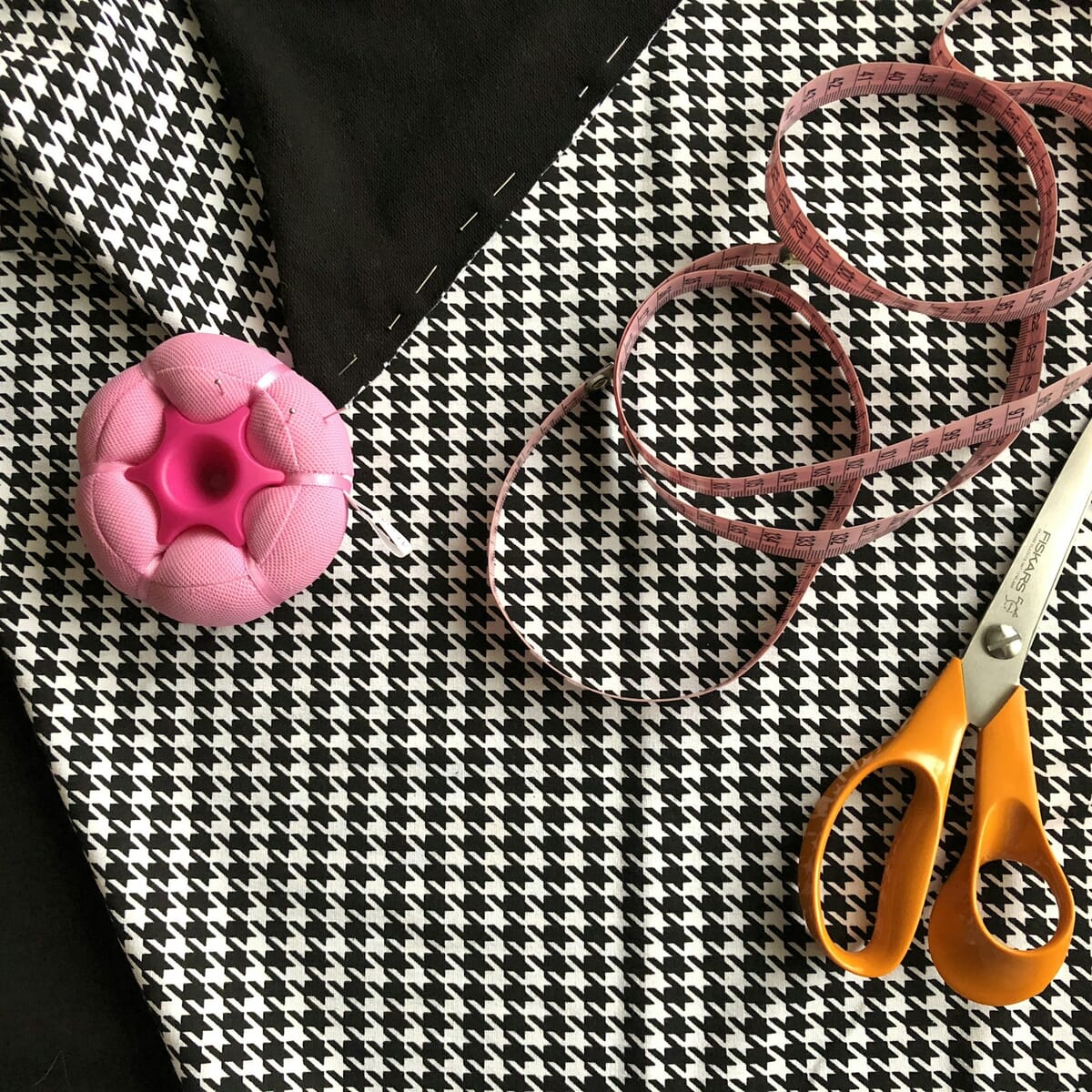
A pattern is the set of flat shapes a garment is cut from, and a digital pattern is that set held as a file rather than as paper. The difference matters less for the first sample than for everything afterwards: grading, revision, requoting, moving factory and reordering two years later all depend on whether the pattern exists as something you can send.
This covers how digital patterns are made, what a pattern file contains beyond outlines, the interchange formats factories accept, how grading works, what it costs and what you should insist on owning.
Key Takeaways
- A pattern file carries notches, grain lines, seam allowances and drill holes, not just outlines.
- DXF-AAMA is the apparel interchange standard between pattern systems.
- Grade after fit is approved. Grading a wrong base multiplies the error across every size.
- Paper patterns can be digitised, by table or by camera, at modest cost.
- Whoever makes it, own the file. A pattern held only by a factory locks in your product.
What is a digital pattern?
A file containing the cuttable shapes of a garment, with all their production markings.
It is more than outlines
A pattern piece carries notches that show where panels align, grain lines that set how the piece sits on the fabric, seam allowances, drill holes for pocket placement and internal lines for darts and folds. A file with outlines alone is a drawing of a pattern rather than a pattern.
It is dimensionally exact
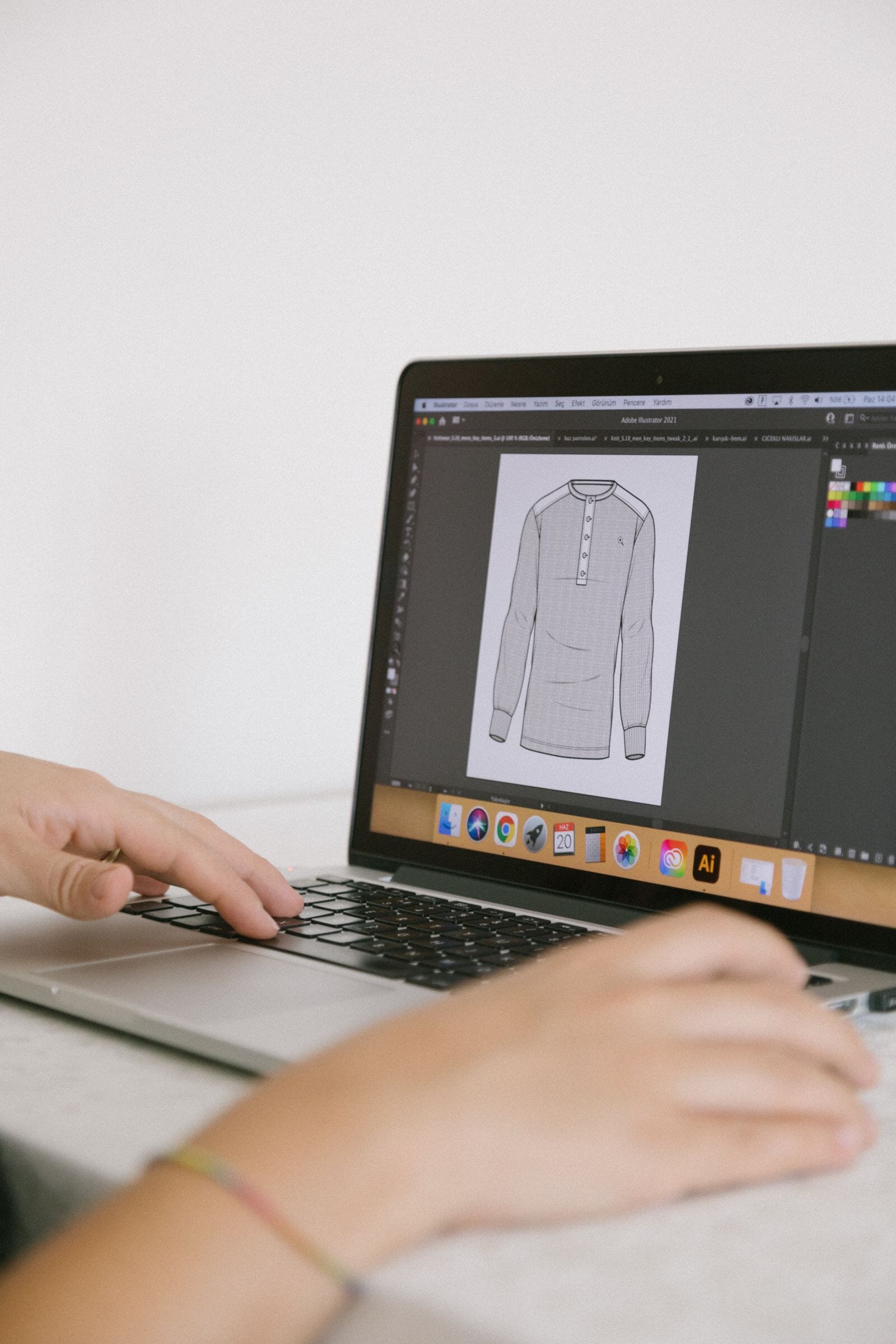
Pattern files are held to millimetres, because a small error repeated across every piece and every size becomes a garment that does not assemble. This is why pattern software is a different category from drawing software, which has no such requirement. Our guide to fashion CAD sets out how drawing, pattern and 3D software differ.
It exists per size
A pattern is developed in one base size and then graded into the rest of the range, producing a nested set. The graded set, not the base alone, is what a cutting room needs.
It is the factory's physical instruction
Everything else in a tech pack describes the garment in words, numbers and drawings. The pattern is the one document the cutting room physically follows, which makes it the file where a small error does not get caught by a person reading it, and instead reaches every single unit in the run.
How are digital patterns made?
Drafted directly in software, digitised from paper, or derived from an existing block.
Drafted from measurements
A pattern maker constructs the pieces in a pattern system from body or garment measurements, using the software's drafting tools. This is the most flexible route and it depends entirely on the skill of the person doing it rather than on the software.
Digitised from paper
An existing paper pattern is captured either on a digitising table with a puck or photographically, then cleaned up in software. Studios that have worked on paper for decades usually hold enormous value in those patterns and digitising is how it becomes portable.
Developed from a block
Most working pattern makers hold a library of tested blocks for common garment shapes and develop new styles by modifying one. Starting from a block that already fits is faster and produces fewer sample rounds than drafting from nothing.
Reverse engineered from a garment
A reference garment can be taken apart, traced and rebuilt as a pattern, which is common for brands replicating a fit they already trust. It captures the shape and it does not capture the construction decisions, which still have to be specified separately.
What software is used?
Commercial pattern systems, with open-source options at the edges.
The established systems
Gerber AccuMark, Lectra Modaris, Optitex and TUKAcad are the long-standing names, and most factories of any size run one of them. They handle drafting, grading, marker making and export between them. Our studio team works in all four, plus CLO, Browzwear, StyleCAD and Audaces.
Open source exists
Seamly2D and its Valentina lineage are free and capable of parametric drafting, and they are used mainly by independent makers rather than by factories. Interchange with commercial systems is possible and less seamless than between the commercial tools.
Licences are priced for businesses
Commercial pattern systems are annual licences aimed at factories and studios rather than individuals, which is a large part of why small brands buy pattern making as a service. The software assumes a trained operator using it daily.
The tool is not the skill
A pattern system in untrained hands produces confident-looking pieces that do not assemble into a wearable garment, and the software will not warn you. The value in pattern making sits almost entirely in the person rather than in the licence, which is why buying the software is never the route to solving this problem.
What is DXF-AAMA?
The interchange format that lets a pattern move between different systems.
It carries production data
DXF with the AAMA extension holds pattern pieces along with notches, grain lines, internal lines and piece names, which plain DXF does not reliably do. This is why apparel uses the extension rather than generic DXF.
It is the portability guarantee
A pattern exported as DXF-AAMA can be opened by a factory running a different system from the one it was made in. Without it, your pattern is only usable by whoever holds the same software.
Export it and keep it
Whatever system your pattern maker uses, ask for a DXF-AAMA export alongside the native file. It costs nothing at the time and it is the difference between being able to move factory and having to redevelop. Our pattern making service delivers DXF-AAMA and PDF files, with native files on request.
Verify it opens
Formats drift between software versions, and a file that fails to open at the receiving end is invariably discovered at the worst possible moment in a schedule. Asking the factory to confirm both receipt and readability before production is booked takes about an hour and removes an entire category of delay.
How does grading work?
Rules applied to a fitted base pattern to produce the rest of the size range.
Grade after fit, never before
Grading multiplies whatever the base pattern is across every size, which means grading a base that has not been fit-approved simply propagates the error. This is the most expensive sequencing mistake available in pattern work.
Rules, not scaling
Grading is not uniform enlargement. A size range grows at different rates in different places, and the rules encode how much each point moves per size, which is why a photocopier enlargement produces a garment nobody can wear. Our pattern grading service grades a fit-approved base pattern to your size range.
Grade rules come from a size chart
The size chart defines the body or garment measurements per size, and the grade rules implement it. Deciding the size chart before grading rather than after is what makes a range consistent across styles. Our grading chart template shows how those rules are laid out, one row per point of measure and one column per size step.
Consistency across the range matters
Grading every style to the same size chart means a medium means the same thing throughout your range. Styles graded independently produce a catalogue in which customers cannot predict their own size.
What is a marker?
The layout of every pattern piece on the fabric width, used for cutting.
It determines fabric consumption
Marker efficiency is the percentage of fabric actually used, and a few points of improvement moves the unit cost measurably. Factories optimise markers routinely because fabric is usually the largest single cost in a garment.
It respects grain and nap
Pieces have to sit with their grain lines aligned to the fabric, and directional fabrics such as corduroy or printed cloth restrict how pieces can be rotated. These constraints reduce efficiency and have to be specified rather than discovered.
It is built per size ratio
Markers are made for the mix of sizes in a production order, so the same pattern produces different markers for different orders. This is a factory activity rather than something a brand provides.
It is where fabric estimates come from
The consumption figure in a costing comes from a marker, which is why early fabric estimates are approximate until a real marker exists. Asking for the marker consumption is a reasonable question when a quotation looks high.
Can you digitise an existing paper pattern?
Yes, by table or by photograph, and it is usually inexpensive.
Digitising tables are the traditional route
A large sensing surface with a handheld puck records points as the operator traces the pattern, producing a clean file with notches and internal lines. It is accurate and it is slow relative to the alternative.
Photographic digitising is faster
Photographing a pattern against a calibrated background and processing it in software has become common and is considerably quicker for large libraries. Accuracy depends on careful setup and on cleaning the result.
Cleanup is part of the job
Traced pieces need their notches confirmed, grain lines set, seam allowances checked and pieces named before the file is usable in production. A raw trace is not a production pattern.
It is worth doing before you need it
Paper patterns degrade, get lost and cannot be emailed. Digitising a library while nothing is urgent is far cheaper than doing it during a production crisis. Digitising a paper pattern is a $99 add-on to our pattern making and pattern grading services.
What does digital pattern making cost?
Per style rather than per licence, for most small brands.
Services are priced per style
Pattern making bought per style costs a fraction of an annual licence plus the years of training it assumes, and the work is done by somebody who does it constantly. This is the normal arrangement for brands producing a handful of styles a year. Our first patterns are a flat $349, $549 or $899 per style by complexity, with one correction round after the fit sample.
Complexity drives the price
A simple jersey top is a short job and a lined jacket with a hood, pockets and hardware is not. The number of pieces, not the size of the order, sets the cost.
Grading is usually separate
Grading is typically quoted separately from first pattern, because it happens later and only once fit is approved. Budgeting for both from the start avoids an unwelcome second invoice. Our pattern grading is $149 per style for up to 10 pieces and 5 sizes, or $229 for 11 pieces or more.
Revisions have their own economics
Each fit session produces pattern revisions, and whether those are included, capped or billed is worth settling before work begins. This is the most common source of friction in freelance pattern work.
Who should make your patterns?
A trained pattern maker, bought as a service or employed if volume justifies it.
It is trained work
Converting a design into shapes that produce a fitting garment takes years to learn, and the failure mode stays invisible until an entire run has been cut incorrectly. There is no safe version of learning this on a live production order.
Factories often offer it
Many manufacturers will make the pattern as part of taking on the work, which is convenient and creates a dependency. The pattern then lives in their system, and moving the style elsewhere means paying for it again.
Freelancers keep it portable
An independent pattern maker produces a file that belongs to you and can be used anywhere, which preserves your ability to requote. For brands that expect to change supplier, this is the safer arrangement.
Fit is the real test
Whoever makes it, judge the pattern by how the first sample fits on a real body, after washing, doing ordinary things, rather than by how tidy the file looks or how impressive the software was. Everything else in this process exists to reach that moment with fewer surprises.
What should you own?
The native file, the DXF-AAMA export, and the graded set.
The native file is the editable version
Revisions after fit sessions happen in the native format, and holding only an export means every future change has to be redone. Ask for it explicitly, at the point of commissioning rather than afterwards.
The DXF is the portable version
This is what lets a different factory cut your garment. It is the file that makes your product independent of any single supplier relationship.
The graded set is what production needs
A base pattern alone cannot be cut into a size range, and rebuilding grading later means paying for it twice. Take delivery of the full nested set.
Write it into the agreement
Ownership of pattern files is not automatic, and in the absence of anything written it depends entirely on what the supplier assumes. One sentence in the engagement naming the files and formats you will receive prevents a genuinely difficult conversation at the exact moment you most need the files.
How do patterns relate to the tech pack?
The pattern makes the pieces, the tech pack says what to do with them.
They answer different questions
A pattern says what shapes to cut. The tech pack says what fabric to cut them from, how to sew them, what trims to attach, where, and to what finished measurements.
Both are required
A factory with a pattern and no specification will construct the garment according to its own habits. A factory with a specification and no pattern has to make one, which adds time and introduces its own fit.
Measurements connect them
Points of measure in the tech pack are the finished dimensions the pattern is supposed to produce, which makes them the check on whether the pattern is right. A mismatch between the two is found at first sample.
Both get versioned together
A pattern revision usually implies a measurement revision, and the two documents have to stay in step. Dating both and noting what changed is what keeps them aligned.
What goes wrong most often?
Grading too early, files held by a supplier, and no fabric decision.
Grading before fit approval
The most expensive common error, because it multiplies a base-size problem across a full size range and has to be redone entirely. It usually happens because a schedule looked tight.
Pattern locked inside a factory
A product whose pattern exists only in a supplier's system cannot be requoted or moved without redevelopment. This becomes visible precisely when you most need alternatives.
Pattern cut before fabric is settled
Drape determines silhouette more than the pattern does, so a pattern developed against an imagined cloth rarely survives contact with a real one. Fabric first is the sequencing rule that saves the most time.
Undated revisions
Multiple pattern versions circulating by email without dates or revision numbers eventually produce a production run cut from a superseded file, and it is usually discovered only when the goods arrive. It requires no skill whatsoever to avoid and it happens constantly, because nobody thinks filing is the part that will cost them money.
How do patterns change between sample and production?
They absorb every fit correction, and then they stop moving.
Each fit session produces a revision
Comments from a fit session are translated into changes in the pattern pieces, which is where a general observation about fit becomes a specific alteration at a specific point. This is the stage where vague comments cause the most damage, because a pattern maker cannot act on an adjective and will interpret it as best they can.
Change one thing at a time
Altering five aspects of a pattern between rounds makes it impossible to know which change produced the improvement, and the next sample arrives with a new and unrelated set of problems. Controlled steps are slower per round and reliably faster across the whole development.
The approved pattern is frozen
Once fit is signed off, the pattern becomes the reference production is measured against and stops being edited. Changes after that point are new versions with new numbers rather than quiet updates to the same file.
Production can still surface issues
A pattern that behaves perfectly on a single sample occasionally reveals a problem at volume, usually connected to fabric batch variation or to cutting in large stacks. Those findings belong back in the pattern record rather than being fixed informally on the floor.
Working with GarmentSpec
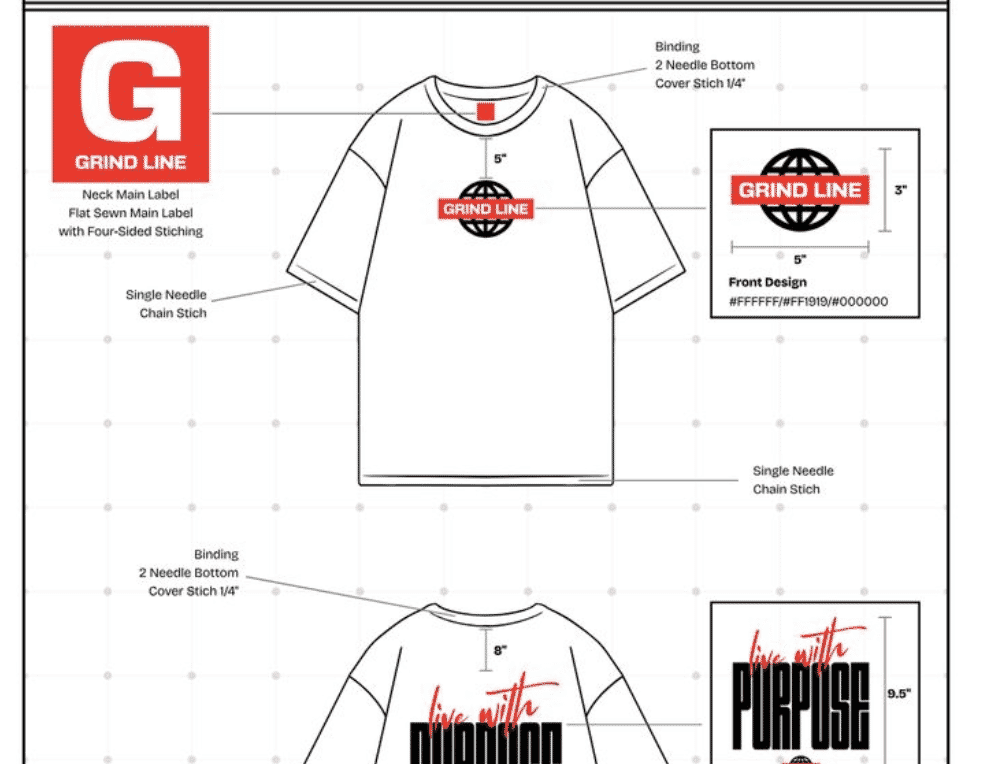
GarmentSpec produces the specification side: technical flats with the views your construction requires, enlarged detail callouts, a bill of materials with references and placements, and graded points of measure with tolerances. That is the document a pattern maker works against and your factory quotes from. A tech pack is $299 per style, in three to five working days.
Our studio team in the USA also drafts the pattern itself. A first pattern is $349, $549 or $899 per style by complexity, in five to seven working days, delivered as DXF-AAMA and PDF files with one correction round after your fit sample. Pattern grading from your base pattern is $149 per style for up to 10 pieces and 5 sizes ($229 for 11 pieces or more), in three to five working days. Tech pack, first pattern and grading to 5 sizes together cost from $649 per style.
Every file is yours outright and not tied to any manufacturer, which means the same package can be quoted at several factories on identical information. We do not sew samples and we do not place production.
Frequently asked questions
Do I need a digital pattern for a first sample?
Not strictly, since a paper pattern cuts a sample perfectly well. You need it before you grade, before you change factory, and before you reorder years later.
Can a tech pack replace a pattern?
No. A tech pack specifies the garment and a pattern produces the pieces. A factory without a pattern will make one, and its fit will be theirs rather than yours.
How long does a first pattern take?
For a simple garment, a few days. For structured outerwear with many pieces, considerably longer, and both figures assume fabric is already settled.
Is grading included in pattern making?
Usually not. It is normally quoted separately because it happens after fit approval rather than alongside the first pattern, and it should be budgeted from the start to avoid an unwelcome second invoice.
What size should the base pattern be?
The middle of your intended range, so grading moves outward in both directions. Grading a long way from an end size tends to distort the extremes.
We build the factory-ready spec a manufacturer can quote from without a single question: technical flats, bill of materials, graded points of measure with tolerances, colorways and construction notes. $299 per style, 3 to 5 working days, 2 to 3 revision rounds.
Get your tech pack — $299Start with the free templateWe don't take your production. The spec is yours to send to any factory, anywhere. Talk to us first if you're not sure what you need.
Sources
- Techpacker, tech pack content standards
- Browzwear, 3D apparel design and pattern workflow
- CLO Virtual Fashion, CLO3D pattern and simulation documentation
GarmentSpec builds factory-ready tech packs: technical flats, bill of materials, and graded points of measure with tolerances. $299 per style, 3 to 5 working days.