Contents
- What does fashion CAD actually mean?
- What software is used for technical flats?
- What is pattern CAD?
- What file formats do factories accept?
- When is 3D simulation worth it?
- What are the main 3D tools?
- What does fashion CAD cost?
- Do you need CAD skills to run a brand?
- How does CAD fit into the development process?
- What can CAD not do?
- What does a small brand actually need?
- How do you brief a CAD freelancer?
- What mistakes do brands make with CAD?
- How is CAD used inside a factory?
- Working with GarmentSpec
- Frequently asked questions
Fashion CAD is used loosely to mean three genuinely different things: drawing technical flats, generating and grading patterns, and simulating a garment in 3D. They use different software, produce different files and solve different problems, and conflating them is why brands regularly buy the wrong tool.
This separates the three, explains what each produces, which formats factories accept, what the tools cost, and what a brand with a handful of styles actually needs.
Key Takeaways
- Three distinct categories: drawing CAD, pattern CAD, and 3D simulation.
- Drawing CAD is vector software. Illustrator is the default and it is not specialist.
- Pattern CAD produces cuttable shapes. DXF-AAMA is the interchange format.
- 3D simulation removes sample rounds, and it does not replace the flat.
- A small brand usually needs drawing CAD only, and buys the rest per style.
What does fashion CAD actually mean?
Three separate software categories doing three separate jobs.
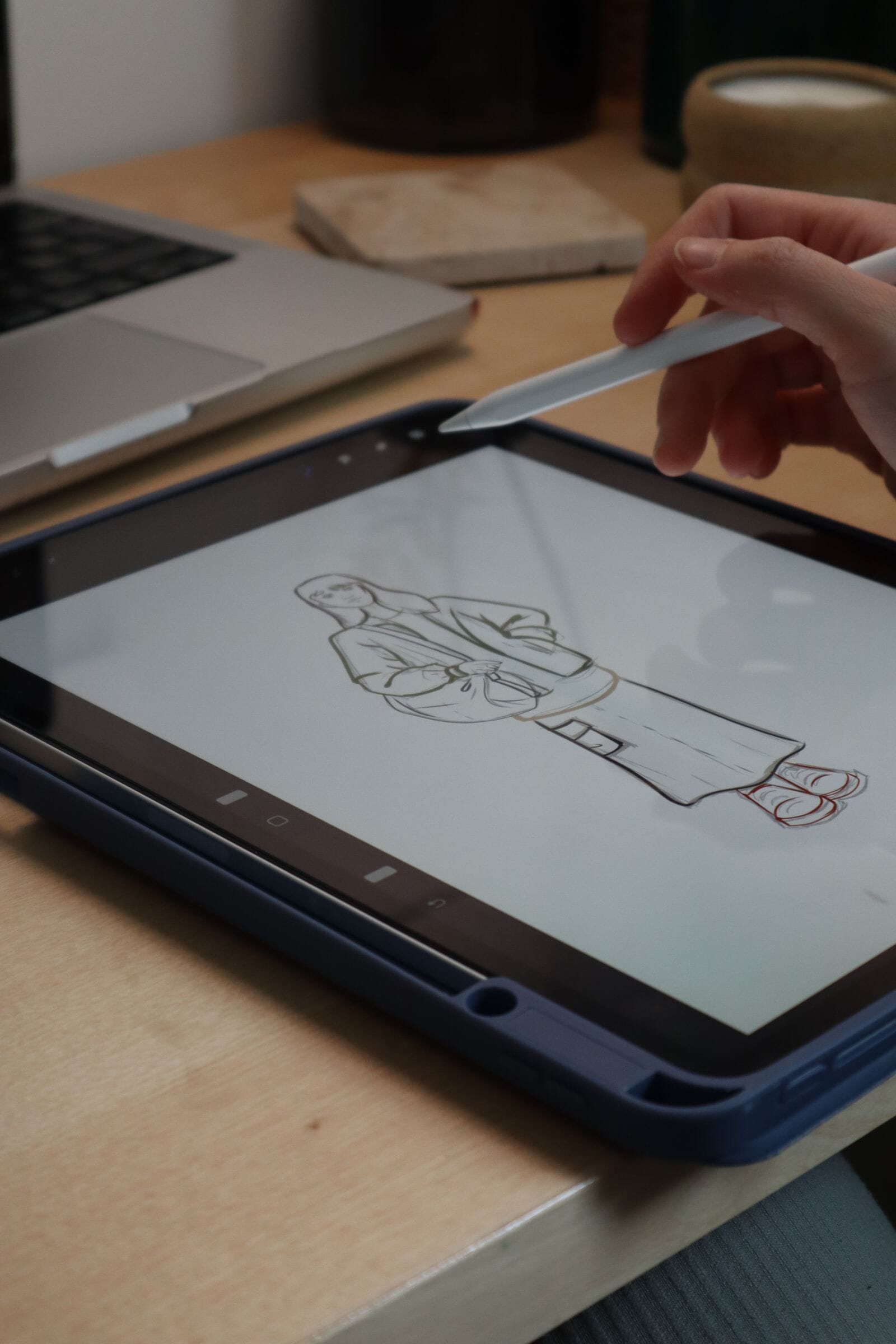
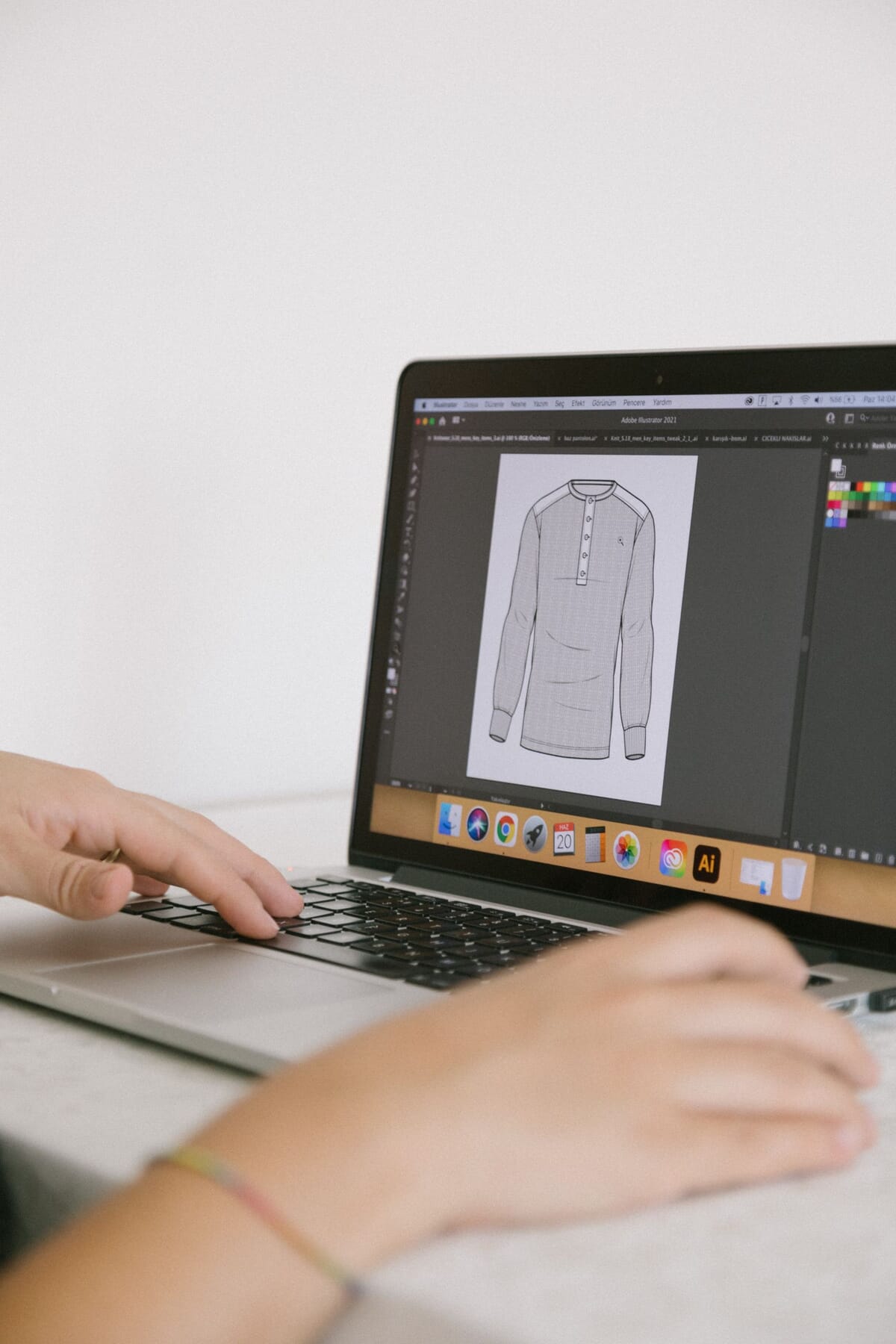
Drawing CAD produces the specification
Vector software is used to draw technical flats: the front and back views, the seams, the stitching and the enlarged detail callouts. The output is a drawing that a factory reads and counts operations from, and it is the most universally required of the three.
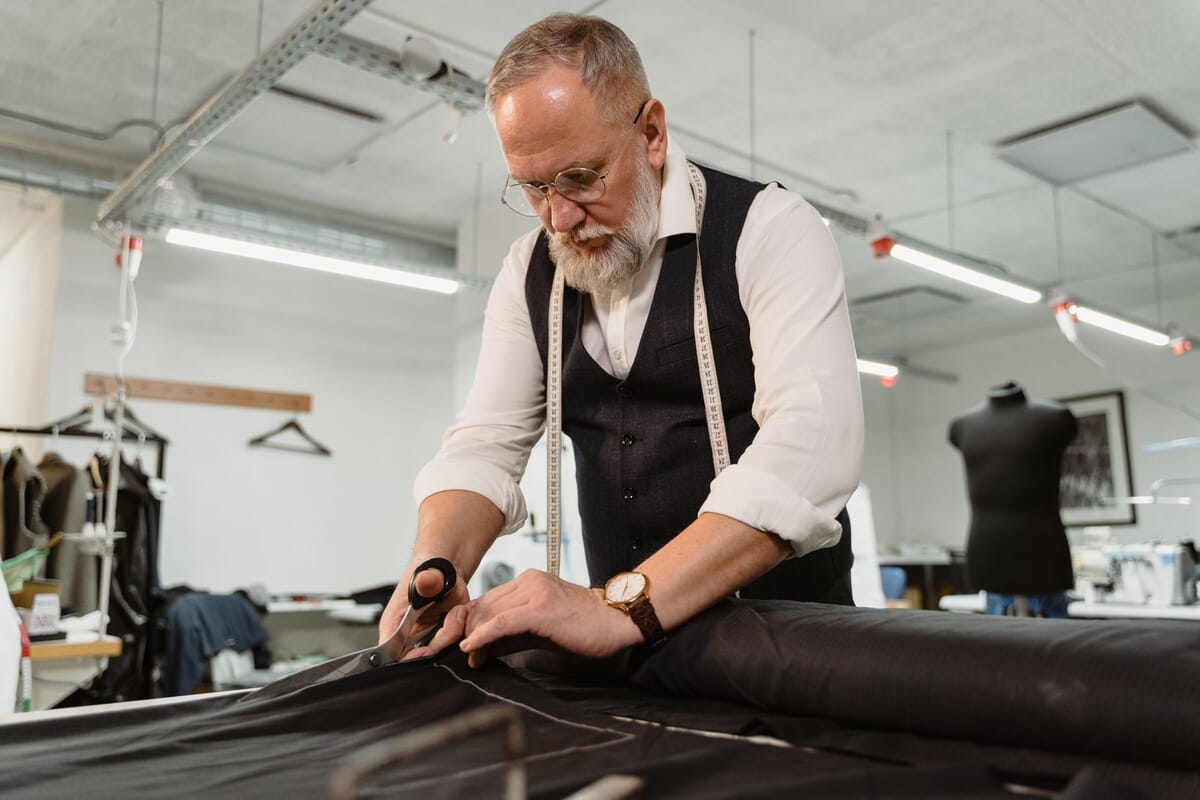
Pattern CAD produces the pieces
Pattern design systems generate the two-dimensional shapes the garment is cut from, grade them across a size range and lay them out for cutting. This is engineering rather than drawing, and its output is what the cutting room physically uses.
3D simulation tests the garment
Simulation software renders a pattern on a virtual body to show how it drapes, where it strains and how it behaves in movement. It answers fit questions before a physical sample exists, which is the one thing neither of the other categories can do.
They are not interchangeable
A technical flat cannot be cut from, a pattern cannot be read as a construction drawing, and a 3D render is neither of those things however convincing it looks. Brands that buy one category expecting it to do the job of another end up with expensive software, a learning curve they did not need, and the original problem entirely unsolved.
What software is used for technical flats?
Vector drawing software, with Adobe Illustrator as the industry default.
Illustrator is the standard
Most technical flats in the apparel industry are drawn in Illustrator, which means files are portable, freelancers already know it, and template libraries are widely available. It is not fashion software and that is precisely why it is universal.
Affinity, Inkscape and CorelDRAW all work
Affinity, now made by Canva, is free for individuals and combines vector, pixel and layout work in one app, Inkscape is free and open source, and CorelDRAW is another long-running vector option. All export PDF, which is what actually goes to a factory.
Vector matters more than brand
A flat gets resized, reused across a size range and revised after every fit session, and raster line weights degrade every time that happens. Any vector tool is acceptable, and no raster tool is.
Templates beat features
A library of category bases, stitch line styles and reusable detail components saves far more time than any feature in any package. Most of the work in flats is repetition, and the library is what removes it.
What is pattern CAD?
Software that creates, grades and lays out the pattern pieces a garment is cut from.
It builds the shapes
A pattern system lets a pattern maker construct pieces with defined seam allowances, notches, grain lines and drill holes, all of which are physical instructions to the cutting room. These are engineering entities rather than drawings, and they carry tolerances of millimetres.
It grades the size range
Grading applies a set of rules to scale a base pattern across sizes, and doing it in software makes the rules explicit, repeatable and auditable. Manual grading remains valid and is considerably slower to revise. Our pattern grading service returns the graded nest, DXF-AAMA and PDF files for every size, the grade rule table and the graded spec, 3-5 working days after the base pattern is in.
It produces the marker
A marker is the layout of all pattern pieces on the fabric width, and its efficiency directly determines fabric consumption and therefore cost. Marker optimisation is one of the clearest places where software pays for itself at volume.
The main systems
Gerber AccuMark (now a Lectra product), Lectra Modaris, Optitex and Tukatech's TUKAcad are long-established commercial systems, with Seamly2D and Valentina as open-source options (Seamly2D began as a fork of Valentina in 2017). Systems exchange patterns through DXF-AAMA, which is how a factory opens a pattern drafted in software it does not run. Our pattern making service works in Gerber AccuMark, Lectra Modaris, Optitex, TUKAcad, CLO, Browzwear, StyleCAD and Audaces, so you can ask for the native file your factory uses.
What file formats do factories accept?
PDF for drawings, DXF-AAMA for patterns.
PDF for anything read by a human
Technical flats, construction notes and measurement sheets travel as PDF because it opens anywhere, prints at fixed scale and cannot be altered by accident. This is the format for the entire specification package.
DXF-AAMA for patterns
DXF with the AAMA extension is the interchange standard for apparel patterns and carries pieces, notches, grain lines and internal lines. It is what lets a pattern made in one system be cut in a factory running another.
Native files stay with you
Keep the editable vector file and the native pattern file, because both will be revised and both are what make your product portable. Sending only flattened output to a factory and keeping nothing is how brands lose control of their own styles.
Check before assuming
Some factories want a specific format, or a specific version of a format, and establishing that takes a single email before you export anything. Sending a file nobody at the receiving end can open is a common, entirely avoidable week of delay that tends to arrive at the worst point in a schedule.
When is 3D simulation worth it?
When you are developing enough styles that removing a sample round pays for it.
It removes physical rounds
Simulating drape, strain and fit on a virtual body can resolve questions that would otherwise require a sample, and each sample round costs money, shipping and calendar time. For a brand developing dozens of styles a season this compounds quickly.
It needs a digital pattern
Simulation runs on pattern pieces, which means you need pattern CAD before 3D is possible at all. Buying simulation software without a digital pattern workflow is buying the second half of a process you have not started.
Accuracy depends on fabric data
A simulation is only as good as the physical properties entered for the cloth: weight, stretch, bend and friction. Generic fabric presets produce plausible-looking renders that do not predict how your actual fabric behaves.
Small brands rarely need it
With three styles a year, the sample rounds you might save do not repay the software cost or the learning time. The money is better spent on a good pattern maker and one extra sample round.
What are the main 3D tools?
CLO3D, Browzwear and Optitex are the apparel-specific names, with Blender as a free general-purpose outlier.
CLO3D is built for apparel
CLO3D, from CLO Virtual Fashion, simulates garments from their pattern pieces and is sold as a subscription, with a large tutorial ecosystem. Marvelous Designer comes from the same company and is aimed at games, film and animation rather than apparel production.
Browzwear is built around teams
Browzwear's VStitcher is its 3D design tool, alongside Lotta for building styles from pattern blocks, Stylezone for reviewing collections in the cloud and a fabric analyzer that measures physical fabric properties. The suite is built around brand and manufacturer teams, with a separate offer for independent creators.
Optitex spans pattern and 3D
Optitex offers pattern CAD and simulation in one environment, which suits operations that want a single supplier for both. Integration is its main argument rather than any individual feature.
Blender is free but general
Blender can produce garment renders and cloth simulation and is not built around apparel patterns or production workflows. It is a reasonable visualisation tool and a poor fit for specification.
What does fashion CAD cost?
From nothing to several thousand a year, depending which category you need.
Drawing CAD is cheap
Illustrator is a subscription, Affinity is free for individuals and Inkscape is free. This is the category every brand needs and the least expensive one.
Pattern CAD is expensive
Commercial pattern systems are priced for factories and studios rather than individuals, and the large vendors generally quote on request rather than publishing prices. This is a large part of why small brands buy pattern making as a service.
3D sits in between
Subscription 3D tools are affordable relative to pattern systems and expensive relative to drawing software, and the real cost is the weeks of learning time before output is reliable. That time is the part most brands underestimate.
Services avoid the licences
Buying pattern making and specification per style means paying only when you have a style, with no licence, no training and no version upkeep. For a brand producing a few styles a year this is almost always cheaper. As an example, our pattern making is a flat fee per style ($349 simple, $549 intermediate, $899 complex), and pattern grading to 5 sizes is $149 for up to 10 pieces or $229 for 11 or more. The tech pack, first pattern and grading to 5 sizes come as a package from $649.
Do you need CAD skills to run a brand?
You need to read the output. Producing it is optional.
Reading a flat is the essential skill
Being able to look at a technical flat and identify what is missing converts a passive relationship with suppliers into an active one. It is learnable in an afternoon and it changes every conversation that follows.
Drawing flats is genuinely learnable
The conventions are few, the software is standard and a competent flat requires accuracy rather than artistry. A founder who wants to own this can reach a usable standard within one product cycle.
Pattern making should be bought
Converting a design into shapes that produce a fitting garment is trained work whose failure mode stays invisible until an entire run has been cut wrong. There is no safe version of learning this on a live production order.
3D is a specialisation
Reliable simulation requires understanding both pattern construction and fabric physics, and half-learned 3D produces confident renders that mislead. It is a role rather than a feature.
How does CAD fit into the development process?
Drawing CAD specifies, pattern CAD builds, 3D tests, samples confirm.
Specification comes first
The flat, the bill of materials and the measurement sheet define what is being made before anybody cuts anything. Pattern work against an undefined garment produces patterns that get remade. Where that specification lives, a spreadsheet or a dedicated tool, is a separate choice, covered in our guide to techpack software.
Patterns follow the specification
The pattern maker works from the flat and the intended fabric, producing a base size to be tested. Fabric has to be settled first, because drape determines silhouette more than the pattern does.
Simulation sits between pattern and sample
Where 3D is used, it screens obvious problems before a physical sample is cut, reducing but not eliminating rounds. Nobody serious approves a production garment on a render alone.
Samples remain the decision point
A physical sample in the real fabric, washed, fitted on a real body, is what gets approved. Every CAD category exists to make that moment arrive sooner and with fewer surprises.
What can CAD not do?
Judge a garment, or replace a physical sample.
It cannot tell you what to make
Software has no view on whether your product answers a real need at a price somebody will pay. That remains the decision that determines whether the brand works.
It cannot feel fabric
Hand, weight, recovery and how a cloth behaves after washing are physical properties a customer registers in seconds and no render communicates. Fabric decisions are made by handling cloth.
It cannot fix an incomplete brief
A drawing of an undecided garment is an undecided garment with better line weights. CAD records decisions and does not make them.
It cannot replace fit on a body
A dress form does not sit down and a virtual body does not tuck a shirt in. The failures that matter appear in movement on real people.
What does a small brand actually need?
Vector drawing software, and services for everything else.
Buy drawing CAD
One vector licence and a template library covers technical flats for the life of a small brand, and it is the category with the clearest return. Everything else can be commissioned.
Commission patterns per style
Pattern making bought per style costs a fraction of a licence plus the years of skill it assumes. It also means the work is done by somebody who does it constantly.
Skip 3D until volume justifies it
The sample rounds 3D saves are only worth the cost once you are developing many styles a season. Before that, an extra physical sample is cheaper than the software and far more reliable.
Own your files regardless
Whoever produces them, the vector flats and the DXF patterns should end up in your possession. Files held only by a supplier make your product impossible to requote without redeveloping it.
How do you brief a CAD freelancer?
With a reference garment, a decision list and a deadline.
Send something physical if you can
A reference garment, even an approximate one, communicates construction faster than any description and removes most ambiguity in one shipment. Photographs of the inside are the next best option.
List what you are changing
Defining your design as a specific set of deviations from a known construction is dramatically faster to draw, cost and manufacture than describing it from nothing. It also makes the quote accurate.
Specify the deliverable
State exactly what you expect: front and back flats, which detail callouts, a bill of materials, graded measurements, and in which file formats. Vague deliverables produce vague invoices.
Agree revisions up front
Fit sessions generate revisions, and whether those are included, capped or billed separately should be settled before work starts. This is the most common source of friction in freelance specification work.
What mistakes do brands make with CAD?
Buying the wrong category, and not owning the output.
Buying 3D first
Simulation software is the most visible and the least necessary of the three categories for a small brand. It is regularly bought before a single complete flat exists.
Confusing rendering with specification
A beautiful 3D render is not a manufacturing document, and no factory can count operations from one. Renders are useful for presentation and sales, and not for production.
Letting the factory hold the files
A pattern held only by your manufacturer means your product cannot be moved or requoted without redeveloping it. It is a quiet dependency that becomes obvious at the worst moment.
Skipping the flat entirely
Brands sometimes go straight from an approved sample to production, which works exactly once, with one factory, for as long as the people who made it are still there. The drawing exists so that the product outlives that relationship, survives a change of supplier, and can be reordered years later without being redeveloped from memory.
How is CAD used inside a factory?
For cutting, marker efficiency and quality control, rather than for design.
The cutting room runs on patterns
A factory's cutting room receives graded pattern pieces and a marker, and the accuracy of those files determines whether every garment in the run is the same size. This is the point where a millimetre of error becomes several thousand garments of error, which is why pattern files carry tolerances that drawings do not.
Markers decide fabric cost
The layout of pattern pieces across the fabric width sets how much cloth each garment consumes, and a few percentage points of marker efficiency moves the unit cost measurably. Factories optimise markers as a matter of routine, and it is one of the clearest places where software earns its licence.
Spreading and cutting are automated at volume
Automatic spreaders lay fabric in stacks and computer-controlled cutters follow the marker directly from the file, which removes human variation from the most error-prone stage of production. Smaller factories still cut manually from printed markers and the file requirements are the same.
Quality control checks against the spec
Inspection measures finished garments against the points of measure and tolerances in your specification, which means those numbers are doing real work on the factory floor. A specification without tolerances gives an inspector nothing to accept or reject against.
Working with GarmentSpec
GarmentSpec produces the drawing side of this: technical flats with the views your construction requires, enlarged detail callouts, a bill of materials with references and placements, and graded points of measure with tolerances, delivered as a complete tech pack.
Turnaround is three to five working days per style at $299. The files are yours and are not tied to any manufacturer, which means you can quote the same style at several factories on identical information.
Frequently asked questions
Is Illustrator considered CAD?
In apparel, yes. Drawing technical flats in vector software is normally described as CAD even though the software is not apparel-specific.
Can I make patterns in Illustrator?
You can draw shapes that look like pattern pieces, and they will lack the notches, grain lines, seam allowances and grading rules a cutting room relies on. Use a pattern system or buy the work.
Do factories need a DXF file?
If they are cutting from your pattern, yes. If they are making the pattern themselves from your specification, they need the flats and measurements instead.
Is CLO3D worth learning?
For a technical designer, or a brand developing many styles a season, often yes. For a founder with three styles, the weeks of learning time are better spent on fabric sourcing and fit.
Does CAD reduce manufacturing cost?
Indirectly. Marker efficiency reduces fabric consumption and accurate specification reduces sample rounds and quoting risk, both of which show up in the unit price.
We build the factory-ready spec a manufacturer can quote from without a single question: technical flats, bill of materials, graded points of measure with tolerances, colorways and construction notes. $299 per style, 3 to 5 working days, 2 to 3 revision rounds.
Get your tech pack — $299See pattern makingWe don't take your production. The spec is yours to send to any factory, anywhere. Talk to us first if you're not sure what you need.
Sources
- Adobe, Illustrator vector documentation
- Browzwear, VStitcher, Lotta and Stylezone
- Affinity by Canva, free design app for individuals
- Lectra, Gerber AccuMark 2D, 3D and AccuNest
- Optitex, 2D/3D pattern design software
- Tukatech, TUKAcad pattern, grading and marker software
- Seamly2D, open-source pattern making
- Marvelous Designer, by CLO Virtual Fashion
- CLO Virtual Fashion, CLO3D product documentation
- Techpacker, tech pack content standards
GarmentSpec builds factory-ready tech packs: technical flats, bill of materials, and graded points of measure with tolerances. $299 per style, 3 to 5 working days.