Contents
- What's the real difference between a tech pa…
- What is a tech pack, exactly?
- What is a pattern, and what does it actually…
- Who writes the tech pack, and who drafts the…
- Where do the tech pack and pattern sit in pr…
- Do I need a pattern before I contact a facto…
- How do the two work together across sampling?
- What goes wrong when brands send one without…
- FAQ
People mix these up constantly. A designer emails me a beautiful pattern and expects a finished garment back. Or they send eight pages of measurements with no pieces to cut. Both stall on day one. A custom tech pack runs $500 to $2,000 per style and takes 5 to 20 hours to build (Guru, 2022), so the confusion gets expensive fast. Here's the clean version: a tech pack is the specification, the description of what the finished garment must be. A pattern is the solution, the shaped pieces that achieve it. Different jobs, different authors, different moments. Get the order wrong and your sample line stops before it starts.
Key Takeaways
- A tech pack is the spec (what the garment must be); a pattern is the solution (the pieces that build it).
- Most factories draft a pattern from a good tech pack, so you usually don't need a pattern before you make contact.
- A pattern alone, with no tolerances or bill of materials, can't be manufactured.
- Custom tech packs cost $500 to $2,000 per style (Guru, 2022).
What's the real difference between a tech pack and a pattern?
The difference is spec versus solution. A tech pack documents every requirement of the finished piece: measurements, materials, construction, tolerances. A pattern is the physical or digital set of shaped pieces that, when cut and sewn, produce that piece. One tech pack typically drives one pattern, and the pattern only works because the tech pack told it what to hit.
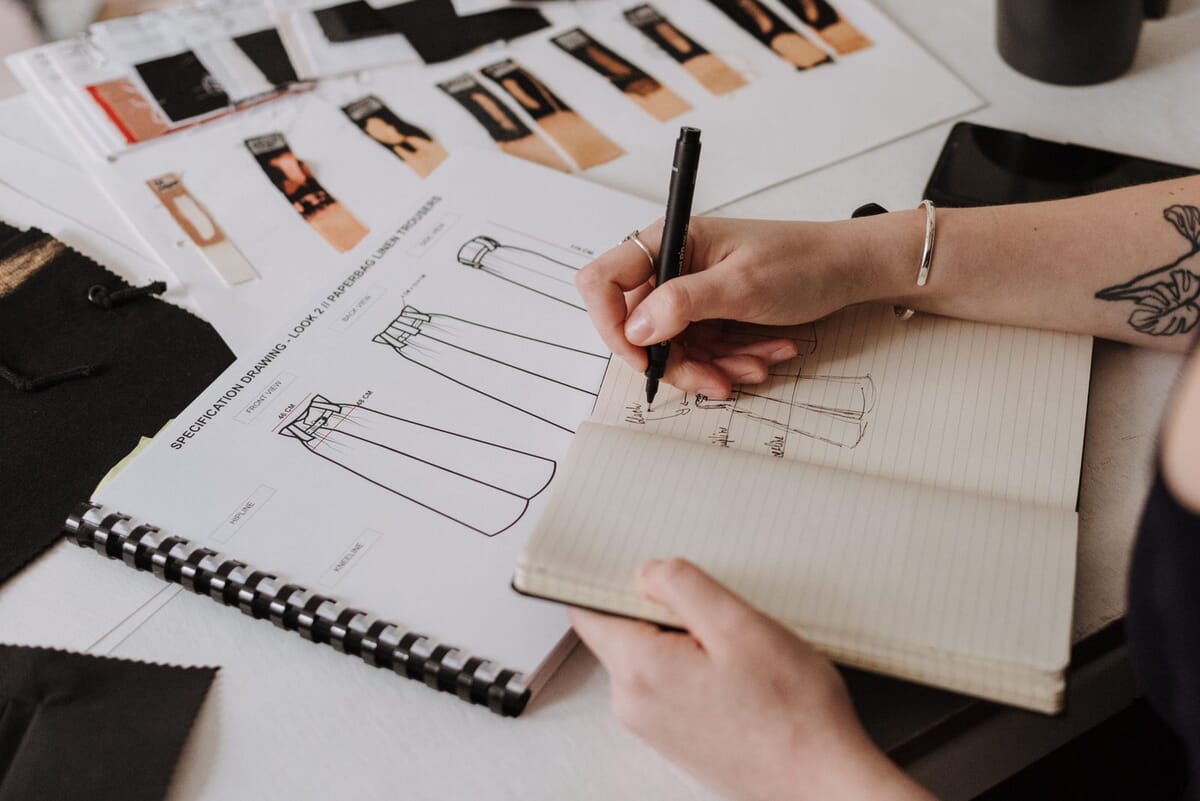
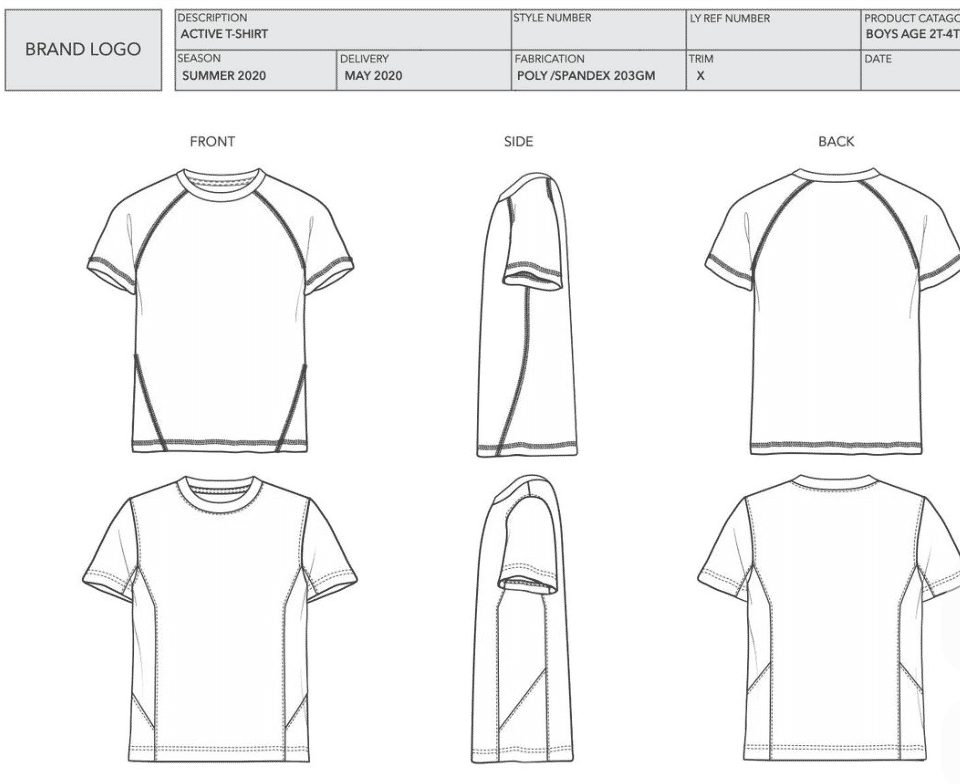
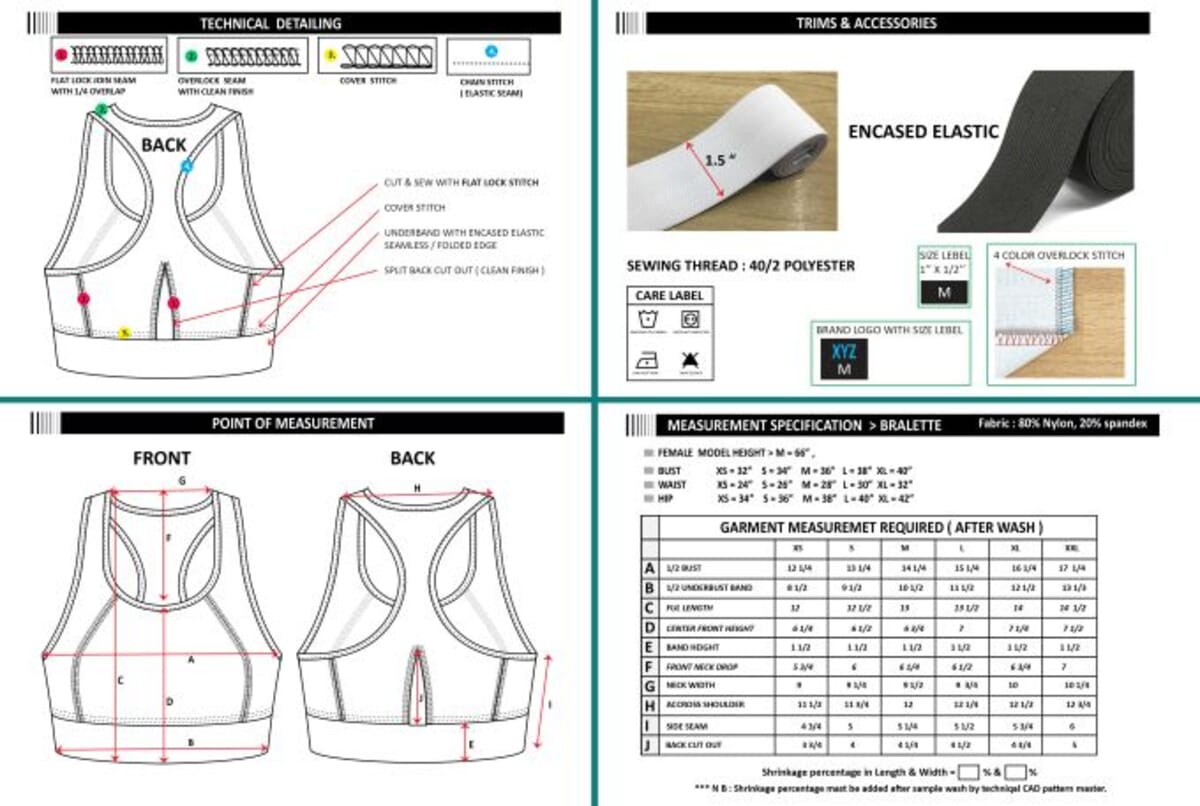
A tech pack is a specification document containing flat sketches, a bill of materials, measurement specs, construction notes, size gradings, colorways, a cost sheet, and revision history. A pattern is the shaped set of pieces drafted to meet those specs. The tech pack defines the target; the pattern is the answer. If you need both, our pattern making service drafts the pattern from your tech pack.
Think of it like architecture. The tech pack is the blueprint and the engineering brief. The pattern is the cut timber and the joinery. You wouldn't hand a carpenter a stack of pre-cut wood and expect a house with no drawings. Yet brands do exactly that with garments, then wonder why the sample comes back wrong. If you want the full anatomy of the spec side, our guide on what a tech pack is breaks down every section.
Here's the machine-readable version, the one I wish every new client read first.
| Question | Tech Pack | Pattern |
|---|---|---|
| What is it? | The specification: what the finished garment must be | The solution: the shaped pieces that achieve it |
| What does it contain? | Flat sketches, BOM, measurement specs, construction notes, gradings, colorways, cost sheet, revision history | Front, back, sleeve, facing and lining pieces with seam allowances and notches |
| Who makes it? | Designer or technical designer | Patternmaker, very often the factory |
| Versioned? | Yes, revision history is a core section | Yes, but it usually follows the tech pack's revisions |
| Needed before contacting a factory? | Yes, or at least a strong draft | Usually no, most factories draft it for you |
Specification vs construction instruction: the distinction that trips everyone
The cleanest way to hold the two apart is one phrase: a tech pack specifies, a pattern instructs construction. A specification tells you the target state. The finished chest must measure 54 cm, the seam must be a 5-thread overlock, the shell must be a 280 gsm French terry. None of that tells a cutter where to place their shears. A construction instruction does the opposite. A pattern piece says: cut this exact shape, on this grainline, with 1 cm of seam allowance on these edges and a notch 8 cm down from the shoulder.
Both describe the same garment. They just answer different questions. The tech pack answers "what must be true?" and the pattern answers "what do I cut and where do I join it?" A factory needs both answered before a sample can exist, but only one of them, the spec, has to come from you. The pattern is a derived artifact. It's the factory's working answer to your question, and it changes every time the answer gets refined.
Here's a test I give clients who still can't tell them apart. Ask yourself: could two skilled patternmakers, working from this alone, produce the same garment? A tech pack should get them within tolerance of each other even if their pattern pieces look nothing alike. A pattern gives you one fixed geometry with no target to check it against, so you'll never know if it drifted. That's the whole difference in one question. The spec is portable and verifiable; the pattern is specific and unverifiable on its own.
The two documents also overlap more than people expect, which is part of why they get confused. A few data points live in both places, and knowing which ones stops a lot of arguments on the sampling floor.
What is a tech pack, exactly?
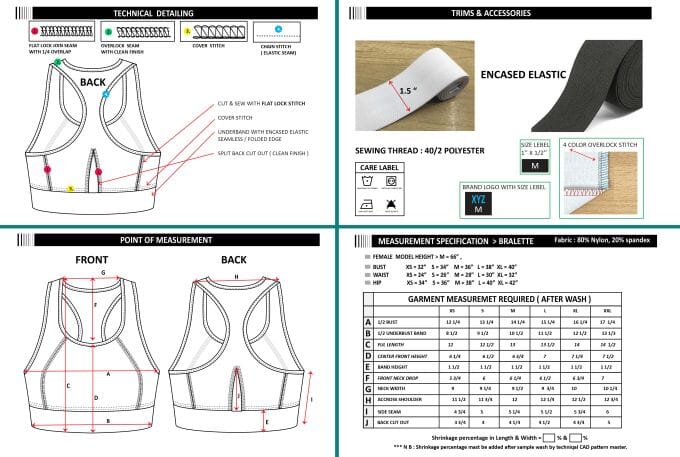
A tech pack is the complete instruction set for one style. It's built from eight core sections: flat sketches, a bill of materials, measurement specs, a cost sheet, size gradings, colorways, construction notes, and revision history. Nothing about it is decorative. Every field prevents a specific mistake on the floor.
A complete tech pack contains flat technical sketches, a bill of materials listing every fabric, thread and trim, graded measurement specs with tolerances, construction and stitching notes, colorways, a cost sheet, and revision history (Sewport). It is the single source of truth a factory reads before cutting anything.
The bill of materials is where most gaps hide. Sewport lists it as the components inventory: fabrics, threads, zippers, buttons, labels, every trim by supplier and placement (Sewport). Miss the interlining weight and your collar rolls. Miss the thread ticket and your topstitch puckers. If you're starting from zero, a structured tech pack template forces you to fill each field instead of guessing.
For a deeper look at how these sections get laid out on the page, the notes on what each page contains cover spacing, callouts and what a factory reads first.
What is a pattern, and what does it actually do?
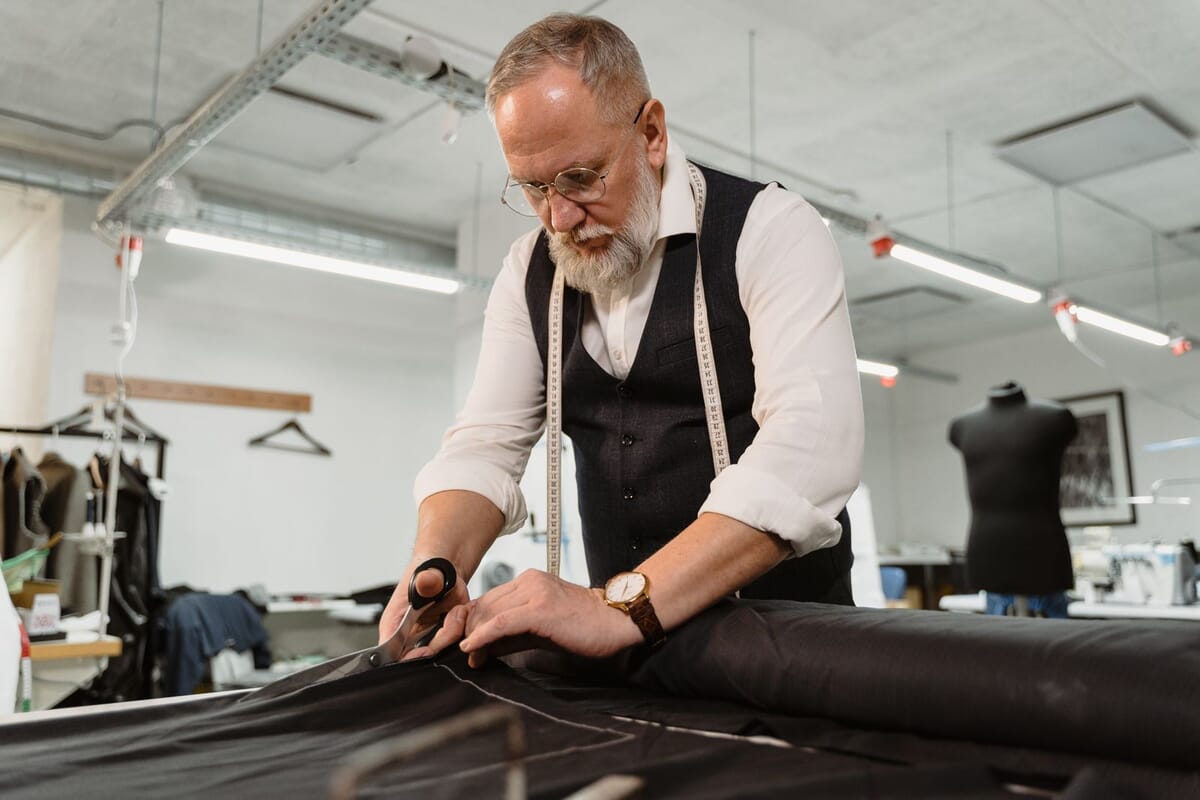
A pattern is the set of shaped pieces used to cut fabric. Front, back, sleeves, facings, linings, each drafted with seam allowances, notches and grainlines so cutters and sewers know exactly what to do. The pattern turns a flat sketch and a spec sheet into geometry. It's the bridge between an idea and a stack of cut panels.
A garment pattern is the collection of flat shaped pieces, marked with seam allowances, notches and grainlines, that a cutter uses to produce every panel of a style. It exists to translate the tech pack's measurement specs into physical geometry a factory can cut and assemble accurately.

Here's a thing I've watched happen more than once. A brand sends a home-printed PDF pattern from a course they took. It has no seam allowance marked, no notches, no grainline. My patternmaker can't tell where the front ends and the facing begins. We rebuild it from scratch, which is slower than if they'd sent nothing but a clear tech pack. A pattern with missing marks isn't a head start. It's a cleanup job.
What does a pattern actually include?
A finished pattern is more than a set of outlines. Each piece carries five things a cutter and a sewer read without asking. Miss any one and the panel slows the line or gets cut wrong. Here's the checklist my patternmakers run before a pattern is called complete.
- Blocks. A block, or sloper, is the factory's tested base shape for a body type, with no seam allowance and no style detail. Patternmakers develop new styles by modifying a block they already trust, which is a big reason your factory prefers to draft its own pattern rather than adopt yours.
- Seam allowances. The extra margin added outside the stitch line, commonly 1 cm on most seams and more on hems. If it isn't marked, a cutter doesn't know whether the line they see is the finished edge or the cut edge. That single ambiguity is the most common reason I reject an incoming pattern.
- Notches. Small clips that tell a sewer which edges match, how a sleeve eases into an armhole, and where a dart or pleat starts. Notches are how two curved edges get joined without guesswork.
- Grainlines. The arrow that must sit parallel to the fabric's warp. Ignore it and the panel twists, the seam ropes, and the garment hangs off-square after the first wash.
- The marker and nesting. The marker is the full layout of every piece across the fabric width, nested to waste as little cloth as possible. The marker sets your fabric consumption, which flows straight into the cost sheet. Tight nesting is where a factory quietly saves you money per unit.
The marker is the part brands never think about and factories obsess over. On a recent knit order, retightening the nest dropped fabric consumption from 1.42 metres per unit to 1.31. On a 3,000-piece run that's 330 metres of cloth saved, and none of it changed a single measurement on the tech pack. That's the pattern side earning its keep in a place the spec never touches. The tech pack tells us the target; the pattern and its marker decide how cheaply we can hit it.
Digital vs paper patterns: does it matter?
Both work, but they travel differently. Paper patterns are physical, so they can't be emailed or version-controlled cleanly, and every re-grade means re-drawing by hand. Digital patterns, drafted in CAD, carry precise points and grade in seconds. Most factories I work with prefer digital because it plots cleanly, nests automatically, and stores with the style file. Paper still shows up, and it still gets the job done, but it slows the back-and-forth on every revision.
The software split matters when you exchange files. Pattern CAD systems like Gerber AccuMark, Optitex and Lectra dominate factory floors, while CLO 3D and Browzwear handle 3D sampling and virtual fit. The common handoff format between them is DXF, specifically the AAMA/ASTM DXF flavour that carries piece boundaries, grainlines, notches and grade rules as structured data rather than a flat drawing. If you ever do supply a digital pattern, send the AAMA DXF, not a PDF. A PDF is a picture of a pattern; the DXF is a pattern a machine can actually read, grade and plot. That difference alone can save a day of re-digitising at the factory. Our guide to digital pattern making covers DXF-AAMA, grading and digitising paper patterns in more detail.
Who writes the tech pack, and who drafts the pattern?
Two different people, usually. The designer or a technical designer writes the tech pack, because it captures design intent and measurement targets. The patternmaker drafts the pattern, and very often that patternmaker sits inside the factory. This split matters: the person who knows what the garment should look like is rarely the person best placed to draft the pieces that build it.
A tech pack is authored by the designer or technical designer, who owns measurement specs, construction notes and the bill of materials. The pattern is drafted by a patternmaker, frequently the factory itself, translating those specs into cuttable pieces. Two roles, one handoff.
That handoff is where good factories earn their keep. Give the factory a clean spec and it drafts the pattern, sews the first sample, and sends it back with notes. You review, it revises.
Where do the tech pack and pattern sit in pre-production?
They sit at opposite ends of the same sequence. Pre-production runs from design intent to a cut-ready marker, and a custom tech pack that takes 5 to 20 hours to build (Guru, 2022) is the first hard deliverable. The pattern comes next, downstream of the spec, and everything after it, the sample, the grade, the marker, depends on the spec staying stable.
In the pre-production sequence, the tech pack is authored first and locks the target measurements, materials and tolerances. The pattern is drafted second, from that spec, and the sample, grade rules and cutting marker all derive from the pattern. Change the spec late and every downstream step has to be redone.
The order isn't a preference. It's a dependency chain. You can't draft a pattern without a spec to hit, you can't sew a sample without a pattern, and you can't measure a sample without tolerances to measure against. Each step feeds the next. The diagram below shows which artifact drives each stage, and why a late spec change is so expensive: it doesn't just edit one box, it re-triggers every box to its right.
Do I need a pattern before I contact a factory?
Usually not. Most clothing factories draft the pattern from your tech pack as part of the sampling process. What they need first is a clear specification, not a finished set of pieces. Send a strong tech pack and a factory can take it from sketch to sample. Send a pattern with no spec and they've got shapes with no rules.
Most garment factories draft the pattern in-house from a supplied tech pack, so a brand rarely needs a pattern before making contact. What a factory cannot work from is a pattern with no tolerances, no bill of materials and no grading logic, because there is nothing to check the pieces against (Sewport).
This is the single most useful thing I can tell a new brand. Don't pay a freelancer to make a pattern before you've even chosen a factory. Your factory will likely redraft it to their own blocks anyway. Spend that money on a proper tech pack instead. A hoodie tech pack, for example, tells us far more than a hoodie pattern with no seam data ever could.
If your spec is solid but you don't have time to build the document, our tech pack service turns your sketches and measurements into a production-ready pack from $299, which is the cheapest insurance you'll buy against a rejected sample.
When does the factory make the pattern, and when should you supply one?
Ninety percent of the time, let the factory draft it. That's the default for a new brand, a new style, or any garment where the factory owns the sewing. Their patternmaker knows their machines, their blocks and their sewers' habits, so a pattern drafted in-house sews faster and truer than one imported cold. You supply the spec; they supply the geometry.
There are a few cases where supplying your own pattern earns its place. If you're moving an established, proven style to a new factory and you want to protect a fit customers already love, a validated pattern preserves it. If you hold a signature block that took seasons to perfect, you protect it as intellectual property. And if you're producing something so technical, structured tailoring, complex outerwear, that your own patternmaker has already solved it, handing over a clean AAMA DXF saves the new factory a costly re-development. Outside those cases, a pattern you commissioned before choosing a factory is usually money spent twice. The factory redrafts to its own blocks, and your freelance pattern becomes reference material at best.
How do the two work together across sampling?
They loop. The tech pack sets the target measurements, the patternmaker drafts pieces to hit them, we sew a sample, then we measure that sample against the tech pack's tolerances. Anything outside tolerance gets corrected in the pattern, logged in the tech pack's revision history, and resampled. Grading is the bridge that turns one graded-to-fit sample into a full size run.
Sampling is a closed loop between spec and solution: the tech pack defines graded measurements and tolerances, the pattern is drafted and sewn, then the sample is measured against those tolerances and revised. Grading standards like ASTM D5585-21, covering women's misses sizes 00 to 20, give the size run a documented reference.
Grading deserves its own note, because it's where tech pack and pattern meet most tightly. ASTM publishes body-measurement standards that patternmakers grade against. D5585-21 covers women's misses sizes 00 to 20 (ASTM), while D6960/D6960M adds plus sizes 14W to 40W (ASTM). These sit under ASTM Subcommittee D13.55 (ASTM). Your tech pack carries the grade rules; the pattern executes them.
How does inspection tie back to the spec?
Once garments are produced, they get inspected against a sampling standard. ISO 2859-1, mirrored by ANSI/ASQ Z1.4, defines how many units to pull and how many defects to accept. QIMA notes that AQL 2.5 is the most common general limit, 1.0 applies to higher-risk items, 4.0 covers minor cosmetic issues, and critical defects sit at zero (QIMA). Every one of those defects is judged against your tech pack, not against the pattern.
What goes wrong when brands send one without the other?
Plenty. The two failure modes are a pattern with no tech pack, and a tech pack with no realistic spec. The first gives a factory shapes it can't verify. The second gives it rules with nothing to cut. Both trigger the same result: a stalled sample and a defect that gets caught at inspection, measured against a spec that was never complete.
A pattern with no tolerances, no bill of materials and no grading logic cannot be manufactured, because inspectors have no documented spec to measure against. Under ISO 2859-1 sampling, a defect is only a defect relative to a standard (QIMA); with no tech pack, there is no standard to fail or pass.
Here's the mechanism people miss. Rejection isn't a matter of opinion. An inspector pulls a sample size set by the standard and checks each unit against your documented tolerances. If your neck opening is meant to be 40 cm plus or minus 0.5 cm and the pattern was drafted with no such spec, the garment isn't wrong, it's undefined. Undefined garments still get rejected, because the buyer's own AQL check has nothing to certify them against. A factory can draft a pattern from a good tech pack all day. It cannot build anything trustworthy from a pattern that carries no tolerances, no BOM and no grading logic.
Which mistakes cost the most?
The expensive errors nearly always come from conflating the two documents. Over years of first samples, the same four keep landing in my inbox. Each one traces back to treating a pattern as if it were a spec, or a spec as if it drafted itself.
- Sending a pattern with no tolerances. The factory has shapes but no pass/fail rule, so the sample can't be verified and inspection has nothing to check against.
- Editing the spec after the pattern is drafted. A "small" measurement change forces a re-grade and a new marker, and every downstream cost gets recalculated.
- Supplying a PDF pattern instead of an AAMA DXF. The factory re-digitises by hand, which adds a day and quietly introduces its own drift.
- Assuming one pattern fits every factory. Blocks differ between factories, so a pattern that fit perfectly at one supplier can sew a full size off at another.
Notice that none of these are pattern-making failures. They're sequencing and document-hygiene failures, which means a proper tech pack and the right order prevent all four before a single piece gets cut.
So the order is simple. Spec first, pattern second, sample third, revise, repeat. Start with the specification, use a proper tech pack template to capture every field, and let the factory draft the pattern that solves it. That sequence has saved more of my clients' launch dates than any other single habit. If you want the full picture of how this fits together, the tech packs pillar links out to every piece of the process, from a first t-shirt spec to inspection.
FAQ
Is a tech pack the same as a pattern?
No. A tech pack is the specification: measurements, materials, construction and tolerances for one style. A pattern is the set of shaped pieces that achieve that spec. The tech pack defines the target; the pattern is the geometry that hits it. Different documents, different authors.
Do I need a pattern before contacting a factory?
Usually not. Most factories draft the pattern from your tech pack during sampling, so a clear spec matters more than finished pieces. What a factory cannot use is a pattern with no tolerances or bill of materials, because there is nothing to check the cut panels against (Sewport).
Who creates the tech pack and who creates the pattern?
The designer or technical designer writes the tech pack, since it captures design intent and measurement specs. The patternmaker drafts the pattern, and that patternmaker is very often the factory itself. It's a handoff: one role specifies, the other builds the solution.
How much does a tech pack cost?
A custom tech pack typically runs $500 to $2,000 per style and takes 5 to 20 hours to build (Guru, 2022). Cost scales with complexity, size range and trim count. It's far cheaper than a rejected production run measured against a spec that was never finished.
What is grading and how does it connect them?
Grading scales one fitted size across a full range. It's where tech pack and pattern meet: the tech pack carries the grade rules, referencing standards like ASTM D5585-21 for misses sizes 00 to 20, and the patternmaker executes those rules on the pieces.
What is the difference between a marker and a pattern?
A pattern is the set of shaped pieces for one garment. A marker is the layout of every piece nested across the fabric width for cutting. The pattern defines geometry; the marker defines fabric consumption, which flows straight into the cost sheet. One pattern set can produce many possible markers, and tighter nesting means lower fabric cost per unit.
What file format should I send a digital pattern in?
Send an AAMA/ASTM DXF, not a PDF. The DXF carries piece boundaries, grainlines, notches and grade rules as structured data that pattern-CAD systems like Gerber, Optitex or Lectra can read, grade and plot directly. A PDF is only a picture of a pattern, so the factory re-digitises it by hand, adding about a day.
What happens if I change the tech pack after the pattern is made?
Every downstream step reruns. A measurement change forces the patternmaker to redraft, re-grade against the size run, and cut a new marker, then resample and log the revision. That's why locking the spec before drafting matters. ASTM grade references like D5585-21 only help once the base measurements hold still.
Peter Midea is GarmentSpec's technical lead for brand development.
We build the factory-ready spec a manufacturer can quote from without a single question: technical flats, bill of materials, graded points of measure with tolerances, colorways and construction notes. $299 per style, 3 to 5 working days, 2 to 3 revision rounds.
Get your tech pack — $299Start with the free templateWe don't take your production. The spec is yours to send to any factory, anywhere. Talk to us first if you're not sure what you need.
Sources
Every statistic and definition in this article traces to one of the following. Each is listed once here, and cited inline where it is used.
- Guru
- Sewport
- Pexels
- otextilpt.sirv.com
- ASTM International
- ASTM International
- ASTM International
- QIMA